What's inside
As an Amazon Associate I earn from qualifying purchases. This post may contain affiliate links at no extra cost to you.
Dust Collection at the Source vs Ambient Air Filtration for Fine Dust
Fine dust control works best when you stop dust before it spreads. That makes dust collection at the tool the primary system, while an ambient air cleaner is a secondary system for particles that escape. Treating the two as interchangeable is a common—and expensive—mistake.
A shop vacuum, dust extractor, or central collector connected to a machine captures chips and dust at the point of generation. An ambient air filtration unit hangs or sits in the shop and recirculates room air through filters. It cleans what remains suspended, but it cannot reliably pull dust out of a saw blade guard, router bit, or open sanding surface from across the room.
As an Amazon Associate we earn from qualifying purchases at no extra cost to you.
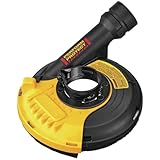
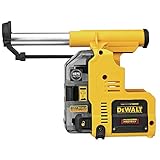
Why source capture comes first
Capturing dust at the source requires far less airflow than trying to clean the entire room after the dust has dispersed. A 2-1/2-inch hose on a shop vacuum may move roughly 100 to 150 CFM at the tool. A 4-inch machine port generally needs around 350 to 500 CFM for useful chip capture, while a 6-inch duct may need 800 CFM or more. These are practical targets, not guarantees; hose length, bends, filters, and leaks can reduce actual airflow substantially.
Use a dust extractor and cyclone separator for handheld sanders, routers, track saws, and other tools with small ports. A cyclone keeps most chips out of the filter, preserving suction. For a planer, jointer, or table saw producing large volumes of chips, a dedicated collector with a properly sized duct is usually a better fit.
Fine dust is especially difficult because it remains airborne longer and can pass through poor filters. A collector that blows dusty air back into the shop is not doing its job. Look for a filter rated for fine particulate, ideally a true HEPA-filtered extractor when working with large amounts of sanding dust or MDF. Check the manufacturer’s filtration rating and replacement-filter cost rather than relying on the word “fine” in a product listing.
What ambient filtration can and cannot do
An ambient air cleaner is useful after source capture has removed most of the dust. It continuously recirculates room air, catching fine particles that escaped through a saw guard, leaked from duct joints, or were raised during cleanup. It is also useful in shops where a collector cannot connect easily to every tool.
Buy an overhead shop air filtration unit based on delivered airflow, not the largest number printed on the box. As a rough target, aim for six to ten air changes per hour. Calculate room volume by multiplying length, width, and ceiling height. A 20-by-24-foot shop with an 8-foot ceiling contains 3,840 cubic feet. Six air changes per hour requires about 384 CFM; ten requires about 640 CFM. Because filters load and rated airflow is often measured without much resistance, choosing a unit with more capacity gives useful margin.
Ambient filtration does not make open sanding safe by itself. A cloud can reach your breathing zone before the cleaner makes enough passes through the room. It also does not remove settled dust from benches, shelves, rafters, or floor cracks. When swept or blown with compressed air, that settled material becomes airborne again.
Which system fits the job?
| Feature | Source dust collection | Ambient air filtration |
|---|---|---|
| Primary purpose | Capture dust and chips at the tool | Remove airborne dust after it escapes |
| Best location | Connected directly to the machine | Mounted high or near the center of the shop |
| Typical airflow | About 100–150 CFM for small hoses; 350–800+ CFM for larger ducting | Often 300–1,200 CFM, depending on unit and filter load |
| Strength | Prevents dust from spreading | Reduces fine dust that remains suspended |
| Main limitation | Needs suitable ports, ducting, and sealed connections | Cannot reliably capture dust at an open cutting or sanding operation |
| Best value | Essential first purchase | Useful upgrade after source capture is working |
Common failure modes
Small hoses attached to large machine ports are one problem. The hose may show strong suction at the end, but it cannot carry enough total airflow to capture chips from a planer or table saw. The opposite mistake is using oversized ducting on a small extractor. The system may have less air velocity and lose effectiveness at the tool.
Leaks are another frequent failure. A loose fitting, unsealed blast gate, or cracked flexible hose can consume a surprising amount of airflow. Keep flexible hose runs short, use smooth-wall duct where practical, and seal joints with clamps or foil tape. Avoid unnecessary 90-degree bends; each bend increases resistance.
Filters also cause gradual performance loss. A clogged pleated filter can reduce airflow before the motor sounds different. Monitor suction, clean filters according to the manufacturer’s instructions, and replace disposable bags before they are packed solid. Never remove a fine-dust filter to “improve” airflow. That simply moves the dust into the room.
A practical setup for a small workshop
Start with source capture on the tools that create the most fine dust: sanders, routers, saws, and machines cutting plywood or MDF. Add a cyclone separator for a shop vacuum, and use a dust deputy-style separator or a 4-inch dust collection ducting kit when a larger collector is justified. Keep the collector outside the main work area if possible, but only if its exhaust is filtered and the arrangement does not create a fire or noise problem.
Next, add ambient filtration if the shop still shows a visible haze, if several tools operate without effective ports, or if sanding is a regular part of the work. Run the unit during dusty work and for at least 30 to 60 minutes afterward. Use a shop air-quality monitor to compare readings before and after changes, but do not treat a low reading as proof that respirator protection is unnecessary.
Finish cleanup with a vacuum equipped for fine dust, not a broom or compressed air. Wear a properly fitted respirator when cutting or sanding, especially MDF, composite panels, or unknown finishes. The cheapest acceptable system is often a good extractor connected directly to the tool, followed by vacuum cleanup. Ambient filtration is worth buying when you need cleaner air between operations, but it should complete a dust-control plan—not substitute for one.