What's inside
As an Amazon Associate I earn from qualifying purchases. This post may contain affiliate links at no extra cost to you.
An air scrubber and a ceiling-mounted air filter both capture airborne workshop dust, but they serve different needs. A ceiling filter is usually the less expensive choice for a small shop with occasional sanding and light cutting. A portable air scrubber makes more sense when you need to clean air in a specific work area, move filtration between rooms, or add finer filtration to a shop with persistent airborne dust.
As an Amazon Associate we earn from qualifying purchases at no extra cost to you.


What each filter does
A ceiling air filter draws dusty shop air through a filter and returns cleaner air to the room. Many units use a fan and one or more disposable filters, with controls for different fan speeds. They are meant to run during and after dusty work, mixing and filtering air throughout the shop.
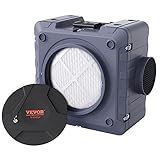
An air scrubber is generally a portable, ductable filtration unit. It pulls air through high-efficiency filters and may exhaust the cleaned air back into the room or through a duct. Contractors often use scrubbers to contain dust during renovation, but smaller units can also serve a workshop. Check the filter specification: “air scrubber” describes a type of equipment, not a guarantee that it includes a HEPA filter or captures every hazardous particle.
Neither replaces a dust collector at the tool, a shop vacuum with suitable filtration, or respiratory protection when the job requires it. These machines address dust that has escaped into the room; they do not stop it at the blade, bit, or sanding pad.
Air scrubber vs. ceiling air filter
| Factor | Ceiling air filter | Air scrubber |
|---|---|---|
| Typical placement | Fixed near the ceiling | Portable; placed near a dusty zone or connected to ducting |
| Best fit | General background filtration in one shop | Targeted filtration, temporary work areas, or finer filtration when equipped accordingly |
| Cost and setup | Often cheaper and simple to install | Often costs more; heavier units may need careful positioning or duct setup |
| Room coverage | Depends on airflow and circulation around the whole room | Can focus on one area, but placement and airflow still matter |
| Main drawback | Does little to capture dust right at the tool | Can be noisy or bulky; replacement filters can add cost |
Choose by shop size and work
For a one-car garage shop doing occasional routing, sanding, and small projects, a ceiling unit may be enough as a secondary control. Look for a published airflow rating, a filter you can replace, and a remote or timer if the unit will be mounted overhead. A unit sold as covering a certain square footage is only a rough guide: room height, obstructions, filter condition, and how the air circulates all affect performance.
For a shop around 20 by 20 feet with an 8-foot ceiling, the room holds about 3,200 cubic feet of air. A unit rated at 400 cubic feet per minute would theoretically move one room-volume of air every eight minutes, before accounting for real-world losses and imperfect mixing. That number is useful for comparing products, not a promise that every particle disappears in eight minutes.
Consider a portable scrubber if you do dusty work in a separate finishing area, need filtration in a temporary enclosure, or want to position intake close to a task without mounting equipment. Before buying, check its clean-air airflow and filter rating, not just the word “HEPA” in a listing. Higher-efficiency filters can increase resistance and reduce airflow; a powerful fan with a restrictive or loaded filter may not deliver its advertised free-air rating.
For routine background filtration, compare ceiling-mounted shop air filters. If you need movable or ductable filtration, compare portable HEPA air scrubbers, checking the filter and airflow details for the specific unit.
Placement and operating habits
Mount a ceiling filter where it can pull from and return air to open space, not boxed into a corner by shelving. Avoid placing it directly above a dust-producing tool if the airflow blows dust across the operator or toward clean stock. A scrubber can sit near the dusty zone, but keep its intake clear and avoid a setup that draws dust past your face on its way to the filter.
Run filtration during dusty work and leave it on afterward. A timer that runs for 30 to 60 minutes after a session is a practical starting point, not a universal clearance time. Fine dust can remain suspended, and heavier dust may settle on benches and floors. Clean surfaces with a suitable vacuum or damp method rather than sweeping dry dust back into the air.
Filters, noise, and safety
Check filters regularly, especially after a long sanding session or when airflow drops. A loaded filter reduces air movement and can make the fan work harder. Follow the manufacturer’s replacement instructions; do not wash a filter unless it is specifically designed to be washable. When changing a dusty filter, avoid shaking it indoors and use appropriate respiratory protection.
Noise can decide whether a unit gets used. Compare sound ratings at the fan speed you will actually run: a loud machine may be switched off during work, defeating its purpose. A lower setting used consistently can be more practical than a high setting you tolerate for only a few minutes.
Fine wood dust is a health hazard, and some workshop dusts require additional precautions. Use source capture at the tool, maintain the collector and hoses, and wear a properly fitted respirator when exposure warrants it. Filtration machines are a supplement, not a substitute for these controls. If your work produces combustible dust or involves hazardous materials, check the relevant safety requirements before choosing or operating equipment.
Make the purchase fit the job
Buy a ceiling air filter when you want affordable, always-on background cleaning in a single general-purpose shop and already control dust at the tools. Choose an air scrubber when portability, targeted placement, ducting, or a verified high-efficiency filter matters enough to justify the extra cost and upkeep. If airborne dust remains heavy, first inspect the source-capture setup: a bigger room filter cannot compensate for a poorly connected dust hood or a collector that leaks.