As an Amazon Associate I earn from qualifying purchases. This post may contain affiliate links at no extra cost to you.
Choosing Miller welding equipment is really a decision about process coverage. A woodworker who welds steel table bases and shop fixtures mostly needs a dependable MIG machine, while a fabricator who also repairs aluminum parts needs AC TIG or a spool gun in the mix. Miller sells dedicated machines, multiprocess units, and full packages under similar model names, so the real work is matching each exact model to the jobs you actually run.
This guide is for MIG-focused shops, mixed-process fabricators, and owners of compatible Miller machines who want to add aluminum capability. Every pick below is genuine Miller equipment, selected from the model name and the specifications stated on its product page, and the one accessory in the list is labeled as an accessory rather than a welder.
Quick Picks
As an Amazon Associate we earn from qualifying purchases
Product
Best for
Key spec
Miller Millermatic 211 PRO MIG Welder
MIG-focused shops
Dual-voltage input with Auto-Set
Miller Syncrowave 210 TIG/MIG Package with Spoolmate 150
A complete TIG-ready package
Stick, MIG and AC-DC TIG in one package
Miller Multimatic 220 AC/DC Multiprocess Welder
One machine for every process
MIG, TIG, stick and flux-cored on 120/240V
Miller Spoolmate 150 Spool Gun
Adding aluminum MIG to a Miller machine
Fits Miller 200, 211 and 215 class machines
How to Choose
Match the process list to your real work
Start with the processes you run every week, not the ones you might try someday. A dedicated MIG welder like the Millermatic 211 PRO keeps setup simple for steel fabrication, gates, frames, and shop furniture. Multiprocess machines such as the Multimatic 220 add stick, TIG, and flux-cored capability for outdoor repairs or mixed materials. If aluminum TIG is on your list, confirm the machine offers AC TIG specifically, because DC-only TIG will not handle aluminum properly. Buying only the coverage you need keeps the machine simpler to set up and easier to learn well.
Check input power before anything else
Input voltage decides where a machine can work and how much output it can deliver. Dual-voltage models plug into standard household circuits for light work and heavier circuits when the job demands more, which suits shops that share space or move between locations. Before ordering, check the outlets in your workspace and the circuit capacity behind them, then confirm the machine’s stated input range matches. A multiprocess welder that runs on 120/240V gives the most flexibility for a small shop. Power details that are not stated on the product page should be treated as unknown, not assumed.
Read the package contents, not just the machine name
Two listings with similar names can include very different gear. A package deal may bundle a TIG torch, a foot control, and a MIG gun, while a bare machine listing leaves those as separate purchases that add up quickly. Read the listing title and description line by line and note exactly which torch, gun, and controls are included. The Syncrowave 210 package in this guide is an example: its value sits as much in the included torch, foot control, and spool gun as in the power source itself. Knowing the full contents prevents an unpleasant second order later.
Confirm the exact model and genuine branding
Miller model names repeat across generations, and a current machine can share most of its name with an older one while carrying different features and drive systems. Check the full model name and the manufacturer part number on the listing, and treat them as the identity of the product. Equipment described only as fitting or compatible with Miller machines is made by someone else, however the listing is worded. For accessories, confirm compatibility against your machine’s class before buying. Genuine Miller equipment carries Miller part numbers, and those numbers are the fastest way to verify what you are actually getting.
The 4 Best Options
Miller Millermatic 211 PRO MIG Welder
Top Pick
Miller Millermatic 211 PRO MIG Welder
Best for: MIG-focused shops welding steel frames, fixtures, and furniture bases.
The Millermatic 211 PRO is the straightforward choice for a shop whose welding is almost entirely MIG on steel: frames, brackets, gates, and the metal bases that pair with woodworking projects. Dual-voltage input lets it run where your power is, and Auto-Set simplifies dialing in parameters when you switch wire or material thickness. The included MDX-100 MIG gun has a 15 ft lead, giving useful reach around larger workpieces without moving the machine. Quick Select drive rolls sized for .024 in wire round out a setup aimed at light fabrication work.
Miller Syncrowave 210 TIG/MIG Package with Spoolmate 150
Runner-Up
Miller Syncrowave 210 TIG/MIG Package with Spoolmate 150
Best for: Fabricators who want TIG, MIG, and stick coverage in a single package purchase.
Processes: stick, MIG and AC-DC TIG
Package includes: TIG torch, foot control and MIG gun
The Syncrowave 210 package suits a fabricator who wants one purchase to cover stick, MIG, and AC-DC TIG work, including aluminum. Because it is sold as a package, the TIG torch, foot control, and MIG gun are included rather than bought separately, and the bundled Spoolmate 150 spool gun extends the setup to aluminum MIG feeding without a separate accessory order. That breadth makes it a sensible centerpiece for a small shop taking on varied repair and fabrication jobs where changing processes midweek is normal rather than occasional.
Miller Multimatic 220 AC/DC Multiprocess Welder
Miller Multimatic 220 AC/DC Multiprocess Welder
Best for: Shops that want one machine covering every common process.
The Multimatic 220 is built for the shop that refuses to keep separate machines for separate jobs. It covers MIG, TIG, stick, and flux-cored processes in one unit, so a single power source handles indoor fabrication, outdoor repairs where flux-cored wire earns its keep, and occasional TIG work. It runs on 120/240V, which means it can work from ordinary shop circuits for lighter tasks and step up when heavier input is available. For a growing fabrication corner in a woodworking shop, that combination of process range and flexible input power is the main appeal.
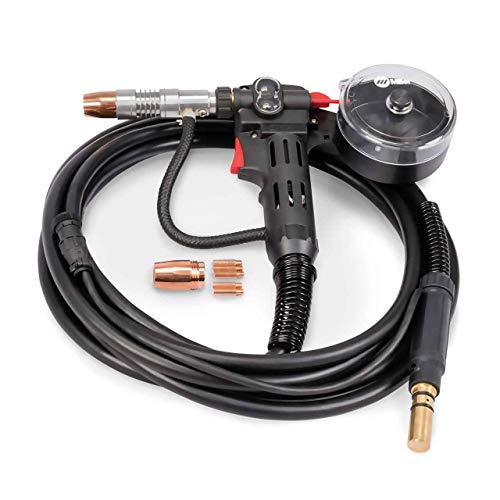
Miller Spoolmate 150 Spool Gun
Miller Spoolmate 150 Spool Gun
Best for: Owners of a compatible Miller MIG machine who need aluminum capability.
Type: spool gun accessory, not a welder
Use: aluminum MIG welding
Compatibility: Miller 200, 211 and 215 class machines
The Spoolmate 150 is not a welder. It is a genuine Miller spool gun accessory that feeds aluminum wire from a small spool mounted on the gun itself, which solves the feeding problems soft aluminum wire causes in a standard MIG liner. It fits Miller 200, 211, and 215 class machines, so owners of a compatible Millermatic can add aluminum MIG capability without replacing their power source. If your shop already runs one of those machines and aluminum jobs keep walking away, this is the lowest-commitment way to bring that work in-house.
Which One Fits Your Situation
You weld steel frames and shop fixtures most days
A dedicated MIG machine is the honest fit. The Millermatic 211 PRO covers steel fabrication with simple setup, Auto-Set assistance, and a gun lead long enough for furniture-scale work. Multiprocess features you never switch on add cost and complexity, so a focused machine that does your daily process well is the smarter buy for this workload.
You take on mixed repair work in several processes
Choose coverage. The Multimatic 220 handles MIG, TIG, stick, and flux-cored work from one unit, while the Syncrowave 210 package adds a bundled torch, foot control, and spool gun for TIG-heavy work. Pick between them by asking whether included accessories or the wider process list matters more for the jobs already on your bench.
Your shop power is limited or shared
Dual-voltage and 120/240V machines earn their place here. They run from ordinary circuits for light tasks and use heavier circuits when available, so the welder fits the building instead of forcing electrical upgrades first. Confirm your circuit capacity before ordering, and treat any input detail missing from a listing as unknown rather than assuming the machine will suit your outlets.
You already own a Miller MIG machine and need aluminum
Do not replace a machine that works. If your unit sits in the 200, 211, or 215 class, the Spoolmate 150 spool gun adds aluminum MIG feeding to the setup you already know. Verify your exact model against the compatibility note before buying, since the gun only helps when it pairs with the right machine class.
Common Mistakes
Buying equipment described as fitting Miller machines and assuming it is made by Miller.
Treating two model generations with similar names as the same machine and merging their specifications.
Ordering a spool gun before confirming it matches the class of machine you already own.
Paying for a multiprocess machine when every job on your bench uses a single process.
Comparing machine names instead of package contents, then discovering the torch or foot control costs extra.
Frequently Asked Questions
Is the Spoolmate 150 a welder on its own?
No. The Spoolmate 150 is a spool gun accessory that feeds aluminum wire and must connect to a compatible Miller power source. It fits Miller 200, 211, and 215 class machines. Without one of those machines it cannot weld anything, so budget for it as an add-on to equipment you already own, not as a standalone purchase.
What does dual-voltage input actually help with?
Dual-voltage input lets a welder run on lower-voltage household circuits for light work and on heavier circuits when more output is needed. For a small shop, that means the machine can work in more locations without electrical changes. Always match the machine’s stated input range to the circuits you actually have before ordering, and check the product page for the exact configuration.
Which of these covers the most welding processes?
The Multimatic 220 lists MIG, TIG, stick, and flux-cored processes, the widest process list in this guide. The Syncrowave 210 package covers stick, MIG, and AC-DC TIG and includes its torch, foot control, and spool gun in the box. Choose by whether the broader process list or the bundled accessories serve your workload better.
How can I be sure a listing is genuine Miller equipment?
Check the full model name and the Miller part number on the product page, and compare them against the model you intended to buy. Genuine machines and accessories carry Miller part numbers. Listings that describe a product only as compatible with, or made for, a Miller machine are third-party items, even when the Miller name appears prominently in the title.
J
JD's Woodworks Editorial Team
We compare specs, warranty terms, long-term owner feedback and street pricing before anything earns a spot. Rankings are never paid.
Affiliate disclosure. As an Amazon Associate we earn from qualifying purchases at no extra cost to you. Prices accurate as of the date shown.
Four hobby TIG welders compared for home shops: AC/DC picks for aluminum, a compact DC model for steel, listed specs, included gear and honest tradeoffs.
The best Creality Falcon engravers compared: Falcon A1 10W, CR-Laser Falcon 10W, Falcon2 Pro 22W and Falcon2 Pro S 40W, by power, work area and enclosure.
The best CNC machines for manufacturing compared: large-bed routers and closed-loop desktop mills with the work area, spindle and control for batch work.


 Miller Spoolmate 150 Spool Gun









