As an Amazon Associate I earn from qualifying purchases. This post may contain affiliate links at no extra cost to you.
A helical cutter head replaces the long straight knives in a planer or jointer with dozens of small carbide inserts arranged in staggered rows around a steel cylinder. Each insert meets the wood at a slight angle, so the head shears fibers instead of chopping them in one hard hit. That shearing action is why helical heads are known for a smoother surface, less tear-out on figured grain, and noticeably lower noise than a straight-knife head running the same board.
The upgrade also changes how maintenance works. A nicked straight knife usually means removing, sharpening, or replacing the full knife set and resetting knife height. A nicked insert on a helical head is handled at the seat where the damage happened: loosen one screw, rotate the insert to a fresh edge, and tighten it again. This guide compares four verified replacement heads, explains the specifications that actually matter, and matches each head to the planer it fits, because fitment is the single most important decision in this category.
As an Amazon Associate, we earn from qualifying purchases.
How to Choose a Helical Cutter Head
Start with exact machine fitment
A helical cutter head is machined for a specific machine, not a general size class. A head built for a 13-inch DeWalt planer will not fit a 12.5-inch DeWalt planer, even though the two machines look similar and come from the same brand. Before comparing anything else, confirm the exact model numbers printed in the listing, and match them against the model plate on the machine in the shop. Width alone is not enough, because shaft diameter, bearing seats, and chassis clearance all differ between models.
OEM diameter versus undersized heads
Some replacement heads are machined slightly smaller than the factory head so the new head can pass through the machine chassis with its inserts already mounted. Other heads, including OEM-diameter designs, match the factory cutting circle but require the inserts to be removed before installation and refitted afterward. Neither approach is wrong, but the trade-off matters: an undersized head is usually faster to install, while an OEM-diameter head keeps the original cutting circle and depth settings unchanged. Read the listing notes on installation before ordering so the extra insert handling does not come as a surprise.
Insert count, rows, and insert size
More inserts in more rows generally means each insert takes a smaller bite, which supports a finer finish and spreads wear across more edges. The four heads in this guide use four-row layouts with insert counts from 40 to 61. Insert dimensions matter for long-term ownership as well. Heads that use the common 15 by 15 by 2.5 millimeter square insert pattern make replacement inserts easy to source later, while a head with a less common insert size ties future maintenance to one supplier. Each square insert carries four cutting edges, so a full rotation cycle gives four rounds of service from every seat.
Bearings and what arrives pre-installed
Swapping a cutter head means pulling the old head from its bearings and fitting the new one into the machine. Heads that ship with bearings already pressed on remove one of the fiddliest steps, since bearing removal without a puller can damage the old head or the new one. Listings in this guide state clearly whether bearings are pre-installed or pre-assembled, and that detail is worth weighing alongside insert count. Also check what else is in the box: screws, wrenches, spare inserts, and an installation manual all reduce the chance of a half-finished swap.
Noise, finish, and realistic expectations
A helical head lowers the sharp hammering sound of straight knives because only a few inserts engage the wood at any moment, and it produces smaller chips that a dust collector handles more easily. It also reduces tear-out on reversing grain, curly maple, and other figured stock. It does not, however, turn a benchtop planer into an industrial machine, and it does not remove the need for sensible depth of cut. Light final passes still give the best surface, and snipe is still managed with proper infeed and outfeed support rather than by the head alone.
The Best Helical Cutter Head Picks
1. Byrd Tool OEM Shelix Cutterhead for DeWalt DW735
Top Pick
1. Byrd Tool OEM Shelix Cutterhead for DeWalt DW735
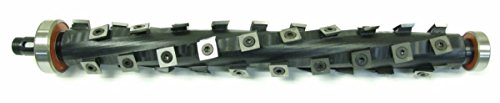
The Byrd Tool Shelix is the reference design in this category, built in the United States by Byrd Tool Corp. with staggered carbide inserts set at a shear angle. This OEM version is machined to the same diameter as the factory cutter head it replaces, so the cutting circle stays exactly as DeWalt designed it. The trade-off is installation: because the head is full diameter, the inserts must be removed before the head passes through the chassis and then reinstalled once the head is seated. The listing includes five extra cutter tips in the box for the first nick or damaged edge.
This head suits DW735 owners who want the original Shelix design and an OEM-diameter cutting circle, and who are comfortable with the longer installation that comes with removing and refitting the inserts. It is the natural pick for a planer that sees heavy use on figured hardwood, where the shear-angle cut is the main reason for upgrading.
2. SpeTool 13-Inch Helical Cutter Head for DeWalt DW735 Series
Runner-Up
2. SpeTool 13-Inch Helical Cutter Head for DeWalt DW735 Series
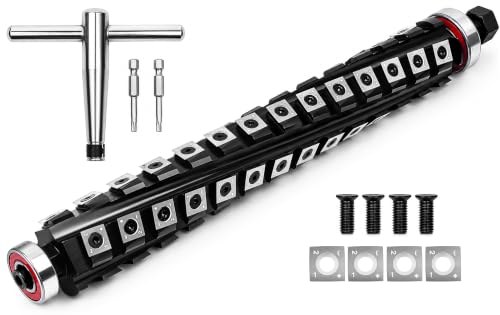
The SpeTool 13-inch head takes the convenience route for the same DeWalt planer family. It uses four cutting wings with 56 staggered carbide inserts, and its two bearings arrive pre-mounted on the shaft, which shortens the swap considerably. The listing covers the DW735, DW735X, and the DW735-XE variant, and the box includes the cutter head, 56 carbide inserts, 56 screws, and two wrenches, plus spare inserts for early replacements. The listing notes one installation step to respect: the planer shaft and gear must be removed before the original blades come out.
This head suits DW735-series owners who want the helical upgrade with the least installation friction, thanks to the pre-mounted bearings and complete hardware kit. It also suits owners of the DW735-XE variant, which several competing listings do not name.
3. FOXBC 13-Inch Spiral Helical Cutterhead for DeWalt DW735 and DW735X
3. FOXBC 13-Inch Spiral Helical Cutterhead for DeWalt DW735 and DW735X
The FOXBC head carries the highest insert count in this guide, with 61 carbide inserts mounted on the head and the two bearings already installed at the factory. The inserts measure 15 by 15 by 2.5 millimeters with a 30-degree profile, a widely used size that keeps future replacement inserts easy to find. The kit includes the inserts and their screws plus two T wrenches for the swap and for later insert rotations. Fitment is stated for the DW735 and DW735X; unlike the SpeTool listing, the DW735-XE is not named, so owners of that variant should confirm fit before ordering.
This head suits DW735 and DW735X owners who prioritize insert count and easy insert sourcing over time. The standard insert size and the pre-installed bearings make it a practical long-term choice for a shop that planes a wide mix of hardwood and softwood and expects to rotate inserts regularly.
4. SpeTool 12.5-Inch Helical Cutter Head for DeWalt DW733 and DW734
4. SpeTool 12.5-Inch Helical Cutter Head for DeWalt DW733 and DW734
Owners of the older 12.5-inch DeWalt planers are not left with straight knives. This SpeTool head is built specifically for the DW733 and DW734, with four rows and 56 staggered carbide inserts in a 12.5-inch head. Like its 13-inch sibling, it arrives with two pre-mounted bearings and is designed as a direct replacement for the straight cutter head in those machines. The same installation note applies: the planer shaft and gear come out before the original blades are removed. For a machine that has been in service for years, the upgrade also replaces a worn cutting system with one that can be maintained one insert at a time.
This head suits DW733 and DW734 owners who are satisfied with their planer overall but want quieter running, less tear-out, and insert-based maintenance instead of full knife changes. It is the only head in this guide for the 12.5-inch DeWalt platform, so checking the machine model plate is the entire buying decision.
Frequently Asked Questions
Does a helical cutter head fit any planer of the same width?
No. Width is only one part of fitment. Shaft diameter, bearing seats, drive gear arrangement, and chassis clearance all vary between models, including between models from the same brand. A head listed for the DW735 does not fit the DW734, even though both are DeWalt benchtop planers. Always match the exact model numbers in the listing to the model plate on the machine.
How long do carbide inserts last compared with straight knives?
Each square insert has four cutting edges, and a dull or nicked edge is handled by rotating that single insert a quarter turn rather than changing a full knife set. Carbide also holds an edge far longer than the high-speed steel used in most straight planer knives, especially in abrasive or figured stock. Service life still depends on the wood being planed and the depth of cut, but the practical difference is that maintenance becomes a small, occasional task instead of a full blade change and knife-height reset.
Is installing a replacement cutter head difficult?
The swap is a mechanical job rather than a specialist one, and the listings in this guide include manuals, screws, and wrenches. Heads with pre-installed bearings remove the hardest step. OEM-diameter heads such as the Byrd Shelix add time because the inserts must be removed before installation and refitted afterward. Listings also flag model-specific steps, such as removing the planer shaft and gear before the original blades on the SpeTool heads, so reading the full instructions before starting is essential.
Will a helical head eliminate tear-out and snipe completely?
A helical head greatly reduces tear-out because the inserts shear the wood at an angle and engage it gradually, which is a real advantage on figured and reversing grain. It does not fully control snipe, which is caused by the board lifting or dropping as it enters and leaves the rollers. Snipe is managed with level infeed and outfeed support, a locked cutterhead carriage where the machine provides one, and light final passes, with the helical head improving the surface quality of the cut itself.
Final Verdict
The best helical cutter head is the one machined for the exact planer already in the shop, so fitment decides this guide before features do. For DW735 owners, the Byrd Tool OEM Shelix offers the original shear-angle design at full factory diameter, the SpeTool 13-inch head offers the easiest installation with pre-mounted bearings and DW735-XE coverage, and the FOXBC head offers the highest insert count with a widely available insert size. For DW733 and DW734 owners, the SpeTool 12.5-inch head brings the same four-row, insert-based system to the older platform. Any of the four replaces knife sharpening and height setting with simple insert rotation, cuts more quietly, and leaves a cleaner surface on difficult grain.
Product and ASIN Reference
Product
ASIN
Byrd Tool OEM Shelix Cutterhead for DeWalt DW735
B0973MQR4X
SpeTool 13-Inch Helical Cutter Head for DeWalt DW735, DW735X, DW735-XE
B0FW4K4W5H
FOXBC 13-Inch Spiral Helical Cutterhead for DeWalt DW735 and DW735X
B0CBMTH9R8
SpeTool 12.5-Inch Helical Cutter Head for DeWalt DW733 and DW734
B0FW4MN4HH
J
JD's Woodworks Editorial Team
We compare specs, warranty terms, long-term owner feedback and street pricing before anything earns a spot. Rankings are never paid.
Affiliate disclosure. As an Amazon Associate we earn from qualifying purchases at no extra cost to you. Prices accurate as of the date shown.
Four hobby TIG welders compared for home shops: AC/DC picks for aluminum, a compact DC model for steel, listed specs, included gear and honest tradeoffs.
The best Creality Falcon engravers compared: Falcon A1 10W, CR-Laser Falcon 10W, Falcon2 Pro 22W and Falcon2 Pro S 40W, by power, work area and enclosure.
The best CNC machines for manufacturing compared: large-bed routers and closed-loop desktop mills with the work area, spindle and control for batch work.


 1. Byrd Tool OEM Shelix Cutterhead for DeWalt DW735
 2. SpeTool 13-Inch Helical Cutter Head for DeWalt DW735 Series









