5 Best 2300W Inverter Generators to Buy (November 2026)
Compare the best 2300W inverter generators for camping, RV trips, and home backup. Quiet, clean power plus running watts, runtime, and options explained.
Compare the best 2300W inverter generators for camping, RV trips, and home backup. Quiet, clean power plus running watts, runtime, and options explained.
As an Amazon Associate I earn from qualifying purchases. This post may contain affiliate links at no extra cost to you.
A 2300W inverter generator sits in a useful middle ground. It is strong enough to run a small refrigerator, charge tool batteries, keep lights on during an outage, or power a campsite, yet it stays light enough for one person to carry. The real decision is not about the headline wattage, because nearly every model in this class advertises the same starting figure. The decision is about running watts, runtime on a tank of fuel, noise, weight, and whether dual fuel matters to you.
This guide is for campers who need quiet power at a site, RV owners who want a portable backup unit, homeowners preparing for short outages, and woodworkers who run small tools away from an outlet. The five generators below were chosen from names and specifications published on Amazon product pages, with attention to the differences that actually change how each one fits a job.
Quick Picks
As an Amazon Associate we earn from qualifying purchases
Starting watts describe the short burst a generator can supply when a motor starts, while running watts describe what it can sustain hour after hour. A refrigerator compressor, a circular saw, or an air conditioner needs a surge to get moving, then settles to a lower draw. In this class, most models advertise 2300 starting watts and deliver around 1800 running watts, so add up the running watts of everything you plan to use at once and leave headroom for one motor starting. If your load list totals close to 1800 running watts, a 2300W unit is already at its limit and a larger generator is the safer choice.
Runtime and fuel tank size
Runtime decides how often you refill, which matters more at night or in bad weather than it does on paper. A tank near one gallon typically gives around five to seven hours at half load, depending on the model and the load. Eco mode stretches fuel by slowing the engine when demand is low, but it cannot create extra capacity. If you plan to run a generator overnight, look for the longest half-load runtime in the class and keep a spare fuel container nearby. Dual fuel models add propane as a second option, which stores longer than gasoline and can be useful when gas stations are closed.
Noise and where you will use it
Inverter generators are quieter than open-frame models, but they still produce sound, and campsites and neighborhoods have limits. Published noise figures are usually measured at a set distance and load, so compare figures only when the test conditions match. A unit rated near the low end of this class is easier to live with beside a tent, while a louder one may still be fine on a job site or a large property. Check campground rules before you buy, since some sites restrict generator hours or require quiet hours in the evening.
Weight, outlets, and parallel capability
A 2300W inverter generator typically weighs between 39 and 55 pounds, and that spread matters when you lift it into a truck bed or carry it across uneven ground. Wheels and a telescoping handle help on the heavier models, while the lightest units can be carried with one hand. Count the outlets against your gear: two household outlets cover most small loads, a 30-amp twist-lock outlet suits RV hookups, and USB ports charge phones directly. Parallel capability lets two matching units join for nearly double the output, which is worth having if your power needs may grow later.
The 5 Best Options
WEN 56235iX 2350-Watt Portable Inverter Generator
Top Pick
WEN 56235iX 2350-Watt Portable Inverter Generator
Best for: Campers and travelers who carry their generator by hand and value light weight above all else.
The WEN 56235iX is the lightest generator in this roundup, and that lightness shapes everything about it. At 39 pounds it is easy to lift into a vehicle, carry to a campsite, or move around a workshop, and its compact case fits where larger units do not. It produces 2350 starting watts and 1900 running watts of clean power, which covers lights, small appliances, phone and laptop charging, and light-duty tools. A fuel shut-off feature uses up the fuel in the carburetor before shutdown, and a carbon monoxide sensor adds a layer of safety during use.
The A-iPower SUA2301iD stands out because it runs on gasoline or propane, so you can switch fuels based on what you have on hand. On gasoline it delivers 2300 starting watts and 1800 running watts, and on propane it delivers 2000 starting watts and 1600 running watts. An 80cc engine keeps the unit compact, a telescoping handle and wheels make it easy to roll across a campsite or driveway, and a carbon monoxide sensor shuts the unit down if exhaust gas builds up. Parallel cables come in the box, so a second matching unit can double the available power later.
The Pulsar G2319N is a straightforward gas-only inverter generator that has been sold for years, and its appeal is simplicity. It produces 2300 peak watts and 1800 running watts from an 80cc engine, with a 1.18-gallon tank that runs up to 4.8 hours at half load. The suitcase-style case weighs under 47 pounds and includes a USB outlet alongside two household outlets, plus parallel capability for linking a second unit. It is CARB compliant, which matters for buyers in states with stricter emissions rules, and its recoil start keeps the design simple with fewer parts to fail.
The Pulsar GX230N is the newer of the two Pulsar models here, and its main advantage is runtime. It produces 2300 peak watts and 1800 running watts, matching the G2319N, but it stretches a smaller 0.95-gallon tank to as much as 6.5 hours at half load. That efficiency makes it a good fit for overnight use, where fewer refills mean fewer interruptions. The box includes engine oil, an oil funnel, a spark plug wrench, and a screwdriver, so setup needs little beyond fuel. It also offers parallel capability, a USB outlet, and a compact case that stores easily in an RV compartment or garage.
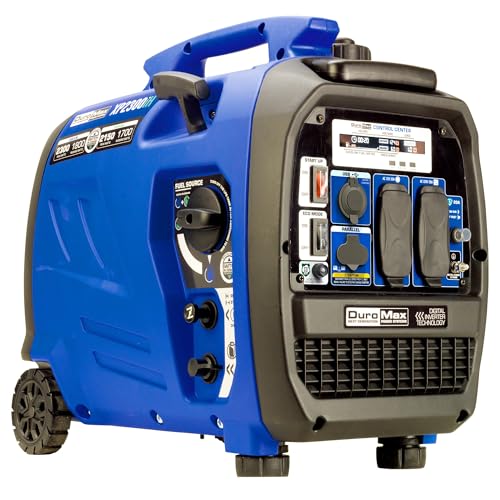
The DuroMax XP2300iH is the dual fuel option in this group, built around an 80cc engine and a power panel. On gasoline it delivers 2300 peak watts and 1800 running watts, and on propane it delivers 2150 peak watts and 1700 running watts, with up to 7 hours at half load on gasoline. A 30-amp RV twist-lock outlet, two household outlets, and USB-A and USB-C ports cover most portable needs, and a wheel and handle kit helps move its 50.6-pound weight. A carbon monoxide alert, parallel capability, and a three-year warranty round out a package for RV owners and home backup users.
Which One Fits Your Situation
Camping in a quiet site
If you camp where noise rules are strict and every pound counts, the WEN 56235iX is the natural fit. At 39 pounds it is the easiest to carry from vehicle to tent, and its compact size leaves more room for other gear. Its runtime covers an evening of lights, charging, and a small fan, and the fuel shut-off feature helps keep the carburetor clean between trips. Pack a small fuel container and you can stretch a weekend without trouble.
RV trips with a 30-amp hookup
RV owners should look first at the A-iPower SUA2301iD or the DuroMax XP2300iH, since both include a 30-amp twist-lock outlet that plugs directly into an RV power cord. The A-iPower is lighter and rolls on its telescoping handle, while the DuroMax adds USB-C and a longer warranty. Either one handles battery charging, lights, and small appliances, and both can pair with a second unit if your needs grow.
Short power outages at home
For brief outages, any of these generators covers the essentials: a refrigerator, a few lights, phone charging, and a small fan. The Pulsar GX230N earns the nod here because its long runtime per tank means fewer refills while you wait for power to return. Keep the generator outdoors, well away from windows and doors, and run an extension cord inside rather than bringing the unit into a garage or enclosed space.
Light workshop use away from an outlet
Woodworkers running a charger, a small fan, or a light-duty tool off-site need steady running watts more than surge capacity. The Pulsar G2319N fits this role well, with enough continuous output for battery chargers and small tools, plus a USB outlet for a phone or work light. Add up the running watts of your tools first, and remember that a saw or compressor motor needs a surge the generator must also cover.
Common Mistakes
Buying on starting watts alone and overloading the generator once several devices run at the same time
Running a generator indoors, in a garage, or near open windows, where exhaust gas can collect
Skipping the break-in steps in the manual, such as the first oil change, and shortening the engine’s life
Forgetting that propane output is lower than gasoline output on dual fuel models
Storing gasoline in the tank for months without stabilizer, then struggling to start the unit
Frequently Asked Questions
How many running watts does a 2300W inverter generator actually provide?
Most 2300W inverter generators provide around 1800 running watts, with 2300 watts available only as a short starting surge. Add up the running watts of everything you plan to use at once, and keep the total below the running figure. Motors such as refrigerator compressors draw extra power when they start, so leave room for one surge at a time.
Can a 2300W inverter generator run a refrigerator?
Yes, a typical full-size refrigerator draws far less than 1800 running watts once it is running, though its compressor needs a surge to start. A 2300W unit handles one refrigerator plus a few lights and phone chargers without trouble. Avoid adding a microwave or a space heater at the same time, since those draw far more power than this class can supply.
Is dual fuel worth it on a generator this size?
Dual fuel is worth it if you store fuel for emergencies or camp where propane is easier to find than gasoline. Propane stores for years without going stale, and a propane tank connects quickly with no pouring or spills. The trade-off is lower output on propane, usually a few hundred watts less than gasoline, so check your load against the propane figures before you rely on it.
How loud is a 2300W inverter generator?
Most models in this class operate in the low fifties decibel range at a standard test distance, which is comparable to normal conversation. Noise rises with load, so a generator running near full output sounds louder than one powering a phone charger. Eco mode lowers engine speed at light loads and keeps noise down, which helps at campsites with quiet hours.
J
JD's Woodworks Editorial Team
We compare specs, warranty terms, long-term owner feedback and street pricing before anything earns a spot. Rankings are never paid.
Affiliate disclosure. As an Amazon Associate we earn from qualifying purchases at no extra cost to you. Prices accurate as of the date shown.
Table saws under the 1500 mark compared: the Grizzly G0771Z and Shop Fox W1837 hybrid saws with cast iron tables, 2 HP motors and T-square fences, specs from their listings.
Table saws for fine woodworking compared: the SawStop Professional Cabinet Saw and Powermatic PM1000, judged on fence precision, table flatness and vibration from listing specs.
Table saw combos explained: saws sold with a stand and accessories in one listing, what to check in the box, and which bundle fits your shop or jobsite.
Compare the best planer digital thickness gauges and digital readout kits for portable planers, with fit, resolution and mounting checks before you buy.
Model table saws for scale modelling and hobby work compared: the precision Proxxon FET 37070 and the compact Saker mini table saw, with specs taken from their Amazon listings.
Three CoreXY 3D printers for product development, each with the architecture stated on its listing: an enclosed multicolor machine, a large-format enclosed model and a heated-chamber model.


 Pulsar GX230N 2300-Watt Portable Inverter Generator
 DuroMax XP2300iH 2300-Watt Dual Fuel Inverter Generator









