As an Amazon Associate I earn from qualifying purchases. This post may contain affiliate links at no extra cost to you.
Cutting metal on a car is a different job from cutting plate in a fab shop. Most of the metal on a vehicle is thin: door skins, floor pans, rocker panels and quarter panels are usually well under an eighth of an inch thick, and they are often painted, primed or rusted. A cutter that is perfect for half-inch plate can blow through a fender too aggressively, warp the panel with excess heat and leave an edge that takes longer to dress than the cut itself. At the other end of the job, frame rails, subframes and suspension mounts ask for more power than a light panel cutter can deliver.
This guide compares four plasma cutters that suit automotive work, from a small 12-amp machine with its own built-in air compressor for delicate sheet metal, through dual-voltage 50-amp units that handle most of what a restoration or repair shop cuts, up to a 65-amp machine for frame sections and heavier chassis work. Each pick was chosen for low-end control, reliable arc ignition on painted or rusty metal, and power options that fit real garage wiring.
As an Amazon Associate, we earn from qualifying purchases.
Quick Picks
Our Short List of 3
Editor’s Choice
Hobart AirForce 12ci
Best for: Panel replacement, patch work and trim cutting in shops without spare compressor capacity
Output: 12 A
Input power: 120V
Air supply: built-in piston air compressor, no external air needed
Match amperage to panel thickness first. Auto body sheet metal is thin, so the low end of a machine’s output range matters as much as the top end. A cutter that turns down to 10 or 15 amps with a fine-cut consumable gives a narrow kerf and puts less heat into the panel, which means less warping to fix later. High maximum amperage only earns its place if you also cut frame rails, brackets or trailer and chassis steel.
Pilot arc ignition earns its keep on cars. Body metal is rarely clean bare steel. A non-touch pilot arc fires the arc without the tip touching the work, so it cuts through paint, primer, undercoating residue and surface rust without grinding the area clean first. Blowback ignition is worth preferring around modern vehicles because it avoids the electrical interference that high-frequency ignition can cause near engine computers and shop electronics.
Dual voltage fits real garages. A machine that runs on a normal 120V outlet is easy to move around a car on a lift or in a driveway, and the same machine on 240V delivers its full output for frame work. Output drops on 120V, so check the reduced range rather than the headline number when you plan panel work on household power.
Plan the air supply before the machine. Every plasma cutter except the Hobart below needs clean, dry compressed air. Moist air shortens consumable life and roughens the cut edge, so a water separator or dryer on the line is close to mandatory in a body shop. If you have no compressor at all, a built-in-compressor model removes the whole problem for light work.
Duty cycle tells you how the machine paces itself. A 60 percent duty cycle at a given amperage means the machine can cut for six minutes out of ten at that setting before it needs to cool. Panel work is mostly short cuts, so duty cycle rarely limits body work, but long frame cuts and repeated bracket work reward a higher figure.
Consumables decide the running experience. Tips and electrodes are wear parts you will replace often. Machines that use common torch patterns, such as AG60 or IPT40 style consumables, are cheaper and easier to keep supplied than machines tied to a rare proprietary stack.
Best Options
Hobart AirForce 12ci
Top Pick
Hobart AirForce 12ci
Best for: Panel replacement, patch work and trim cutting in shops without spare compressor capacity
Output: 12 A
Input power: 120V
Air supply: built-in piston air compressor, no external air needed
Panel replacement, patch work and trim cutting in shops without spare compressor capacity
Watch out for
The 12-amp ceiling is real. It will not handle frame rails or thick brackets, and there is no way to connect an external compressor to stretch its capacity
The AirForce 12ci is built around the exact work that dominates auto body cutting: thin sheet metal. Its 12-amp output is modest on paper, but that is the point. On door skins, floor pans and patch panels, low controlled output with a fine arc gives a clean edge and minimal heat distortion, and the machine is sized for the 1/8-inch-and-under material that makes up most of a car body.
Its defining feature is the internal piston-driven air compressor. There is no external compressor to buy, plumb or listen to, and no air hose dragging across a fender. Plug it into a 120V outlet and it is ready to cut, which makes it a natural fit for small garages, mobile repair work and shops where the main compressor is already busy feeding paint guns and air tools.
Watch out for: The 12-amp ceiling is real. It will not handle frame rails or thick brackets, and there is no way to connect an external compressor to stretch its capacity
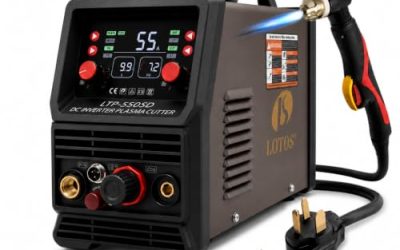
LOTOS LTP5000D
Runner-Up
LOTOS LTP5000D
Best for: Restoration and repair shops that want one machine for panels, floors and light frame work
Restoration and repair shops that want one machine for panels, floors and light frame work
Watch out for
LOTOS sells closely named LT and LTP variants, so confirm the listing shows the pilot arc LTP model before ordering; it also needs a compressor that can hold pressure during long cuts
The LTP5000D has been a fixture of small body and restoration shops for years because it covers the whole middle of automotive work in one dual-voltage box. Output adjusts from 10 to 50 amps, so the same machine trims a patch panel at low settings and cuts a subframe or trailer steel at full output on 240V. The non-touch pilot arc fires through paint and rust, which saves real time when the job is cutting out a rotted floor section rather than working with fresh sheet.
On 240V power the current listing rates it for a 5/8-inch clean cut with 3/4-inch severance, far beyond anything on a car body, while on 120V it still handles panel and light structural work at reduced output. LOTOS supplies an air filter regulator fitted to the machine, and setup guidance points to roughly 65 to 70 PSI at the regulator for general cutting.
Watch out for: LOTOS sells closely named LT and LTP variants, so confirm the listing shows the pilot arc LTP model before ordering; it also needs a compressor that can hold pressure during long cuts
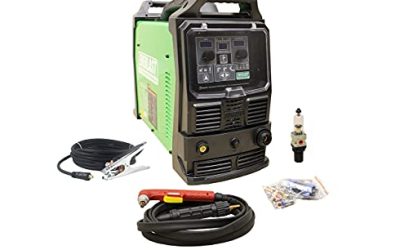
bestarc BTC500DP
bestarc BTC500DP
Best for: Home restorers and smaller shops that want pilot arc cutting with the air setup done for them
Home restorers and smaller shops that want pilot arc cutting with the air setup done for them
Watch out for
The included torch lead and ground lead are on the shorter side for walking around a full-size vehicle, so plan the machine’s position before you begin a long cut
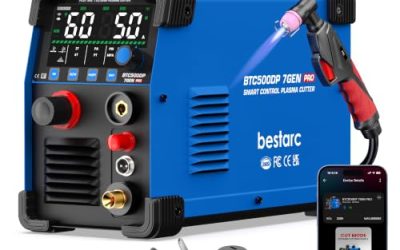
The BTC500DP is a 50-amp pilot arc machine aimed at buyers who want guided setup. A large digital display shows settings at a glance, and the built-in air sensor reports air pressure in real time, which removes the most common cause of poor cuts for new users: running the torch at the wrong pressure. The regulator is built in, the torch is an AG60P pilot arc pattern with widely available consumables, and 2T/4T trigger modes plus adjustable post flow cover both short panel cuts and longer runs.
For body work, the useful details are the low end of its range and the pilot arc itself. It fires without contact, so it cuts painted and lightly rusted sheet without prep, and the maker rates it for a 1/2-inch clean cut, which is several times thicker than any panel you will meet. Dual voltage input means it runs from a 110V outlet for panel work and steps up on 220V when brackets and mounts are on the list.
Watch out for: The included torch lead and ground lead are on the shorter side for walking around a full-size vehicle, so plan the machine’s position before you begin a long cut
YESWELDER CUT-65DS
YESWELDER CUT-65DS
Best for: Frame and chassis repair, unibody sectioning and shops that also gouge out old welds
Output: 15 to 45 A on 110V, 15 to 65 A on 220V
Input power: dual voltage 110/220V
Arc ignition: blowback non-touch pilot arc, no high-frequency interference
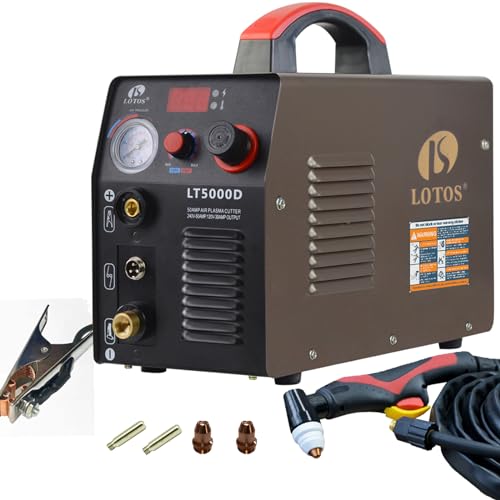
The CUT-65DS is the heavy end of this list, built for the parts of a car that are not thin: frame rails, subframes, crossmembers and the welds that hold them. Output runs from 15 to 65 amps on 220V power, and the blowback pilot arc ignition fires without high-frequency interference, which is the safer behaviour around vehicle electronics and shop computers. A dedicated gouging mode is genuinely useful in repair work for removing old welds and failed previous repairs without switching tools.
The listing rates clean cuts at 5/8 inch on 220V and 5/16 inch on 110V, with severance up to 63/64 inch on 220V, and the 60 percent duty cycle at full output supports the longer cuts frame work involves. Two digital displays show voltage and amperage, post flow adjusts from 5 to 20 seconds to cool consumables after each cut, and the IPT40 torch uses common consumables. Turned down on 110V, it still behaves well enough for bracket and patch work, though the smaller machines above are easier to live with for pure panel cutting.
Watch out for: It is more machine than panel work needs, and it asks for a healthy air supply, around 6 CFM class, to hold cut quality on long runs
Which One Fits
You mostly replace panels, floors and rocker sections. The Hobart AirForce 12ci is the most focused tool here. Its low output suits thin sheet, and the built-in compressor means it is ready wherever there is a wall outlet.
You restore whole cars and cut a bit of everything. The LOTOS LTP5000D covers the widest range of everyday automotive cutting in one dual-voltage machine, from patch panels to light structural steel.
You are setting up on a budget and want setup help. The bestarc BTC500DP’s air sensor and display remove the guesswork that ruins first cuts, and its consumables are cheap and easy to find.
You do frame, chassis or heavy repair work. The YESWELDER CUT-65DS brings the output, duty cycle and gouging mode that rails and crossmembers demand, while still turning down for bracket work.
Common Mistakes
Buying maximum amperage for sheet metal. A big machine run carelessly puts excess heat into thin panels and warps them. For body work, low-end control and the right fine-cut consumable matter more than headline output.
Feeding the torch wet air. Compressor tanks collect water, and that moisture eats electrodes and leaves a rough, drossy edge. Drain the tank and run a separator, especially in humid shops.
Cutting at full travel speed on rust. Pilot arc fires through rust and paint, but heavy scale still slows the cut. Rushing leaves uncut bridges that tear the panel edge when the piece comes free.
Ignoring what is behind the panel. Fuel lines, brake lines, wiring looms and sound deadening often sit just behind body sheet metal. Check the back side, move or shield lines, and disconnect the battery before cutting near harnesses.
Using one tip for every job. A worn or oversized tip widens the kerf and roughens the edge. Match the consumable to the amperage you are actually running, and swap tips when the orifice goes oval.
Expecting full output from a household outlet. Dual voltage machines reduce output on 110 or 120V. Panel work is fine at that level, but frame cuts planned around the headline rating will disappoint until the machine is on 220 or 240V.
FAQ
Can a plasma cutter cut car body panels without warping them?
Yes, with the amperage turned down to suit the sheet thickness, a fine-cut consumable and a steady travel speed. Most warping comes from running far more power than thin panel steel needs, or from lingering in one spot. Short, planned cuts with cooling pauses keep distortion to a minimum.
Do I need an air compressor for a plasma cutter?
Most machines need an external compressor supplying clean, dry air. The exception in this guide is the Hobart AirForce 12ci, which carries a built-in piston compressor and runs from a 120V outlet alone, at the cost of a 12-amp output ceiling suited to sheet metal rather than frame steel.
Why does pilot arc matter for automotive work?
Car metal is usually painted, primed or rusted, and a non-touch pilot arc fires through those surfaces without grinding them clean first. It also keeps the tip off the work, which extends consumable life. Blowback pilot arc designs add a second benefit: no high-frequency interference near vehicle electronics.
What plasma cutter size suits frame work as well as panels?
A dual-voltage machine in the 50 to 65 amp class covers both ends. Run it on household power at reduced output for panels and brackets, and on 220 or 240V for frame rails and crossmembers. Below that class, frame cutting gets slow; above it, you pay for capacity a car rarely needs.
Final Verdict
For dedicated panel and patch work, the Hobart AirForce 12ci is the most specialised tool here: low controlled output, no compressor to manage and clean cuts in the thin steel that makes up a car body. For the broad middle of automotive cutting, the LOTOS LTP5000D remains the dependable all-rounder, and the bestarc BTC500DP matches that formula while guiding air setup for newer users. When the work turns to frames and chassis, the YESWELDER CUT-65DS is the pick, with the output, duty cycle and gouging mode that heavier repair demands. Match the machine to the thickest metal you cut regularly, keep the air dry, and any of these four will handle automotive work well.
J
JD's Woodworks Editorial Team
We compare specs, warranty terms, long-term owner feedback and street pricing before anything earns a spot. Rankings are never paid.
Affiliate disclosure. As an Amazon Associate we earn from qualifying purchases at no extra cost to you. Prices accurate as of the date shown.
Find the best steel plasma cutter for your shop. Compare four proven machines for clean cuts in mild steel, from a portable 12-amp unit to a 60-amp workhorse.
Best high frequency TIG welder guide: four HF-start AC/DC welders compared on output, duty cycle, dual voltage, torch, foot pedal and warranty for home shops.
Find the best gas shielded MIG welder for your shop. Compare four gas MIG machines by output range, duty cycle, voltage, weight, and included gas hardware.
Find the best 110 volt plasma cutter for home shops: dual-voltage 50-amp and 55-amp picks compared on cut capacity, pilot arc and air needs before you buy.
Compare deep cut portable band saws in the Milwaukee 6230 class: the 6232-21 kit, DEWALT DWM120K and two cordless rivals, by capacity, speed and weight.
Compare the best small plasma cutter options for garages and small shops with dual-voltage 50-amp models, pilot arc starts, and clean-cut limits explained.



 YESWELDER CUT-65DS