Best Small Plasma Cutter: 3 Compact Picks for Shops
Compare the best small plasma cutter options for garages and small shops with dual-voltage 50-amp models, pilot arc starts, and clean-cut limits explained.
Compare the best small plasma cutter options for garages and small shops with dual-voltage 50-amp models, pilot arc starts, and clean-cut limits explained.
As an Amazon Associate I earn from qualifying purchases. This post may contain affiliate links at no extra cost to you.
A small plasma cutter solves a problem that a grinder handles slowly and a saw handles awkwardly: cutting sheet, plate, tube, and rusty brackets in place, in a shop where floor space and storage are already spoken for. Instead of a large industrial unit on a dedicated cart, a compact inverter cutter can sit on a bench, move to a vehicle or fence line, and go back on a shelf when the job is done. For woodshops that also fabricate steel bases, brackets, and fixtures, that footprint matters as much as cutting capacity.
This guide focuses on compact, portable 50-amp class machines that run on dual voltage, so lighter work can start on a standard household circuit and thicker work can move to a higher-voltage circuit when one is available. All three picks below are the same type of tool, a small handheld plasma cutter, and each one is judged on the same points: clean-cut capacity rather than the larger severance figure, pilot arc starting, air requirements, controls, and how easily the unit fits into a small shop routine.
As an Amazon Associate, we earn from qualifying purchases.
How to Choose a Small Plasma Cutter
Start with clean-cut thickness, not the maximum figure
Every listing shows two thickness numbers, and they mean different things. The clean-cut figure is the thickness the machine can cut with a reasonably smooth edge at a practical travel speed. The maximum or severance figure is thicker, slower, and rougher, and it is meant for separating a piece when edge quality does not matter. Buyers who size a machine by the severance number often end up disappointed on the material they cut every week. A safer approach is to list the thickest steel, stainless, or aluminum cut regularly, then choose a machine whose clean-cut rating covers that thickness with a little room to spare. Occasional thicker pieces can still be severed, but daily work should sit inside the clean-cut range.
Understand what 50 amps means on two voltages
The three machines in this guide are 50-amp class cutters, but full output depends on input power. On a 110-volt household circuit, output and duty cycle are reduced, and cuts are slower and thinner. On a 220-volt circuit, the same machine can deliver its stated output and hold an arc longer before resting. Dual voltage is therefore a flexibility feature, not a promise that both inputs perform identically. Before ordering, check the plug type, the breaker the manual calls for, and whether an adapter is included. Any new higher-voltage receptacle should be installed by a licensed electrician, and extension cords, if used at all, should be short and heavy enough for the load described in the manual.
Pilot arc, touch start, and cutting painted or rusty metal
A pilot arc starts the arc without the torch tip touching the workpiece, which helps on painted, rusty, or coated metal and on expanded metal and mesh, where a touch-start torch can lose contact at every gap. Two of the picks below use pilot arc designs, and the third uses a non-touch pilot arc with a built-in air regulator. Pilot arc is not a substitute for preparation, since heavy scale, oil, and loose rust still produce a rougher edge and wear consumables faster, but it does make starts more reliable on the imperfect metal that repair and fabrication work usually involves. Buyers who mostly cut clean new sheet may care less about this feature, while buyers cutting salvage, trailers, and farm equipment usually care a great deal.
Air supply is half the system
A plasma cutter does not work alone. It needs a separate air compressor that can deliver the pressure and flow stated in the manual, plus reasonably dry air. A compressor that is too small will cycle constantly, pressure will sag mid-cut, and the edge will show it. Moisture is the other quiet problem, because wet air shortens electrode and nozzle life and can make starts inconsistent. A regulator, a moisture separator where the manual recommends one, and a habit of draining the compressor tank all protect cut quality. One pick below builds the regulator into the machine, which simplifies setup, while the other two rely on the regulator arrangement described in their listings and manuals. In every case, match the compressor to the cutter before assuming a poor result is the cutter’s fault.
Duty cycle, post flow, and controls that help beginners
Duty cycle describes how long a machine can cut at a given amperage within a ten-minute period before it needs to cool. Small cutters are built for intermittent fabrication cuts rather than continuous production cutting, so short cuts, layout pauses, and repositioning often keep real work inside the rating. Post flow keeps air moving after the trigger is released to cool the torch and consumables, which supports consumable life. Trigger modes matter too. A 2T mode cuts while the trigger is held, which suits short cuts, while a 4T mode starts with one press and stops with another, which reduces hand fatigue on longer cuts. A large, readable display for amperage and air pressure also helps, especially for a first-time buyer who is still learning which settings suit each thickness.
Size, weight, and storage in a small shop
Small in this guide means the machine can be carried by its handle, stored on a shelf or under a bench, and set up without rearranging the shop. Torch lead length, ground clamp reach, and where the air hose connects affect whether that compact promise holds in practice. Plan a cutting area with a metal surface or stand, clearance for sparks, and a fire extinguisher within reach. Plasma cutting throws hot sparks and molten metal, so eye protection rated for plasma work, gloves, and protective clothing are required, and cutting should never happen near sawdust piles, finishes, solvents, or other flammable material, a point that matters especially in a woodworking shop. Ventilation also matters, and galvanized or coated metal needs particular care because of the fumes it can produce.
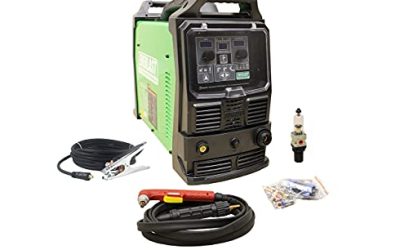
The bestarc BTC500DP 7GEN is the most feature-complete small cutter in this guide for a buyer who wants clear feedback while learning. Its listing describes a 50-amp pilot arc machine with dual-voltage 110-volt and 220-volt input, a large LED display, and an air sensor. The stated capacity is a one-half inch clean cut and a three-quarter inch maximum cut, which puts regular work on sheet, angle, and plate up to one-half inch inside the clean range, with thicker separation cuts available occasionally. Post flow, mesh cutting support, and 2T and 4T trigger modes round out a control set aimed at beginners and do-it-yourself fabricators.
In a small shop, this model suits a bench-based routine: set it near the compressor, cut brackets, tabs, and sheet parts, then store it under the bench. Its dual-voltage input means a buyer can begin on a household circuit for thinner material and use a higher-voltage circuit later for the full clean-cut range. Buyers who need to cut thicker plate all day should look at a larger class of machine instead, because this unit is built around portability and intermittent cuts rather than production volume.
Who It Suits
This cutter suits beginners and small-shop fabricators who want a readable display, pilot arc starts on imperfect metal, and enough clean-cut capacity for common bracket and plate work. It is a weaker fit for buyers who routinely cut plate thicker than its clean-cut rating or who need a built-in air regulator, since air regulation is handled outside the headline feature set here.
The ARCCAPTAIN CUT50 takes a simpler route to the same job: a 50-amp dual-voltage inverter cutter with a large LED display, a one-half inch clean cut, and a two-thirds inch maximum cut in its full listing title. That clean-cut figure matches the bestarc model above, while the maximum figure is a little lower, so buyers should compare these two machines mainly on controls, included accessories, and current listing details rather than on a headline gap in everyday capacity. For sheet, tube, angle, and repair plate, the CUT50 covers the thickness range most home and small-shop fabrication actually uses.
The listing describes DC inverter IGBT technology, post flow, and 2T and 4T operation, the same basic control pattern as the bestarc. Inverter design is what keeps a 50-amp class cutter in a portable body, and post flow supports torch cooling after each cut. The large display helps a new operator set amperage deliberately instead of estimating, and dual-voltage input keeps the machine useful in a garage with only household power for light work, as well as in a shop with a higher-voltage circuit for thicker cuts.
Portability is the main reason to choose this model. It is positioned as a light, carry-to-the-job machine for farm, vehicle, and garage repairs, where the work cannot always come to a fixed cutting table. A buyer should confirm the torch, ground clamp, air connection parts, and starter consumables listed at the time of ordering, and should budget for replacement consumables from the start.
Who It Suits
This cutter suits buyers who want a straightforward, portable 50-amp machine for garage, farm, and repair cutting, with dual voltage and a clear display and without paying attention to extra modes they will not use. It is less suited to buyers whose work is mostly thick plate, or who want the air-sensor feedback offered by the bestarc model above.
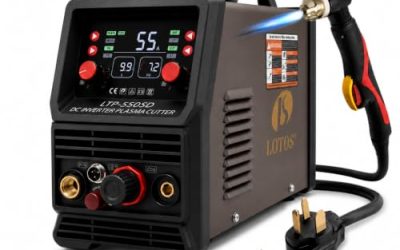
The S7 CUT-50 is the most compact pick by stated dimensions, at 16 by 6 by 10 inches, with a listed weight of 22.2 pounds. Its Amazon listing describes a 50-amp cutter with 110-volt and 220-volt dual voltage, non-touch pilot arc starting, clean cuts up to 20 millimeters, a built-in air regulator, and IGBT inverter technology, aimed at home and do-it-yourself metal cutting. The built-in regulator is the distinguishing feature here, because it puts air adjustment on the machine itself and simplifies the connection between compressor and cutter.
Non-touch pilot arc starting serves the same purpose as on the bestarc model: the arc can start without dragging the tip on the workpiece, which helps on coated surfaces and uneven material. The listing’s clean-cut figure is stated in millimeters rather than as separate clean and maximum inch figures, so buyers should read it conservatively and test settings on scrap of the same thickness before committing to a finished part, as with any cutter. The narrow body suits a crowded bench or a shelf, although at 22.2 pounds it is a carry-short-distances machine rather than the lightest option in this class.
Who It Suits
This cutter suits home and small-shop buyers who want the narrowest body in this guide and air regulation built into the machine, for occasional cutting of sheet, brackets, and fixtures. It is a weaker fit for buyers who want separate clean-cut and maximum-cut figures stated in inches, or who need to carry a cutter long distances by hand.
Frequently Asked Questions
How thick can a small 50-amp plasma cutter cut cleanly?
In this guide, the 50-amp models state a clean cut of one-half inch or, for the S7 model, clean cuts up to 20 millimeters as titled. Clean cut means a usable edge at a practical speed, which is different from a thicker maximum or severance cut. Thinner material cuts faster and with a narrower kerf, while material near the clean limit needs a slower travel speed, correct air pressure, and fresh consumables. For regular work, choose a machine whose clean-cut rating covers the thickest material cut often, and treat anything above that figure as an occasional separation cut rather than a daily expectation.
Does a small plasma cutter need an air compressor?
Yes. All three machines in this guide are air plasma cutters, so each one needs a separate compressor that meets the pressure and flow requirements in its manual. The S7 CUT-50 includes a built-in air regulator, which controls pressure at the machine, but it does not replace the compressor itself. Dry air matters as well, because moisture shortens consumable life and can cause inconsistent starts. Before buying any cutter, compare the compressor’s rated output with the manual, drain the tank regularly, and plan for a moisture separator if the manual recommends one for the setup.
Can a small plasma cutter run on a household outlet?
Yes, for lighter work, because all three picks are dual-voltage machines that accept 110-volt input as well as 220-volt input. The limit is output: on the lower voltage, available amperage, duty cycle, and clean-cut thickness are reduced compared with the higher-voltage circuit. Thin sheet, light angle, and small brackets are realistic household-circuit work, while repeated cuts near the one-half inch clean limit belong on the higher-voltage input. Check the plug, adapter, and breaker requirements in the manual before the first cut, and have any new receptacle installed by a licensed electrician.
What safety steps matter most when plasma cutting in a woodshop?
Keep the cutting area clear of sawdust, wood offcuts, finishes, solvents, and anything else that can ignite, because plasma cutting produces sparks and molten metal that travel farther than many first-time users expect. Use eye protection rated for plasma cutting, gloves, and protective clothing, work with ventilation, and keep a fire extinguisher within reach. Set the workpiece on a metal surface or cutting stand, clamp it where possible, and watch the area after cutting, since hot edges and slag stay dangerous after the arc stops. Coated and galvanized metal needs extra care because of fumes, so follow the manual’s ventilation guidance for those materials.
Final Verdict
For most small shops, the bestarc BTC500DP 7GEN is the easiest first choice in this guide, because it combines a one-half inch clean cut, pilot arc starting, a large display with an air sensor, and flexible 2T and 4T control in one compact dual-voltage machine. The ARCCAPTAIN CUT50 is the close alternative for buyers who want the same one-half inch clean-cut class in a simpler, highly portable package, and its current listing details are worth comparing directly before ordering. The S7 CUT-50 earns its place for buyers who value a narrow body and a built-in air regulator, accepting a millimeter-based capacity statement and a heavier listed weight.
None of these machines replaces a larger production cutter, and none should be bought on its maximum thickness figure alone. The right choice is the one whose clean-cut rating covers the material cut most often, whose voltage and plug match the shop, and whose air demand the existing compressor can actually meet. Matched that way, a small plasma cutter adds fast, flexible metal cutting to a compact shop without taking over the room, and it earns its shelf space on brackets, fixtures, repairs, and sheet work throughout the year.
Product and ASIN Reference
Product
ASIN
bestarc BTC500DP 7GEN Pilot Arc Plasma Cutter
B0C6G3SQ3W
ARCCAPTAIN CUT50 Plasma Cutter
B0B5N7K2DJ
S7 CUT-50 Plasma Cutter
B08L889WBF
J
JD's Woodworks Editorial Team
We compare specs, warranty terms, long-term owner feedback and street pricing before anything earns a spot. Rankings are never paid.
Affiliate disclosure. As an Amazon Associate we earn from qualifying purchases at no extra cost to you. Prices accurate as of the date shown.
Find the best steel plasma cutter for your shop. Compare four proven machines for clean cuts in mild steel, from a portable 12-amp unit to a 60-amp workhorse.
Best high frequency TIG welder guide: four HF-start AC/DC welders compared on output, duty cycle, dual voltage, torch, foot pedal and warranty for home shops.
Find the best gas shielded MIG welder for your shop. Compare four gas MIG machines by output range, duty cycle, voltage, weight, and included gas hardware.
Find the best 110 volt plasma cutter for home shops: dual-voltage 50-amp and 55-amp picks compared on cut capacity, pilot arc and air needs before you buy.
Compare deep cut portable band saws in the Milwaukee 6230 class: the 6232-21 kit, DEWALT DWM120K and two cordless rivals, by capacity, speed and weight.

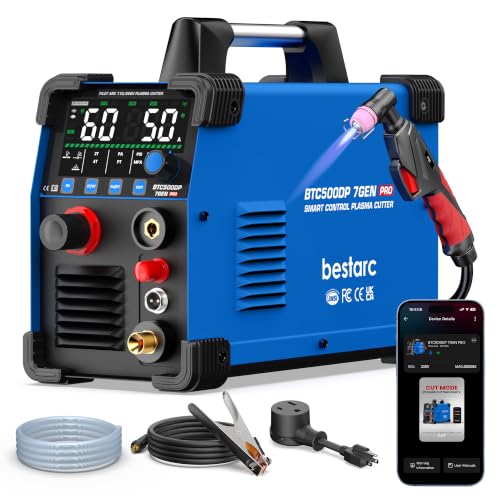 bestarc BTC500DP 7GEN Pilot Arc Plasma Cutter
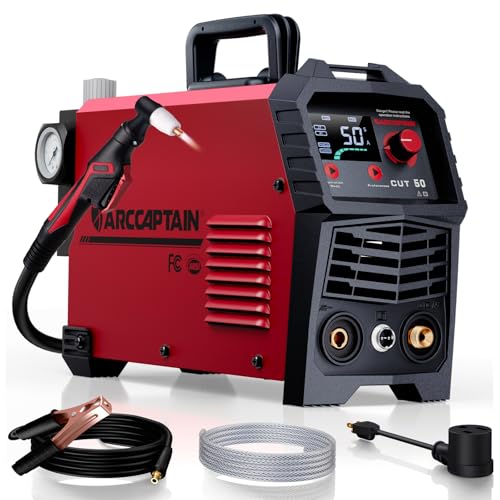 ARCCAPTAIN CUT50 Plasma Cutter
 S7 CUT-50 Plasma Cutter