Key takeaways
- Best high frequency TIG welder guide: four HF-start AC/DC welders compared on output, duty cycle, dual voltage, torch, foot pedal and warranty for home shops.
What's inside
As an Amazon Associate I earn from qualifying purchases. This post may contain affiliate links at no extra cost to you.
A high frequency TIG welder starts the arc without touching the tungsten to the work, which keeps the tungsten sharp and the arc steady on thin metal and aluminum. The AHP AlphaTIG 200X leads this guide with 200 amps of AC/DC output, dual-voltage input, and a 60 percent duty cycle at full output. Every welder below uses high-frequency start and runs on both 110-volt and 220-volt circuits, so the choice comes down to output, duty cycle, and included accessories.
High-frequency start, often written as HF start, is the feature that separates a smooth TIG setup from a frustrating one. Instead of scratching the tungsten across the metal or lifting it off the work to strike an arc, the machine sends a high-frequency signal through the torch that ionizes the shielding gas and jumps the gap on its own. The tungsten stays clean, the arc starts in the same place every time, and thin material does not get gouged by a scratch start. For anyone learning TIG or welding aluminum, that clean start matters on every single bead.
Our top pick: AHP AlphaTIG 200X. Runner-up: Lincoln Electric Square Wave TIG 200. This guide compares published specifications only: amperage, duty cycle, input voltage, AC/DC capability, pulse controls, included torch and foot pedal, weight, and warranty, all taken from manufacturer listings and Amazon product pages. No machine here was chosen for its brand name alone, and every pick below is a genuine high-frequency TIG welder, not a scratch-start unit or a MIG-only machine with a TIG torch added on.
At a Glance
| Product | Best for | Key specification |
|---|---|---|
| AHP AlphaTIG 200X | Best overall for home shops | 200A AC/DC, HF start, 60 percent duty cycle at 200A |
| Lincoln Electric Square Wave TIG 200 | Best premium build and support | 200A AC/DC, HF start, dual voltage, foot pedal included |
| Everlast PowerTIG 185DV | Best portable dual-voltage unit | 185A AC/DC, HF start, 35 percent duty cycle at 185A |
| YESWELDER TIG-200P ACDC PRO | Best value with large display | 200A AC/DC, HF start, large LED display, foot pedal included |
How to Choose
1. Confirm True High-Frequency Start
Not every TIG welder starts the same way. High-frequency start uses a high-voltage, high-frequency signal to establish the arc across a small gap, so the tungsten never touches the workpiece. Lift-arc start, by contrast, requires touching the tungsten to the metal and lifting it away, which can contaminate the tungsten and the weld. Scratch start is the crudest method and belongs on basic stick machines, not on a TIG setup. When comparing listings, look for the words high frequency or HF start in the specification list. All four machines in this guide list high-frequency start as a standard feature, which is why they are here.
2. Choose AC/DC Output If Aluminum Is on the List
Aluminum welding needs alternating current. The AC side of the output breaks up the oxide layer on aluminum while the DC side handles steel and stainless. A DC-only TIG welder can weld steel and stainless well, but it cannot weld aluminum in any practical sense. Every pick in this guide is an AC/DC machine, so each one covers steel, stainless steel, and aluminum. If your work is steel only, a DC-only machine could cost less, but the AC/DC machines below keep the aluminum door open without requiring a second welder later.
3. Match Amperage and Duty Cycle to Your Thickest Metal
Amperage sets the thickest metal a machine can weld in a single pass, and duty cycle sets how long it can hold that output before it must cool down. A 200-amp machine with a 60 percent duty cycle at 200 amps can weld at full output for six minutes out of every ten, which is generous for home shop work. The AHP AlphaTIG 200X carries exactly that rating, while the Everlast PowerTIG 185DV is rated at 35 percent duty cycle at its full 185 amps. For sheet metal, tubing, and brackets under one quarter inch, any of these four machines has ample output. For plate work near three eighths of an inch, the 200-amp machines and their duty cycle ratings become the deciding factor.
4. Check Dual-Voltage Input
A dual-voltage welder runs on a standard 110-volt household circuit and on a 220-volt shop circuit, usually with an adapter cable included in the box. On 110 volts, output is limited, often to around 80 to 140 amps depending on the machine, which is still enough for thin sheet and small repair jobs. On 220 volts, the machine reaches its full rated output. All four picks here accept both voltages. Before ordering, confirm that your shop has a 220-volt receptacle of the right type, or plan the work you can do on 110 volts until one is installed.
5. Weigh Pulse Control for Thin Material
Pulse control alternates the welding current between a high peak and a low background current several times per second. The peak current penetrates the metal while the background current lets the puddle cool slightly, which reduces heat input and distortion on thin sheet and stainless. It also helps when welding in position or joining metals of different thicknesses. The AHP AlphaTIG 200X, the Everlast PowerTIG 185DV, and the YESWELDER TIG-200P ACDC PRO all list pulse control in their published specifications. Pulse is a helpful feature rather than a requirement, and a welder without it can still produce sound welds with good technique and a foot pedal.
6. Look at the Torch, Foot Pedal, and Included Accessories
A TIG welder is only as usable as the gear in the box. A foot pedal lets the operator ramp amperage up and down during the weld, which is the standard way to control heat on aluminum and stainless. A flex-head torch reaches into tight joints that a rigid torch cannot. A gas regulator and hose connect the machine to the argon cylinder, and a ground clamp completes the circuit. The AHP, Lincoln, Everlast, and YESWELDER machines in this guide all ship with a torch, a foot pedal, a regulator, and cables in the listed package. Tungsten electrodes and filler rod are usually not included, and an argon cylinder is always a separate purchase.
7. Consider Weight, Size, and Warranty
A home shop welder often moves between a bench, a welding cart, and a job outside the shop. The YESWELDER TIG-200P ACDC PRO weighs about 31 pounds, the Everlast PowerTIG 185DV about 40 pounds, the Lincoln Square Wave TIG 200 about 46 pounds, and the AHP AlphaTIG 200X about 50 pounds. Lighter machines are easier to carry, while heavier machines often carry larger transformers and longer duty cycles. Warranty length also varies: Everlast lists a five-year warranty on the PowerTIG 185DV, AHP lists a three-year warranty on the AlphaTIG 200X, and Lincoln and YESWELDER list their own warranty terms on their product pages. Read the warranty terms on the listing before ordering so the coverage period and conditions are clear.
Our Picks
AHP AlphaTIG 200X — ASIN B00REX6USW
The AHP AlphaTIG 200X is a 200-amp AC/DC TIG and stick welder with high-frequency start, pulse control, and dual-voltage 110-volt and 220-volt input. Its published duty cycle is 60 percent at 200 amps for TIG and 35 percent at 155 amps for stick, and the manufacturer lists capacity for one quarter inch aluminum and three eighths inch mild steel. The control panel uses knobs for start amps, main amps, end amps, and pulse frequency, with a digital display for the set amperage. The listed package includes a TIG torch, a foot pedal, a ground clamp, an electrode holder, and a gas regulator, and AHP lists a three-year warranty.
Best for: Home shops that want the strongest combination of output, duty cycle, and included accessories at this size.
Consideration: At about 50 pounds it is the heaviest machine in this guide, so plan on a welding cart if it will move around the shop often.
Lincoln Electric Square Wave TIG 200 — ASIN B017DQ8DJ8
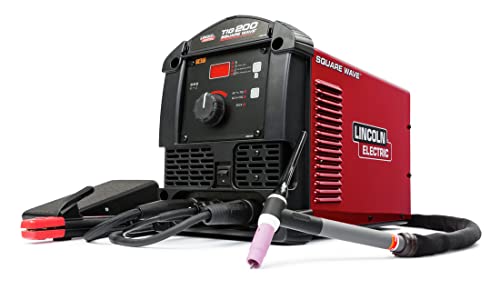
The Lincoln Electric Square Wave TIG 200 is a 200-amp AC/DC TIG and stick welder with high-frequency start and dual-voltage input for 120-volt and 230-volt circuits. Its published specification lists a 25 percent duty cycle at 200 amps, AC balance and AC frequency controls for aluminum work, and a foot pedal in the listed package. The machine weighs about 46 pounds and ships with a TIG torch, a foot pedal, a regulator, and cables. Lincoln Electric is a long-established welding brand with a broad service and parts network, which matters when a machine needs support years after purchase.
Best for: Welders who want a premium-brand machine with established support and a straightforward control layout.
Consideration: The published duty cycle at full output is lower than the AHP and YESWELDER picks, so long beads at maximum amperage need more cooling pauses.
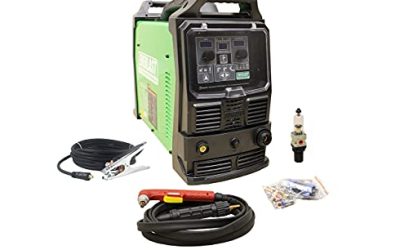
Everlast PowerTIG 185DV — ASIN B00AWU739O
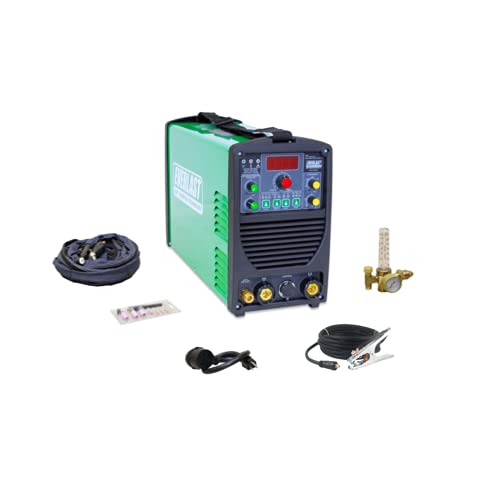
The Everlast PowerTIG 185DV is a 185-amp AC/DC TIG and stick welder with high-frequency start, pulse control, and dual-voltage 110-volt and 220-volt input. Its published duty cycle is 35 percent at 185 amps, and the inverter design keeps the machine to about 40 pounds, making it the most portable of the established-brand picks here. The control panel uses a digital display with knobs for the main welding settings, and the listed package includes a TIG torch, a NOVA variable-amp foot pedal, a ground clamp, and a gas regulator. Everlast lists a five-year warranty, the longest coverage among the four picks in this guide.
Best for: Portable shop work, repair jobs, and welders who want long warranty coverage in a dual-voltage machine.
Consideration: Maximum output is 185 amps rather than 200, so very thick aluminum near the top of the range is better left to a 200-amp machine.
YESWELDER TIG-200P ACDC PRO — ASIN B0C7GMHX18
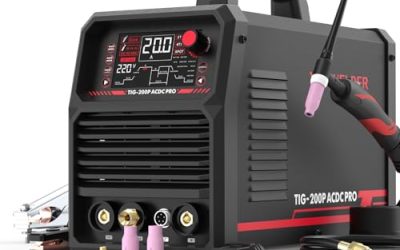
The YESWELDER TIG-200P ACDC PRO is a 200-amp AC/DC TIG and stick welder with high-frequency start, pulse control, and dual-voltage 110-volt and 220-volt input. Its published specifications list a large LED display, a foot pedal in the package, and a weight of about 31 pounds, making it the lightest 200-amp machine in this guide. The control layout uses push-and-turn controls for amperage, pulse, and AC settings, and the listed package includes a TIG torch, a foot pedal, a ground clamp, and a gas hose. The machine handles steel, stainless steel, and aluminum, and its compact size suits benches and small shops where space is tight.
Best for: Small shops and first-time AC/DC TIG buyers who want full 200-amp output in the lightest package here.
Consideration: The brand has a shorter track record than Lincoln or Everlast, so confirm the warranty terms and included accessories on the listing before ordering.
Which One Is Right for You?
Start with the metal and the thickness you weld most. If aluminum brackets, thin stainless, and general fabrication fill your week, the AHP AlphaTIG 200X gives the strongest mix of 200-amp output, a 60 percent duty cycle at full output, and a complete accessory package. If brand support and a simple, proven layout matter more than maximum duty cycle, the Lincoln Electric Square Wave TIG 200 is the premium choice, and its AC balance and frequency controls give fine control over aluminum cleaning action.
If the welder travels to repair jobs or moves between benches, weight becomes the deciding factor. The Everlast PowerTIG 185DV at about 40 pounds pairs portability with a five-year warranty, while the YESWELDER TIG-200P ACDC PRO at about 31 pounds is the lightest 200-amp machine here and the easiest to carry. For a first AC/DC TIG machine on a tight bench, the YESWELDER is the practical pick. For a machine that stays on a cart and runs long beads on thick material, the AHP leads. Match the machine to the work first, then let weight and warranty break the tie.
Frequently Asked Questions
What does high frequency mean on a TIG welder?
High frequency refers to the high-frequency, high-voltage signal the machine uses to start the arc. The signal ionizes the argon shielding gas between the tungsten and the workpiece, so the arc jumps the gap without the tungsten touching the metal. This is called HF start, and it keeps the tungsten clean and the arc start consistent.
Can a high frequency TIG welder weld aluminum?
Yes, provided the machine has AC output. All four welders in this guide are AC/DC machines, so each one welds aluminum as well as steel and stainless steel. Aluminum welding also needs pure argon shielding gas and a clean, oxide-free joint, so preparation matters as much as the machine.
Do I need 220-volt power for a high frequency TIG welder?
No, all four machines in this guide run on 110-volt household circuits as well as 220-volt shop circuits. Output on 110 volts is limited, usually enough for thin sheet and small repairs, while full rated output needs a 220-volt circuit. Check the receptacle type on the listing and match it to your shop before ordering.
Does high-frequency start wear out the tungsten?
High-frequency start is gentler on tungsten than scratch start because the tungsten never touches the workpiece. The tungsten still wears during welding and needs periodic regrinding to a clean point, especially after accidental contact with the puddle. A dedicated tungsten grinder or a clean bench grinder wheel keeps the point sharp.
What gas do I need for TIG welding with these machines?
Pure argon is the standard shielding gas for TIG welding steel, stainless steel, and aluminum with these machines. The gas flows through the regulator and hose included in the listed package and out of the torch nozzle around the arc. An argon cylinder is a separate purchase, and a flow rate in the range listed in the machine manual covers most home shop work.
Bottom Line
A high frequency TIG welder earns its place in a home shop the first time the arc lights cleanly on thin aluminum without a scratch mark. The AHP AlphaTIG 200X is the strongest all-around choice in this guide, with 200 amps of AC/DC output, a 60 percent duty cycle at full output, pulse control, and a complete package. The Lincoln Electric Square Wave TIG 200 suits welders who value established brand support, the Everlast PowerTIG 185DV suits portable work with its long warranty, and the YESWELDER TIG-200P ACDC PRO suits small shops that need full output in the lightest machine here. Any of the four starts the arc without touching the tungsten, and that clean start is the feature that defines this category.
Disclosure: As an Amazon Associate, this site earns from qualifying purchases.
Related guides
More from Amazon
Programs that pair well with the guide above. Offers and eligibility are set by Amazon and may change.
A free business account with business pricing and bulk-buying tools for work, shop or home office.
Create a business accountFree shipping on eligible items, Prime Video and more. Eligible new members can start with a free trial.
Start a Prime free trialAudiobooks and podcasts to listen to on the go. Eligible new members can start with a free trial.
Try Audible freeAd-free music streaming. Eligible new subscribers can start with a free trial.
Try Music Unlimited freeAs an Amazon Associate we earn from qualifying purchases.