3 Best AC TIG Welders for Aluminum Work (November 2026)
Compare three AC/DC TIG welders with pulse and HF start for aluminum work, from a dual-voltage 200A machine to a 250A shop unit with foot-pedal control.
Compare three AC/DC TIG welders with pulse and HF start for aluminum work, from a dual-voltage 200A machine to a 250A shop unit with foot-pedal control.
As an Amazon Associate I earn from qualifying purchases. This post may contain affiliate links at no extra cost to you.
Welding aluminum on TIG is where the buying decision actually starts, because aluminum’s oxide layer only breaks down under alternating current. A DC-only TIG machine, however good its arc on steel, physically cannot do the job, so the first filter for this class is stated AC output in the listing itself. Beyond that, the real choices are input voltage, pulse control for thin sheet, and what arrives in the box.
The three machines below suit three different shops: a dual-voltage 200-amp unit for mixed household and 220V work, a 250-amp 220V machine for thicker sections, and a digital 200-amp model that bundles a brand-name torch and a foot pedal. Each was chosen because its own Amazon listing states AC/DC TIG with pulse, and each spec printed here comes from that listing or the maker’s own documentation for the model.
Quick Picks
As an Amazon Associate we earn from qualifying purchases.
Product
Best for
Key spec
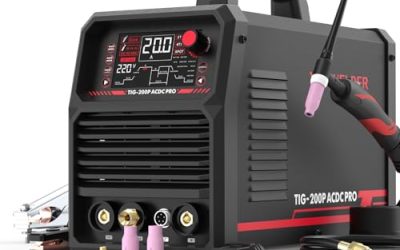
YESWELDER TIG-200P ACDC
Everyday aluminum work on either shop circuit
200A AC/DC with pulse, dual voltage 110/220V
YESWELDER TIG-250P
Thicker aluminum on a dedicated 220V circuit
250A AC/DC with pulse, two torches in the box
Weldpro Digital TIG 200GD
Pedal-controlled aluminum work
200A AC/DC, CK 17 torch and foot pedal included
How to Choose
Start with AC output, not amperage
Aluminum carries a surface oxide layer that melts at a far higher temperature than the metal beneath it. Alternating current spends half of each cycle stripping that layer away, which is why only AC TIG cleans and welds aluminum properly; a DC arc just pushes the oxide around. When you compare listings, look for AC output stated in the product name or mode list, and treat AC balance and frequency controls as the adjustments that govern cleaning width and arc focus. Any machine whose TIG modes are DC only belongs to a different article, however strong its steel performance looks.
Match input voltage to the circuit you actually have
A 200-amp TIG welder only delivers its full rating on a 220V supply; on a household 110V outlet the same machine runs, but output and duty fall. Dual-voltage models sense the supply automatically and ship with an adapter, which suits a garage that may gain a 220V circuit later. A 220V-only machine is a deliberate commitment: simpler and often cheaper per amp, but useless where only household power exists. Before ordering, confirm the plug type in the listing against your receptacle, and arrange for an electrician if a new circuit has to go in.
Pulse and start type decide thin-sheet control
Thin aluminum punishes a basic arc: too much heat and the puddle falls through, too little and the bead sits cold on the surface. Pulse TIG alternates between peak and background current many times per second, averaging less heat into the part while keeping the puddle fluid, and an adjustable pulse range lets you slow down for edges or speed up for flat sheet. High-frequency start strikes the arc without touching the tungsten to the work, which keeps the electrode clean and the first bead free of contamination. For repeated thin work, treat both features as requirements rather than upgrades.
Check the box contents and the offer itself
Torch and pedal decide how much extra shopping follows the machine. A 13-foot WP-26 torch covers bench and floor work; a foot pedal gives both hands to the torch and filler on long aluminum seams, so a bundle that includes one saves a separate order. Read the listing’s included-items list literally, because near-identical model names ship with different torches. One honest note for this class: two of its best-known machines, from PrimeWeld and AHP, are currently sold direct by their makers rather than through a featured Amazon offer, so the picks below are the strongest listings that are actually orderable on Amazon.
the default buy for a home shop that welds aluminum occasionally on household power and more seriously on 220V.
Watch out for
the aluminum figure is the maker’s rating, not a tested result — confirm the current listing’s included-items list before ordering, since YESWELDER sells several similar 200A variants.
This is the machine most home shops should start from. It runs AC and DC TIG plus stick from either a household outlet or a 220V circuit, sensing the supply automatically, and its pulse works on both current types for thin aluminum and thin steel alike. High-frequency start keeps the tungsten clean, the large LED display reads clearly through a helmet, and the maker rates its aluminum capacity at up to 1/8 inch. At under seventeen pounds it also moves between bench and job site without a cart, and the box already holds a torch and consumables.
YESWELDER TIG-250P 250 Amp AC/DC Aluminum Tig Welder with Pulse
Runner-Up
YESWELDER TIG-250P 250 Amp AC/DC Aluminum Tig Welder with Pulse
Best for: a 220V shop welding thicker aluminum sections that wants a spot torch for tight work in the same box.
a 220V shop welding thicker aluminum sections that wants a spot torch for tight work in the same box.
Watch out for
availability signals for this ASIN could not be pinned to a current Amazon record during research — confirm a live featured offer for ASIN B08CBD1L69 before ordering, and note the listing states 220V input, whatever roundups claim about dual voltage.
Shops with a wired 220V circuit and thicker aluminum on the bench get more from this bigger YESWELDER. Its 250-amp ceiling leaves headroom on heavy sections where a 200-amp machine runs at its limit, pulse is on board for thinner work, and the digital inverter holds settings between sessions. The bundle is the other draw: alongside the standard WP-26 torch it adds a compact WP-9 spot torch for tight corners, plus both cables, a gas hose and a starter set of collets, cups and caps. At roughly thirty-five pounds it stays put on the bench rather than travelling.
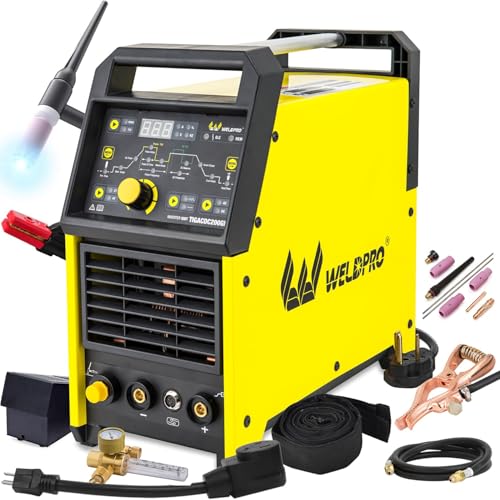
Weldpro Digital TIG 200GD AC DC 200 Amp Tig/Stick Welder with Pulse
Weldpro Digital TIG 200GD AC DC 200 Amp Tig/Stick Welder with Pulse
Best for: aluminum work where pedal control matters, with a brand-name torch and pedal already in the box.
Process: AC/DC TIG and stick, 5 modes (HF AC TIG, DC TIG, AC pulse TIG, DC pulse TIG, stick)
Maximum output: 200A
Pulse: adjustable 0.5–200 Hz (maker figures as reported in reviews)
aluminum work where pedal control matters, with a brand-name torch and pedal already in the box.
Watch out for
availability signals conflict — an older reproduction of this listing ended with no featured offers while current reviews link it as buyable — so confirm a live featured offer for ASIN B084PY4C59 before ordering.
The 200GD is the control-focused option. Five modes cover AC and DC TIG with and without pulse plus stick, the pulse range is the widest here per the maker’s figures reported in reviews, and the front panel is fully digital rather than a single dial. What sets the box apart is hardware: a CK 17 Superflex torch from CK Worldwide, a name brand in its own right, and a foot pedal included rather than sold separately. Dual voltage input means it can start on a household circuit and move to 220V when the shop wiring catches up.
Which One Fits Your Situation
You weld aluminum a few times a month in a home garage
Choose the YESWELDER TIG-200P ACDC. It plugs into the household outlet you already have for light work and steps up to full 200-amp output when a 220V circuit arrives, so the machine does not need replacing as the shop grows. Pulse on both current types covers thin sheet, high-frequency start keeps early beads clean, and at under seventeen pounds it stores on a shelf between jobs instead of owning floor space.
Your bench work is thick aluminum plate and brackets
The YESWELDER TIG-250P is the fit, provided the shop already runs 220V. Its extra fifty amps over the 200-amp machines keep heavy sections within the machine’s comfortable range instead of at its ceiling, and the second WP-9 spot torch reaches corners the standard torch handles awkwardly. Accept the trade-offs plainly: it is a bench machine at nearly thirty-five pounds, and it will not run from a household outlet.
You want pedal control and a torch you can re-order parts for
Pick the Weldpro Digital TIG 200GD. The included foot pedal lets you feather heat at the end of a seam without lifting a hand from the torch or filler, and the CK 17 torch takes widely stocked consumables from a specialist maker. Its five modes and broad pulse range also suit a welder who experiments across aluminum gauges rather than repeating one joint all day.
You are choosing your very first TIG machine
Start with the YESWELDER TIG-200P ACDC rather than the bigger or more complex options. Automatic settings memory shortens setup while you are learning, the dual-voltage input forgives a garage that is still being wired, and stick mode lets the same box handle steel repairs while your TIG technique develops. Spend the difference on a good helmet, gloves and practice plate instead of amperage you will not touch for a year.
Common Mistakes
Buying a DC-only TIG machine for aluminum because it tops a general TIG roundup — without AC output it cannot clean the oxide layer, and no setting fixes that.
Ordering a 220V-only welder before confirming the shop circuit and plug type, then discovering the machine cannot run where it was meant to live.
Trusting the model family name instead of the exact listing: near-identical YESWELDER and Weldpro variants ship with different torches, pedals and input voltages.
Repeating spec figures from a listing’s details block without checking them — at least one listing in this class carries a plainly wrong wattage figure in that block.
Skipping the featured-offer check on older listings: a page can stay indexed and reviewable long after its featured offer disappears, leaving only third-party sellers.
Frequently Asked Questions
Why does aluminum need AC TIG instead of DC?
Aluminum forms an oxide skin that melts at a much higher temperature than the metal under it. The electrode-positive half of an AC cycle blasts that skin off while the other half drives heat into the joint, so one waveform both cleans and welds. A DC arc does only the heating half, which is why DC TIG on aluminum produces dirty, weak beads no technique fully rescues.
Can I run a 200A AC TIG welder on a household outlet?
Yes, if the machine is dual voltage, but expect reduced output: the welder draws what the circuit offers, so thick aluminum stays out of reach until a 220V supply is available. Thin sheet, tubing and small repairs are realistic on household power. A 220V-only model such as the TIG-250P in this roundup cannot use the household outlet at all, even at low settings.
What does pulse actually do on thin aluminum?
Pulse switches the arc between a peak current that melts the puddle and a background current that lets it cool slightly, many times each second. The part absorbs less total heat, so thin sheet is less likely to warp or blow through, while the bead still wets out properly. Slow pulse rates suit edges and corners; faster rates smooth out long flat seams.
Is a foot pedal worth having for aluminum?
For bench work, usually yes. Aluminum gives little warning before the puddle overheats, and a pedal lets you ease off the heat mid-seam without breaking your torch angle or filler rhythm, which a panel dial cannot do. It matters less for quick tack-and-repair jobs on a stand. If pedal control is a priority, choose a machine like the Weldpro 200GD that includes the pedal in the box.
J
JD's Woodworks Editorial Team
We compare specs, warranty terms, long-term owner feedback and street pricing before anything earns a spot. Rankings are never paid.
Affiliate disclosure. As an Amazon Associate we earn from qualifying purchases at no extra cost to you. Prices accurate as of the date shown.
Find the best steel plasma cutter for your shop. Compare four proven machines for clean cuts in mild steel, from a portable 12-amp unit to a 60-amp workhorse.
Best high frequency TIG welder guide: four HF-start AC/DC welders compared on output, duty cycle, dual voltage, torch, foot pedal and warranty for home shops.
Find the best gas shielded MIG welder for your shop. Compare four gas MIG machines by output range, duty cycle, voltage, weight, and included gas hardware.
Find the best 110 volt plasma cutter for home shops: dual-voltage 50-amp and 55-amp picks compared on cut capacity, pilot arc and air needs before you buy.
Compare deep cut portable band saws in the Milwaukee 6230 class: the 6232-21 kit, DEWALT DWM120K and two cordless rivals, by capacity, speed and weight.