Find the best gas shielded MIG welder for your shop. Compare four gas MIG machines by output range, duty cycle, voltage, weight, and included gas hardware.
Find the best gas shielded MIG welder for your shop. Compare four gas MIG machines by output range, duty cycle, voltage, weight, and included gas hardware.
As an Amazon Associate I earn from qualifying purchases. This post may contain affiliate links at no extra cost to you.
The best gas shielded MIG welder for most home shops is the Hobart Handler 140, a 115-volt machine with a 25 to 140 amp output range, a built-in gas solenoid valve, and a dual-gauge regulator with gas hose in the box. It welds 24 gauge to 1/4 inch mild steel with solid wire and shielding gas, and it runs from a standard household outlet. If you need thicker material and dual-voltage input, the Miller Millermatic 211 is the stronger step up, with a 30 to 210 amp range and a 40 percent duty cycle at 150 amps.
A gas shielded MIG welder, also called a GMAW machine, feeds solid wire through the torch while a shielding gas flows from the nozzle to protect the molten weld pool from the air. The usual gas mix for mild steel is 75 percent argon and 25 percent carbon dioxide, and the result is a cleaner bead with less spatter and no slag to chip away than flux-core wire leaves behind. That cleaner bead is the whole point of choosing gas shielded MIG over gasless wire, and it is also why the setup matters: you need a gas cylinder, a regulator, and a machine with a gas solenoid valve, not just a welder that accepts solid wire.
Our top pick: Hobart Handler 140 MIG Welder 115V. Runner-up: Miller Millermatic 211 MIG Welder. This guide compares published specifications only: output range, duty cycle, input voltage, wire feed speed, weight, and the gas hardware each machine ships with, so you can match a machine to the thickness you weld and the outlets you have.
Every machine below welds with shielding gas. That is the line this guide holds: flux-core-only machines are left out, and so are TIG-only machines, because neither one answers a search for gas shielded MIG. All four picks also run flux-core wire when you need it, which is a useful fallback for outdoor work in wind, but their primary mode here is solid wire under gas.
At a Glance
Product
Best for
Key specification
Hobart Handler 140 MIG Welder 115V
Most home shops
115 V, 25 to 140 A, 20 percent duty cycle at 90 A, 57 lb
Miller Millermatic 211 MIG Welder
Thicker steel and dual-voltage shops
120/240 V, 30 to 210 A, 40 percent duty cycle at 150 A, 38 lb
Lincoln Electric Handy MIG Welder K2185-1
Light-duty repairs and first welders
115 V, 70 A maximum output, 20 percent duty cycle, 46 lb
YESWELDER MIG-205DS PRO MIG Welder
Multi-process work on a dual-voltage budget
110/220 V, 30 to 205 A, 5 processes including gas MIG
How to Choose
1. Confirm it is a true gas shielded MIG machine
Gas shielded MIG means solid wire plus shielding gas, and the machine must have a gas solenoid valve and a regulator connection. Some machines ship ready for gas, with the regulator and gas hose in the box, while others ship set up for flux-core wire and need a regulator kit added before they can run gas. Check the included components list before you order, and confirm whether the regulator, gas hose, and solid wire drive roll are in the box or listed as separate accessories.
2. Match the output range to your material thickness
Output range decides how thick you can weld in a single pass. A 70 amp machine covers sheet metal and light repair work up to about 1/8 inch mild steel. A 140 amp machine reaches 1/4 inch mild steel, which covers most auto body panels, brackets, carts, and shop furniture. A 210 amp machine reaches 3/8 inch mild steel, which covers heavier brackets, trailer frames, and structural repair work. Buy for the thickest material you weld regularly, not the thickest you might weld once.
3. Read the duty cycle next to its amperage
Duty cycle states how many minutes out of ten a machine can weld at a given amperage before it must cool. A 20 percent duty cycle at 90 amps means four minutes of arc time in a ten-minute window at that setting. A 40 percent duty cycle at 150 amps means the machine holds longer seams at higher output. Duty cycle only means something next to the amperage it is rated at, so compare machines at the same output rather than comparing the percentages alone.
4. Check the input voltage against your outlets
A 115-volt machine plugs into a standard household outlet on a 20 amp circuit, which keeps the setup simple in a garage. A dual-voltage machine runs light work on 115 volts and reaches full output on 220 or 240 volts, which suits a shop that already has a 240-volt circuit or plans to add one. If your only outlet is a household circuit, a dual-voltage machine still works, but you will not reach its top output until you add the higher-voltage circuit.
5. Look at what gas hardware is in the box
A gas-ready machine should list a built-in gas solenoid valve, a dual-gauge regulator, and a gas hose among its included components. The regulator shows cylinder pressure and flow, and the solenoid valve starts and stops gas flow with the trigger. If those parts are missing from the box, add the cost of a regulator kit and a gas cylinder to your plan. A machine that ships with the full gas setup is ready to weld with solid wire on the first day.
6. Compare wire feed speed and wire sizes
Wire feed speed, stated in inches per minute, controls how fast wire reaches the arc, and the range should cover the wire diameter you plan to use. Common solid wire sizes for these machines run from .023 inch for thin sheet to .035 inch for thicker steel. A machine with a wide feed range, such as 40 to 700 inches per minute, gives you room to tune the arc for thin and thick work. A narrow range limits you to one thickness band.
7. Weigh portability against power
A 38-pound inverter machine carries easily to a job site or a friend’s garage, while a 57-pound transformer machine is more of a bench or cart machine that stays in one shop. Weight often tracks with output: heavier machines tend to hold higher duty cycles at higher amperage. If you weld in one place, weight matters less than output and duty cycle. If you carry the welder to the work, weight and a long gun cable matter more.
8. Decide whether multi-process extras help or distract
Some MIG machines also run stick, lift TIG, and spool-gun aluminum welding. Those extra processes add value when you weld different metals or work outdoors, where stick handles wind and dirty metal better than gas MIG. They add little when you only weld mild steel indoors, and they add setup steps and extra accessories to buy. Choose a multi-process machine when you can name a job for each extra process; otherwise a dedicated MIG machine keeps the controls simpler.
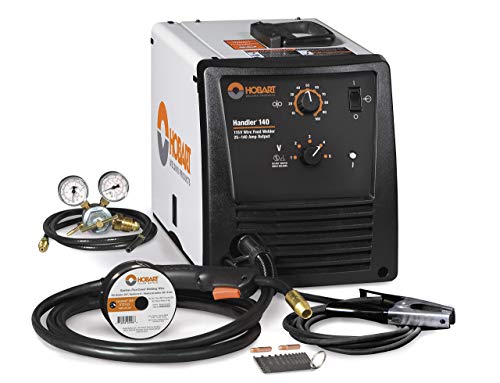
The Hobart Handler 140 runs on standard 115-volt household current with a 25 to 140 amp output range, and it welds 24 gauge to 1/4 inch mild steel with solid wire and shielding gas. A built-in gas solenoid valve and a dual-gauge regulator with gas hose ship in the box, so the machine is gas-ready without extra parts. The listed wire feed speed runs 40 to 700 inches per minute, the duty cycle is 20 percent at 90 amps, and the machine weighs 57 pounds with a 10-foot MIG gun and a 10-foot work cable.
Consideration: The 115-volt input caps output at 140 amps, so thicker steel beyond 1/4 inch needs a larger dual-voltage machine.
Miller Millermatic 211 MIG Welder (907614) — ASIN B013HGPNDM
Runner-Up
Miller Millermatic 211 MIG Welder (907614) — ASIN B013HGPNDM
Best for: Shops that weld thicker steel and want dual-voltage input with automatic settings.
The Miller Millermatic 211 is a dual-voltage machine that runs on 120 or 240 volts, with a 30 to 210 amp output range and a 40 percent duty cycle at 150 amps. It welds 24 gauge to 3/8 inch mild steel, and its Auto-Set feature selects wire feed speed and voltage from the material thickness and wire diameter you enter. The machine weighs 38 pounds, uses multi-voltage plugs for 120-volt and 240-volt outlets, and supports gas MIG, flux-core wire, and spool-gun aluminum welding.
Consideration: Full output needs a 240-volt circuit, so a household outlet alone will not reach the top of the output range.
Lincoln Electric Handy MIG Welder K2185-1 — ASIN B000QFNZ74
Lincoln Electric Handy MIG Welder K2185-1 — ASIN B000QFNZ74
Best for: Light repairs, sheet metal, and beginners who need a small, simple machine.
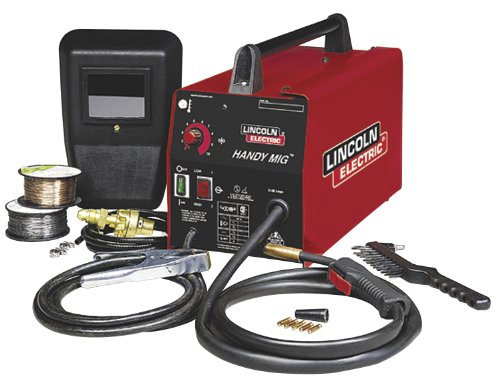
The Lincoln Electric Handy MIG is a compact 115-volt machine with a 70 amp maximum output and a 20 percent duty cycle, built for light-duty repair work and first-time welders. Its listed wire feed speed runs 0 to 300 inches per minute, the machine measures 12.8 by 8.8 by 18 inches, and it weighs 46 pounds. The Handy MIG welds with flux-core wire and with solid wire under shielding gas, and a face shield is included in the box.
Consideration: The 70 amp ceiling limits it to thin material, and gas MIG needs a regulator kit that is not part of the base package, so confirm the kit before you plan a gas setup.
YESWELDER MIG-205DS PRO MIG Welder — ASIN B07TVCWDGW
YESWELDER MIG-205DS PRO MIG Welder — ASIN B07TVCWDGW
Best for: Welders who want five processes and dual-voltage input in one machine.
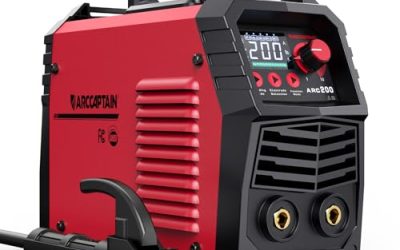
The YESWELDER MIG-205DS PRO is a dual-voltage machine that runs on 110 or 220 volts, with a listed output of 30 to 160 amps at 110 volts and 30 to 205 amps at 220 volts. It is a 5-in-1 machine covering gas MIG, flux-core MIG, spool-gun MIG, lift TIG, and stick welding, with synergic and manual modes and a digital display for voltage and amperage. The listing states it accepts small and large wire spools and ships with a gas hose, ground clamp, MIG torch, and adapters, while the TIG torch and spool gun are separate accessories.
Consideration: The TIG torch and spool gun are sold separately, so the full five-process setup needs extra accessories beyond the base box.
Which One Is Right for You?
Choose the Hobart Handler 140 when your work is mostly auto body panels, brackets, and shop projects up to 1/4 inch mild steel, and you want the gas hardware in the box with a household outlet. Choose the Miller Millermatic 211 when you weld thicker steel, want Auto-Set to dial in settings, and have or plan to add a 240-volt circuit. Choose the Lincoln Electric Handy MIG when your jobs are light repairs and thin sheet, and you want the smallest, simplest machine that still welds under gas. Choose the YESWELDER MIG-205DS PRO when you want stick and lift TIG in the same box as gas MIG, and you accept buying the TIG torch and spool gun separately.
If you weld outdoors often, remember that wind blows shielding gas away from the weld pool. A gas MIG machine can still run flux-core wire for outdoor joints, which is one reason all four picks here keep flux-core as a second mode. For indoor work on clean steel, solid wire under gas gives the cleaner bead and the least cleanup. Match the machine to where you weld as much as to what you weld.
Frequently Asked Questions
What gas does a gas shielded MIG welder use?
For mild steel, the standard mix is 75 percent argon and 25 percent carbon dioxide, which gives a stable arc and a clean bead with low spatter. Pure carbon dioxide also works and costs less per cylinder, but it runs a harsher arc with more spatter. Stainless steel and aluminum use different gas mixes, so check the wire maker’s gas chart for the metal you weld.
Do I need a gas cylinder to run gas shielded MIG?
Yes. A gas shielded MIG machine needs a cylinder of shielding gas, a regulator to control flow, and a gas hose to the machine. The cylinder is usually rented or bought from a welding supply store and filled or exchanged when empty. Flux-core wire is the alternative when you have no cylinder, since the flux inside the wire creates its own shield.
Can a gas shielded MIG welder also run flux-core wire?
All four machines in this guide run flux-core wire as well as solid wire under gas. Switching means changing the wire, the drive roll, and the torch polarity to match the wire type, following the manual for the machine. Flux-core is handy outdoors, where wind disperses shielding gas, while solid wire under gas is cleaner indoors.
What thickness can a 140 amp gas MIG welder handle?
A 140 amp machine such as the Hobart Handler 140 welds 24 gauge to 1/4 inch mild steel in a single pass, according to its published specifications. Thicker joints need beveling, multiple passes, or a higher-output machine such as a 210 amp dual-voltage unit. The exact limit also depends on the joint type, the wire diameter, and the gas mix.
Is a dual-voltage MIG welder worth it for a home garage?
A dual-voltage machine is worth it when you weld thick material or plan to add a 240-volt circuit, since full output needs the higher voltage. It is less useful when all your work is thin sheet on a household outlet, where a 115-volt machine already covers the job. A dual-voltage machine still runs on a household outlet for light work, so it does not lock you into a circuit upgrade on day one.
Bottom Line
The Hobart Handler 140 is the best gas shielded MIG welder for most home shops: it ships gas-ready with a regulator and gas hose, runs from a household outlet, and covers the thickness range most garage projects need. The Miller Millermatic 211 is the step up for thicker steel and dual-voltage shops, with a wider output range and a higher duty cycle. The Lincoln Electric Handy MIG fits light repair work and first-time welders, and the YESWELDER MIG-205DS PRO fits welders who want five processes in one dual-voltage box. Whichever machine you choose, confirm the gas hardware in the box, match the output range to your thickest regular material, and run a few beads on scrap of the same thickness before the real joint.
Disclosure: As an Amazon Associate, this site earns from qualifying purchases.
J
JD's Woodworks Editorial Team
We compare specs, warranty terms, long-term owner feedback and street pricing before anything earns a spot. Rankings are never paid.
Affiliate disclosure. As an Amazon Associate we earn from qualifying purchases at no extra cost to you. Prices accurate as of the date shown.
Find the best steel plasma cutter for your shop. Compare four proven machines for clean cuts in mild steel, from a portable 12-amp unit to a 60-amp workhorse.
Best high frequency TIG welder guide: four HF-start AC/DC welders compared on output, duty cycle, dual voltage, torch, foot pedal and warranty for home shops.
Find the best 110 volt plasma cutter for home shops: dual-voltage 50-amp and 55-amp picks compared on cut capacity, pilot arc and air needs before you buy.
Compare deep cut portable band saws in the Milwaukee 6230 class: the 6232-21 kit, DEWALT DWM120K and two cordless rivals, by capacity, speed and weight.
Compare the best small plasma cutter options for garages and small shops with dual-voltage 50-amp models, pilot arc starts, and clean-cut limits explained.


 YESWELDER MIG-205DS PRO MIG Welder — ASIN B07TVCWDGW