4 Best Lincoln MIG Welders for Home Shops (November 2026)
Compare four Lincoln MIG welders, from the compact Handy MIG to the multi-process Power MIG 210 MP, and match the machine to your metal, projects, and workload.
Compare four Lincoln MIG welders, from the compact Handy MIG to the multi-process Power MIG 210 MP, and match the machine to your metal, projects, and workload.
As an Amazon Associate I earn from qualifying purchases. This post may contain affiliate links at no extra cost to you.
A Lincoln MIG welder is often the first serious welding machine a home shop buys, and the choice is really about how thick the metal is and how often the machine will run. Lincoln’s lineup runs from small machines for sheet metal and repairs to multi-process units that also handle TIG and stick, and buying more machine than the work needs wastes money while buying too little leaves welds unfinished. The four welders below cover that whole spread, from a compact starter to a machine that can grow with the shop for years.
Each pick here is a Lincoln MIG welder sold on Amazon, listed with the model number from its product page so you can match the machine to the listing exactly. The roundup includes a compact starter, a light-duty classic, a small inverter unit, and a multi-process machine, with notes on which ones need an extra look at the listing before you order. The right machine fits the metal, the projects, and the space.
Quick Picks
As an Amazon Associate we earn from qualifying purchases
Product
Best for
Key spec from title
Lincoln Power MIG 210 MP
Multi-process MIG, TIG, and stick
Multi-process welder, model K3963-1
Lincoln Handy MIG
Light repairs and sheet metal
Compact MIG welder, model K2185-1
Lincoln Weld-PAK 90i MIG
Small jobs and first welder
Compact inverter MIG, model K5256-1
Lincoln Power MIG 211i
All-around MIG work
MIG welder, model K6080-1
How to Choose
Metal thickness first
Start with the thickest metal you plan to weld regularly, because that sets the machine class. Thin sheet metal and auto body panels suit the smaller welders here, while thicker plate and structural pieces need a machine with more output. A welder that handles your thickest regular job with room to spare will run cooler and last longer than one pushed to its limit on every weld. If you only ever weld thin material, the compact machines are the honest choice. Write down the three thickest jobs you expect this year before comparing models, and let that list — not the catalog — decide the size. A machine sized for the thickest job also handles thin metal well.
MIG, flux-core, or multi-process
MIG welding with solid wire and shielding gas gives clean welds on steel, while flux-cored wire works without gas and suits outdoor or windy work. The Power MIG 210 MP goes further and also runs TIG and stick, which matters if you plan to weld aluminum or work away from a gas bottle. Decide which processes you will actually use: a multi-process machine is only good value if the extra processes get used, and a MIG-only machine is simpler to set up and learn. A buyer who welds steel indoors will rarely miss the extra processes, while a buyer who works on varied metals will feel their absence quickly. Flux-cored wire also suits a windy driveway.
Duty cycle and how long you weld
Duty cycle is the share of a ten-minute window a welder can run before it needs to cool, and it matters more than most first-time buyers expect. Short repair welds rarely test it, but long beads on a trailer frame or a gate will. The compact machines here suit short runs with breaks between welds, while the larger Power MIG models handle longer sessions. If your projects involve continuous beads, favor the bigger machine even when the smaller one could technically make the weld. A machine that stops to cool in the middle of a long joint is a machine that wastes your afternoon. Check the duty-cycle figure on the listing and compare machines at the same output.
What the listing should confirm
Before ordering, confirm the model number on the listing matches the machine in this article — Lincoln sells several look-alike models with different capabilities. Check whether the listing includes the torch, the ground clamp, and the wire, and whether gas equipment is bundled or bought separately. Two picks in this roundup carry extra flags: the Handy MIG listing rests on a single source, and the 211i listing shows conflicting stock signals, so both deserve a careful read of the product page. A few minutes on the listing now saves a return later. A listing that cannot confirm the model number is worth skipping, since look-alike models can differ in input voltage, included accessories, and process capability.
The 4 Best Options
Lincoln Power MIG 210 MP
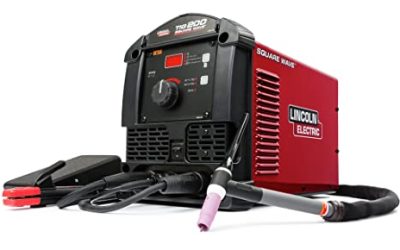
The Power MIG 210 MP is the most capable welder here because it runs MIG, TIG, and stick from one machine, which makes it the pick for a shop that wants one welder to cover several kinds of work. It suits a buyer who welds steel most days but also wants TIG for cleaner joints or stick for outdoor repairs without buying three machines. The multi-process design adds setup steps and a learning curve, so it is not the simplest first welder. For a home shop that plans to grow into different metals and joints, though, it is the machine that stays useful the longest. It also saves bench space.
Specs
Model: K3963-1
Type: multi-process MIG welder
Processes: MIG, TIG, and stick
Class: Power MIG 210 MP
Best for: Home shops that want one machine for MIG, TIG, and stick work.
Watch out for: Multi-process setup takes more learning than a MIG-only machine; confirm the model number on the listing.
Lincoln Handy MIG
Top Pick
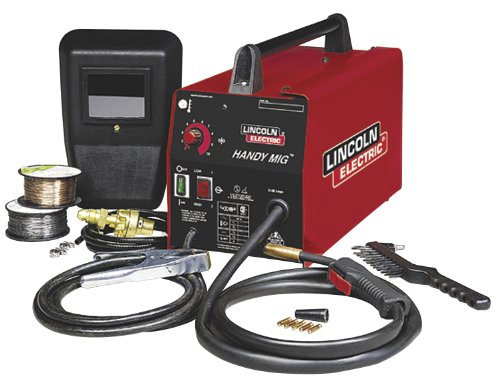
Lincoln Handy MIG
Best for: Occasional light repairs and thin sheet metal.
Model: K2185-1
Type: compact MIG welder
Use: light-duty repairs and sheet metal
Note: listing verified through a single source — confirm the product page before ordering
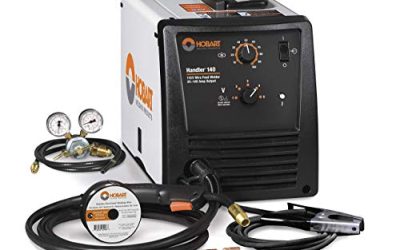
The Handy MIG is Lincoln’s long-running compact welder for light work, and it suits sheet metal, auto body patches, and small repairs around the house. Its small size makes it easy to carry to the job and store on a shelf, which matters in a crowded garage. It is not a machine for thick plate or long production runs, and a buyer who outgrows it will want a larger welder within a year or two. For occasional light welding, though, it has earned its place by being simple to set up and forgiving to learn on. It runs on household power and sets up in minutes.
Watch out for: Single-source listing — read the product page carefully and confirm the model number before ordering.
Lincoln Weld-PAK 90i MIG
Runner-Up
Lincoln Weld-PAK 90i MIG
Best for: First-time welders and small, light-duty home projects.
The Weld-PAK 90i is the smallest welder in this roundup and the easiest one to justify for a first machine. It suits a buyer learning to weld, fixing thin metal around the home, or working on small projects that never need deep penetration. The compact inverter design keeps the machine light and portable, and the simple controls leave little to get wrong. Its limits are real — thick material and long beads are beyond it — but for the light work most home shops actually do, it is enough machine without the weight or the learning curve of the bigger models. The inverter design keeps the weight down for carrying.
Watch out for: Not suited to thick plate or long continuous beads; check the listing for included accessories.
Lincoln Power MIG 211i
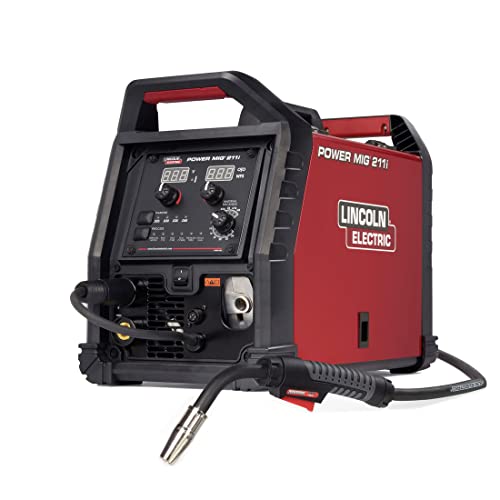
Lincoln Power MIG 211i
Best for: Regular home-shop MIG work across thin and medium material.
Model: K6080-1
Type: MIG welder
Class: Power MIG 211i
Note: conflicting stock signals — confirm the listing is live before ordering
The Power MIG 211i sits in the middle of Lincoln’s home-shop range: more capable than the compact machines and simpler than the multi-process 210 MP. It suits a buyer who welds regularly, handles a mix of thin and medium material, and wants a machine that can grow with the shop without learning TIG or stick. Its listing needs attention, though — one crawl showed no featured offers while another showed it in stock, so the product page deserves a careful check before ordering. If the listing confirms, it is the most balanced MIG-only pick here. It is the machine to buy when compact welders feel limiting.
Watch out for: Conflicting stock signals — confirm the listing on the product page before ordering.
Which One Fits Your Situation
Learning to weld for the first time
The Weld-PAK 90i is the right first machine: simple controls, light weight, and enough capability for the thin metal a beginner practices on. The Handy MIG is the alternative when a slightly larger compact machine is preferred. Skip the multi-process 210 MP until the basics are comfortable and the extra processes would actually get used. A first machine should teach good habits, and simple controls do exactly that.
Repairing cars and sheet metal
The Handy MIG suits body panels and thin sheet, where a small machine gives better control and less burn-through. The 211i is the step up when repairs include thicker brackets or frames alongside the panels. Keep the welds short and let the metal cool between passes to avoid warping thin panels. A small machine also fits under a hood or inside a wheel well more easily.
One machine for several kinds of work
The Power MIG 210 MP is the pick, since it runs MIG, TIG, and stick from a single unit. It costs more in learning time than a MIG-only machine, but it replaces the need for separate machines as the shop takes on different metals and joint types over the years. The extra processes also mean fewer machines to store in a small shop.
Welding most weekends
The 211i suits a regular welding habit: capable enough for medium material and long enough sessions to finish real projects. The compact machines are better kept for occasional use, where their lighter duty cycle never becomes a problem and their portability is the real advantage. Weekend projects such as gates, trailers, and furniture frames are exactly the work the 211i is built for.
Common Mistakes
Buying the biggest welder available when every job is thin sheet metal.
Ordering without confirming the model number on the listing — Lincoln sells look-alike models.
Expecting a compact welder to handle thick plate or long continuous beads.
Forgetting that gas equipment and wire are sometimes sold separately from the machine.
Skipping the product-page check on the 211i, whose listing shows conflicting stock signals.
Frequently Asked Questions
What size MIG welder do I need for home use?
Match the machine to the thickest metal you weld regularly. Thin sheet and auto body work suit the compact welders here, while thicker plate needs a larger machine. A welder that handles your thickest regular job with room to spare will run cooler and last longer. When in doubt, size up one class rather than down. An oversized machine welds thin metal fine with the settings turned down.
Can the Power MIG 210 MP really weld with TIG and stick too?
Yes — it is a multi-process machine that runs MIG, TIG, and stick from one unit. That makes it useful for a shop that works with different metals and joints, though each process needs its own setup and accessories, so expect a learning curve. Each process needs its own torch or holder and consumables, so budget for those too.
Is the Handy MIG enough for auto body work?
For sheet metal patches and light body repairs, yes. Its compact size gives good control on thin metal and it is easy to move around a car. For thicker brackets or frames, step up to the 211i or the 210 MP. Its compact size also makes it easy to position around a car.
Do these welders come with everything needed to start?
Not always. Some listings include the torch, ground clamp, and wire, while gas equipment may be sold separately. Read the listing’s included-items section before ordering so the first weld is not delayed by a missing part. A checklist of torch, clamp, wire, and gas regulator covers the essentials. Some sellers bundle a starter kit, so compare what each listing includes.
J
JD's Woodworks Editorial Team
We compare specs, warranty terms, long-term owner feedback and street pricing before anything earns a spot. Rankings are never paid.
Affiliate disclosure. As an Amazon Associate we earn from qualifying purchases at no extra cost to you. Prices accurate as of the date shown.
Find the best steel plasma cutter for your shop. Compare four proven machines for clean cuts in mild steel, from a portable 12-amp unit to a 60-amp workhorse.
Best high frequency TIG welder guide: four HF-start AC/DC welders compared on output, duty cycle, dual voltage, torch, foot pedal and warranty for home shops.
Find the best gas shielded MIG welder for your shop. Compare four gas MIG machines by output range, duty cycle, voltage, weight, and included gas hardware.
Find the best 110 volt plasma cutter for home shops: dual-voltage 50-amp and 55-amp picks compared on cut capacity, pilot arc and air needs before you buy.
Compare deep cut portable band saws in the Milwaukee 6230 class: the 6232-21 kit, DEWALT DWM120K and two cordless rivals, by capacity, speed and weight.