What's inside
As an Amazon Associate I earn from qualifying purchases. This post may contain affiliate links at no extra cost to you.
A two-port bandsaw is harder to hood than a single-port machine: the lower wheel cabinet and the area under the table can both throw chips and dust, and one pickup may leave the other side untouched. The best setup depends on your saw’s port sizes, the dust collector’s airflow, and how much fabrication you’re willing to do. A well-fitted homemade hood can outperform a pricey universal one; a poorly sealed hood can choke airflow and still leave the floor covered.
As an Amazon Associate we earn from qualifying purchases at no extra cost to you.

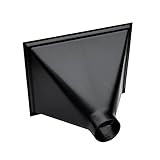

What to look for in a two-port hood
First, identify what each port serves. On many saws, the lower port pulls from the wheel cabinet, while the upper port catches debris below the table. Measure the port inside diameter and note whether it accepts a hose directly or needs an adapter. Common shop hose sizes are 2-1/2 inches and 4 inches, but don’t assume your saw’s ports match either.
Airflow matters more than the number of ports. A small shop vacuum can move plenty of air through a narrow hose but may struggle with a large cabinet opening. A 4-inch dust collector generally needs a clear, reasonably short path; restrictive reducers, corrugated hose, and sharp bends all cut airflow. If both branches share one collector, use a Y fitting rather than a tight T, and keep the branches close in length where practical.
Look for a hood that leaves access to the blade, tension release, and tracking controls. A sealed box that makes routine adjustments miserable is likely to be removed—or left open. Also check that the hood doesn’t obstruct the saw’s lower wheel, blade guides, or table tilt.
Hood options compared
| Option | Best for | Trade-off |
|---|---|---|
| Factory two-port kit | Saws with matching fittings and mounting points | Easy to install, but often limited to one saw model or port size |
| Universal lower-wheel hood | Retrofits where the lower cabinet is the main source of escaping dust | May require drilling, sealing, or a custom adapter |
| DIY plywood or sheet-metal hood | Odd-shaped cabinets and owners comfortable with basic fabrication | Low material cost, but fit and service access take planning |
| Two-branch hose and Y fitting | Connecting existing upper and lower ports to one collector | Simple plumbing, but airflow can favor one branch unless balanced |
Factory and universal hoods
A factory kit is the simplest choice when it matches your saw. The fittings usually land in the right places, and the hood is less likely to interfere with wheel access. Before buying, compare the kit’s port diameters with your machine and check whether it includes the hose, clamps, and adapters you actually need. A kit that ends in a 2-1/2-inch fitting won’t magically supply the airflow of a 4-inch collector line.
Universal hoods make sense when the factory part is unavailable or the lower cabinet has no useful pickup. Search for a bandsaw dust collection hood, then check dimensions and mounting method rather than relying on “universal” in the listing. Flexible rubber or plastic hoods can seal around uneven cabinets, but they may sag or get in the way. Rigid hoods hold their shape, though they need a closer fit.
When a DIY hood is the better buy
For a cabinet with an odd opening, a simple hood made from 1/2-inch plywood, sheet metal, or a suitable plastic panel can be inexpensive and effective. Build it to cover the lower wheel area without sealing the cabinet so tightly that the blade, tires, or controls become difficult to inspect. Seal fixed seams with caulk or foam tape, but make one panel removable for blade changes and cleaning.
Keep the pickup opening near the chips, not far away behind a maze of internal baffles. A large hood opening can collect well if there is enough airflow, but a big cavity connected to a small hose may simply dilute the suction. If you need a transition, use a gradual reducer and avoid stacking several adapters. For the hose and fittings, a 4-inch dust-collection Y fitting and hose is a useful starting point for many collector setups; verify the saw ports before ordering.
The cheaper route is often fine if you already own a dust collector and can make a close-fitting hood. Spending more is justified when a ready-made part saves substantial fabrication time or preserves access to a machine you adjust frequently. Avoid buying a hood solely because it has two outlets: two outlets don’t guarantee balanced airflow.
Connecting and balancing both ports
Run one branch to each port and join them with a Y near the main line. If one branch is much shorter or wider, it may take most of the air, leaving the other pickup weak. A simple test is to run the saw and inspect both areas after cutting scrap. If chips collect around the upper port, temporarily restrict the stronger branch with a blast gate or damper and retest. Don’t close a branch completely unless the hood is designed to run that way.
Use the largest practical hose on the main run, then reduce at the machine. A 4-inch main line feeding two 2-1/2-inch ports is common, but the collector, duct length, and bends determine whether it works well. A shop vacuum with 2-1/2-inch hose may be a better match for small ports and short runs. Compare 2-1/2-inch blast gates if you need to balance branches or shut off an unused pickup.
Test the installation and watch for failures
Run a short cut in scrap, then check the lower cabinet, the table area, and the floor behind the saw. Fine dust escaping around seams usually points to a leak or weak airflow; larger chips left under the table may indicate that the pickup is too far from the blade. Listen for a loose hose, check that clamps stay tight, and make sure the hood hasn’t shifted into a moving part.
Dust buildup around the lower wheel can affect tracking and tire condition, so inspect the cabinet regularly rather than assuming the collector is doing its job. Empty the collector or shop-vac canister before it is packed full, and clean filters when airflow drops. If dust still escapes after sealing leaks and balancing the branches, the collector may be undersized for the duct run. A better hood cannot compensate for inadequate airflow.