As an Amazon Associate I earn from qualifying purchases. This post may contain affiliate links at no extra cost to you.
Buying dust collection for a CNC machine is a choice about where the dust gets caught. A dust shoe on the spindle grabs chips and fine dust at the cutter, before they spread. A rolling collector sits beside the machine and pulls dust through a hose, which suits a larger router or a shared shop collector. The wrong fit shows up fast: a shoe that does not match the spindle diameter leaves a gap, and a weak collector leaves fine dust floating after the cut ends.
This guide is for three kinds of buyers. Owners of small desktop routers need a shoe that fits a 42 or 52 millimetre spindle and a hose they own. Owners of larger machines need a shoe that clears a 65 or 69 millimetre spindle without rubbing the workpiece. Workshop owners who cut a lot of sheet goods need a standalone collector that keeps up with long jobs. The four picks below were chosen from Amazon product titles and specifications.
Quick Picks
As an Amazon Associate we earn from qualifying purchases.
Product
Best for
Key spec from title
Genmitsu CNC Dust Shoe 65/69mm, DS69
A larger CNC spindle that needs dust capture at the cutter
Fits 65 and 69 mm spindles, 38 mm hose adapter
Genmitsu CNC Dust Shoe for 3018-PRO and PROVer V2
A 3018 desktop router owner who wants a direct-fit shoe
Fits a 42 mm spindle, 38 mm hose
Genmitsu CNC Dust Shoe 52mm ABS, DS3018
A 300 to 500 watt spindle that needs a light ABS shoe
52 mm ABS shoe for 300 to 500 watt spindles
WEN DC3401 Dust Collector
A small shop that needs a rolling collector beside the CNC
5.7 amp motor, 660 CFM, 12-gallon bag
How to Choose
Match the shoe to the spindle diameter
The spindle diameter decides everything about a dust shoe, so measure before ordering. A shoe made for a 65 or 69 millimetre spindle will not seal around a 52 millimetre spindle, and a 52 millimetre shoe will not stretch over a 69 millimetre one. Check the listing for the exact diameter range and compare it with the spindle body on your machine, not the collet nut, since the nut is wider than the body the shoe clamps onto. If the listing names your machine model, such as the 3018-PRO or PROVer V2, confirm the spindle size in the listing still matches the spindle you actually fitted, because upgraded spindles change the diameter.
Check the hose size against what you own
A dust shoe is only as useful as the hose that connects it to the collector or vacuum, so check the adapter size in the listing. The shoes in this guide use a 38 millimetre hose adapter, a common size for small shop vacuums and compact collectors. If your vacuum uses a different hose, you will need a step adapter, and a loose adapter leaks suction at the worst point in the run. Measure the outside diameter of your hose end and the inside diameter of the adapter, and remember that a hose that is too long or kinked costs airflow even when the diameters match.
Decide between a shoe and a standalone collector
A dust shoe and a rolling collector solve different halves of the same problem, and many shops end up using both. The shoe captures dust at the cutter, which keeps the table clean and the cut visible, but it needs a vacuum or collector behind it to move the air. A standalone collector such as the WEN DC3401 moves a large volume of air on its own and can serve the CNC plus a table saw or planer, yet it does not catch dust at the cutter unless a shoe or hood feeds it. For a desktop router, start with the shoe. For a larger machine or a busy shop, add the collector.
Think about airflow, bag capacity and cleanup
Airflow and bag capacity decide how often you stop to empty the collector and how much fine dust escapes. A collector rated at 660 CFM moves enough air for a small CNC and a short hose run, but a long hose, a sharp bend or a clogged bag cuts that figure down in practice. A 12-gallon bag holds a useful amount of chips from sheet goods, yet fine MDF dust fills the pores of a bag faster than coarse hardwood chips do. Check how the bag attaches and empties before buying, because a bag that is hard to remove gets emptied less often, and a full bag is the most common reason a collector seems to lose suction.
The 4 Best Options
Genmitsu CNC Dust Shoe 65/69mm, DS69
Top Pick
Genmitsu CNC Dust Shoe 65/69mm, DS69
Best for: A larger CNC router with a 65 or 69 mm spindle that needs dust capture at the cutter.
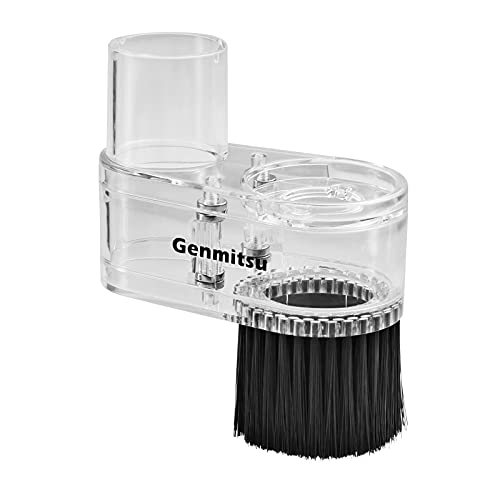
The Genmitsu DS69 suits owners of larger CNC routers whose spindle measures 65 or 69 millimetres across the body. It mounts at the cutter so chips and fine dust are drawn away at the source, which keeps the work surface visible during long cuts and reduces the cloud that settles over the machine. The 38 millimetre hose adapter connects to a standard small shop vacuum hose, so most owners can fit it without buying a new vacuum. It is the pick for anyone who has already upgraded to a bigger spindle and found that a shoe made for a desktop machine no longer fits.
Watch out for: Measure the spindle body, not the collet nut, before ordering, since the nut is wider than the body the shoe clamps onto.
Genmitsu CNC Dust Shoe for 3018-PRO and PROVer V2
Runner-Up
Genmitsu CNC Dust Shoe for 3018-PRO and PROVer V2
Best for: A 3018-PRO or PROVer V2 owner who wants a dust shoe made for that machine.
This Genmitsu shoe is the direct-fit pick for owners of the 3018-PRO and PROVer V2 desktop routers. Because it is made for a 42 millimetre spindle, it seals around the spindle body without shims or guesswork, and the brush skirt rides close to the workpiece so chips are pulled into the hose instead of spraying across the table. The 38 millimetre hose adapter matches the same common hose size as the other shoes in this guide, which makes it easy to pair with a shop vacuum many owners already have. It is the simplest upgrade for a 3018 owner who is tired of sweeping the table after every job.
Watch out for: Confirm your spindle is still the stock 42 mm unit, since an upgraded spindle changes the diameter and this shoe will not fit it.
Genmitsu CNC Dust Shoe 52mm ABS, DS3018
Genmitsu CNC Dust Shoe 52mm ABS, DS3018
Best for: A compact router with a 300 to 500 watt spindle that needs a light dust shoe.
The Genmitsu DS3018 is the light option for a 300 to 500 watt spindle, built from ABS rather than heavier materials so it adds little weight to a small gantry. That matters on a desktop machine, where extra weight on the Z axis can show up as slower movement or lost steps on long jobs. The 52 millimetre fit covers the common spindle size on compact routers, and the shoe sits close to the cutter so it catches chips before they scatter. It is a good match for owners who run a smaller spindle and want dust control without loading down the machine.
Watch out for: Check the spindle diameter and wattage together, since a shoe that fits the diameter but sits on a much larger spindle may not clear the mount.
WEN DC3401 Dust Collector
WEN DC3401 Dust Collector
Best for: A small shop that needs one rolling collector to serve the CNC and other tools.
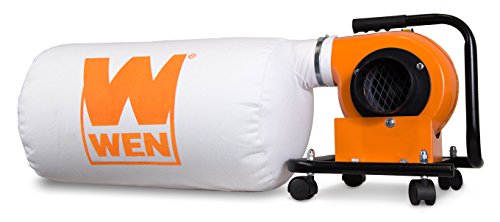
The WEN DC3401 is the standalone pick for a small shop that needs a rolling collector beside the CNC. Its 5.7 amp motor moves air at 660 CFM, enough for a small CNC on a short hose run, and the 12-gallon bag holds a useful volume of chips from sheet goods before it needs emptying. Because it rolls, it can move between the CNC and another tool, which suits a one-person shop where one collector serves several machines in turn. Pair it with a dust shoe on the CNC and the shoe feeds the collector through the hose, catching dust at the cutter instead of letting it drift.
Watch out for: Keep the hose run short and straight, since a long or kinked hose cuts airflow well below the listed figure.
Dust Safety While You Cut
Wood dust is a real health hazard, not just a mess, and fine dust from MDF and hardwoods stays airborne long after the cut ends. A dust shoe and a collector reduce the dust you can see, but they do not replace a respirator when you are cutting MDF, sanding, or emptying a collection bag. Wear a respirator rated for fine dust whenever the machine runs and while you clean up, and ventilate the shop so fine particles do not build up in a closed room. Empty the collector bag outdoors or into a sealed container, and never blow dust off the machine with compressed air while standing in the cloud it creates. Keep the hose clear of the cutter path, check it for clogs before a long job, and keep ignition sources away from fine sawdust, which can ignite when it builds up near heat.
Which One Fits Your Situation
You run a 3018 desktop router
Choose the Genmitsu dust shoe made for the 3018-PRO and PROVer V2, because it fits the stock 42 millimetre spindle without adapters or shims. It keeps the small table clean and the cut visible, and it pairs with a shop vacuum you likely already own. Add the WEN collector later only if the vacuum cannot keep up with long jobs.
You upgraded to a larger spindle
Choose the Genmitsu DS69, because it is the only shoe in this guide that fits a 65 or 69 millimetre spindle. A shoe made for a smaller spindle will not seal around a larger one, and the gap lets fine dust escape at the cutter. Check the hose adapter against your vacuum before ordering so the shoe is useful on arrival.
You want the lightest setup on a small gantry
Choose the Genmitsu DS3018 in ABS, because it adds little weight to a 300 to 500 watt spindle and still catches chips at the source. It suits owners who run shorter jobs and want dust control without slowing the Z axis. Confirm both the 52 millimetre diameter and the spindle wattage before buying.
You need one collector for the whole small shop
Choose the WEN DC3401, because it rolls between machines and moves enough air for a small CNC on a short hose run. It works best when paired with a dust shoe on the CNC, so the shoe feeds dust straight into the hose. Budget time to empty the 12-gallon bag, since a full bag is the fastest way to lose suction.
Common Mistakes
Ordering a dust shoe by machine name alone without measuring the spindle diameter, then finding the shoe does not seal.
Connecting a 38 millimetre shoe to a vacuum hose of a different size with a loose adapter that leaks suction.
Running a long, kinked hose to the collector and wondering why airflow at the cutter is weak.
Letting the collection bag fill completely, which cuts suction and pushes fine dust back into the shop.
Skipping the respirator because the shoe looks like it catches everything, while fine dust still escapes into the air.
Frequently Asked Questions
Does a dust shoe replace a dust collector?
No, a dust shoe and a collector do different jobs. The shoe catches chips and dust at the cutter and guides them into a hose, but it needs a vacuum or collector behind it to move the air. A collector pulls air through a hose but cannot catch dust at the cutter unless a shoe or hood feeds it. Most shops get the best result by pairing the two.
What hose size do these dust shoes use?
The three Genmitsu shoes in this guide use a 38 millimetre hose adapter, which matches a common small shop vacuum hose size. Measure the outside diameter of your hose end before ordering, and use a step adapter if your vacuum hose is a different size. A tight connection matters, because a leak at the adapter wastes suction where it is needed most.
Will the WEN DC3401 keep up with a CNC router?
For a small CNC on a short, straight hose run, its 660 CFM airflow is enough to pull chips and dust away from the cut. Keep the hose short, avoid sharp bends, and empty the 12-gallon bag before it fills, since a full bag cuts airflow quickly. For a larger machine or a very long hose run, a bigger collector would be a better match.
How do I know which Genmitsu shoe fits my spindle?
Measure the diameter of the spindle body, not the collet nut, and match it to the listing: 42 millimetres for the 3018-PRO shoe, 52 millimetres for the DS3018, and 65 or 69 millimetres for the DS69. Also check the spindle wattage on the DS3018, which is made for 300 to 500 watt spindles. If you upgraded the spindle, measure again rather than trusting the original machine specification.
J
JD's Woodworks Editorial Team
We compare specs, warranty terms, long-term owner feedback and street pricing before anything earns a spot. Rankings are never paid.
Affiliate disclosure. As an Amazon Associate we earn from qualifying purchases at no extra cost to you. Prices accurate as of the date shown.
Table saws under the 1500 mark compared: the Grizzly G0771Z and Shop Fox W1837 hybrid saws with cast iron tables, 2 HP motors and T-square fences, specs from their listings.
Table saws for fine woodworking compared: the SawStop Professional Cabinet Saw and Powermatic PM1000, judged on fence precision, table flatness and vibration from listing specs.
Table saw combos explained: saws sold with a stand and accessories in one listing, what to check in the box, and which bundle fits your shop or jobsite.
Compare the best planer digital thickness gauges and digital readout kits for portable planers, with fit, resolution and mounting checks before you buy.
Model table saws for scale modelling and hobby work compared: the precision Proxxon FET 37070 and the compact Saker mini table saw, with specs taken from their Amazon listings.
Three CoreXY 3D printers for product development, each with the architecture stated on its listing: an enclosed multicolor machine, a large-format enclosed model and a heated-chamber model.



 WEN DC3401 Dust Collector









