
What's inside
- Best Manual Salt and Pepper Mill Sets for 2026
- Quick comparison: which set fits your kitchen?
- Best choices by situation
- Grinder materials: the part that matters most
- Adjustment range and actual usefulness
- Refilling, capacity, and moisture resistance
- One-handed use: a useful feature with trade-offs
- Durability and ownership realities
- Bottom line
As an Amazon Associate I earn from qualifying purchases. This post may contain affiliate links at no extra cost to you.
Our Top Picks
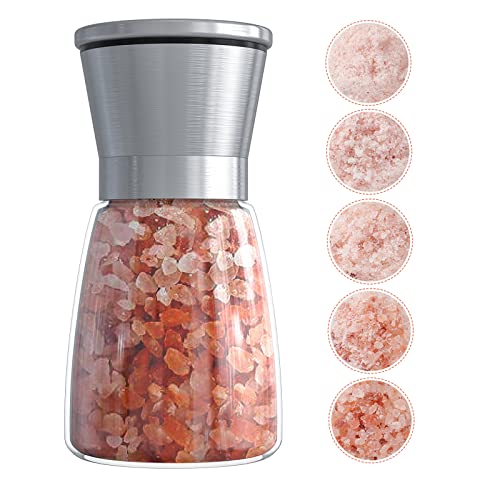 Ebaco Original Stainless Steel Salt or Pepper GrinderL2.6 x 2.6 x 5.3 inches0.5 poundsCheck on Amazon


Best Manual Salt and Pepper Mill Sets for 2026
The best manual salt and pepper mill set for most kitchens is a two-mill pair with a ceramic salt grinder, a hardened-steel pepper mechanism, at least six adjustment positions, a wide refill opening, and a finish that will not absorb moisture. That combination is more useful than choosing by appearance alone: salt can corrode ordinary steel, fine adjustments can clog with damp crystals, and a narrow opening quickly becomes frustrating when the mill needs refilling.
Quick comparison: which set fits your kitchen?
| Mill type or example | Grinder material | Adjustment range | Typical capacity | Refill opening | Best use |
|---|---|---|---|---|---|
| Classic wooden pepper and salt pair | Steel pepper; ceramic salt | Usually 4–6 positions | 25–35 g pepper; 40–60 g salt | About 20–25 mm | Dining table and traditional kitchens |
| Peugeot Paris-style manual set | Hardened steel pepper; ceramic salt mechanism | Continuous or 6-step pepper control | Approximately 30 g pepper; 45 g salt | Typically 20–25 mm | Precise pepper adjustment and frequent cooking |
| Cole & Mason Derwent-style set | Carbon or stainless steel pepper; ceramic salt | 6 settings or more | About 35 g pepper; 50 g salt | Often 25–30 mm | Users who want a broad grind range and easy filling |
| Large acrylic or stainless-steel duo | Steel pepper; ceramic or corrosion-resistant salt | 3–5 settings | 40–60 g pepper; 60–90 g salt | 25–35 mm | High-volume cooking and fewer refills |
| Compact travel or small-table set | Ceramic or small steel mechanisms | 2–4 settings | 10–20 g per mill | 15–20 mm | Small kitchens, picnics, and occasional use |
These figures are useful buying targets rather than universal specifications. Capacity changes with the shape of the body and the size of the salt crystals or peppercorns. A tall mill may hold more than a short one, but its narrow neck can make it harder to fill cleanly.
As an Amazon Associate we earn from qualifying purchases at no extra cost to you.


Best choices by situation
| Your priority | What to choose | Why |
|---|---|---|
| Lowest sensible price | Basic ceramic-and-steel pair, around $20–$40 | Good functionality without paying for premium wood or branding |
| Most precise cooking | Hardened-steel pepper mechanism with six or more settings | Better control from coarse seasoning to fine finishing |
| Small counter or table | 15–18 cm mills with 20–30 g capacity | Less visual and storage space, though refills are more frequent |
| Heavy daily use | 20–25 cm mills with a wide refill opening | More capacity and better leverage when grinding large amounts |
| Humid kitchen | Stainless exterior with a sealed cap and ceramic salt grinder | Less exposed wood and less risk of salt-related corrosion |
| One-handed operation | Vertical push-top mill or a long, lightweight lever design | Can be operated while stirring or holding a pan handle |
Grinder materials: the part that matters most
Steel for pepper
A quality steel pepper mechanism grips peppercorns, cracks them, and then grinds them. It should be made from hardened steel or similarly durable metal. Carbon steel can produce a particularly aggressive grind, but it needs protection from moisture. Stainless steel is more forgiving in a humid room and is less likely to develop surface corrosion if the mill is stored near a kettle or sink.
Look for a mechanism that separates cracking from grinding rather than simply crushing the pepper between two smooth surfaces. This usually produces a more even result and puts less strain on the adjustment collar. A six-position selector is adequate for most cooks; a continuously adjustable mechanism is preferable if you regularly switch between coarse rubs, medium seasoning, and fine table pepper.
Ceramic for salt
Salt is abrasive and attracts moisture. A ceramic mechanism is the safest general choice because it does not rust when exposed to salt. Do not assume that a matching pair uses identical internals: some sets use a good steel pepper grinder but a cheaper metal salt mechanism. Check the salt mill specification separately.
Use dry, free-flowing salt crystals unless the manufacturer specifically permits damp sea salt or wet salt. Large wet crystals can bridge the opening, overload the mechanism, and leave residue inside the body. A ceramic grinder is corrosion-resistant, not immune to clogging.
Adjustment range and actual usefulness
More settings are not automatically better. The important question is whether the adjustment stays in place during repeated turning. A collar that shifts from coarse to medium while you grind is less useful than a firm five-position selector.
- Fine: suitable for table seasoning and sauces where visible grains are unwanted.
- Medium: the most practical everyday setting for eggs, vegetables, pasta, and soups.
- Coarse: better for steaks, roasted vegetables, and recipes where pepper texture is part of the result.
- Extra coarse: useful for finishing, but often slower and more tiring with a small manual mill.
When comparing a product, turn the adjustment through its complete range before filling it. The collar should move with deliberate resistance, without grinding against the body. Avoid models where the adjustment screw is directly below the dispensing holes: the screw can collect salt or pepper dust and become difficult to clean.
Refilling, capacity, and moisture resistance
A 30 g pepper capacity sounds generous, but it depends on how often you cook. As a rough calculation, suppose a household uses 0.7 g of pepper per dinner and cooks at home five nights a week. A 30 g chamber contains about 43 dinner portions, or roughly eight weeks of use. If you season more heavily at 1.5 g per meal, the same mill lasts only 20 portions, or four weeks.
For salt, capacity is less important because a container of salt is usually close by. Refill design matters more. A removable top, hinged opening, or body that separates from the mechanism is easier to fill than a narrow hole beneath a fixed cap. Aim for an opening of at least 25 mm if you buy coarse crystals or refill with a scoop. A funnel helps, but an opening smaller than 15 mm still tends to trap dust around the threads.
Moisture resistance comes from several details working together:
- A ceramic salt mechanism rather than untreated steel.
- Stainless steel or sealed wood around the grinder assembly.
- A cap or plug that covers the dispensing holes when the mill is not in use.
- A dry storage position away from steam rising from a hob or dishwasher.
- A body finish that does not become slippery when handled with damp fingers.
Wooden mills can last for many years, but unsealed end grain around a refill opening may swell or stain. Acrylic is easy to inspect and clean, although it can show scratches. Stainless steel resists kitchen moisture well, but polished surfaces reveal fingerprints and can be slippery. Choose the material according to where the mill will live, not just how it looks in a product photograph.
One-handed use: a useful feature with trade-offs
Traditional twist mills normally require two hands: one hand holds the body while the other turns the top. That is fine at the dining table but inconvenient when seasoning food in a pan. Push-top mills allow one-handed operation by pressing a button or lever, and some designs dispense from the side so the grinding head is less likely to sit directly over steam.
The compromise is control. Push mechanisms commonly offer fewer adjustment positions, and the spring or ratchet is another part that can wear. A long, narrow manual mill may also be easier to operate with one hand than a short, wide model because it provides more leverage. If one-handed use is essential, check whether the mill can stand securely and whether the button requires enough force to disturb the pan or bowl.
Durability and ownership realities
The first parts to show wear are usually the adjustment threads, the ratchet or spring in a push-top design, and the seal around a refill cap. Pepper dust can work into the threads; salt residue can harden around the ceramic burrs. A premium body does not compensate for a mechanism that cannot be serviced or adjusted.
Do not wash a manual mill under running water or put it in a dishwasher unless the manufacturer explicitly allows it. Instead, empty it, wipe the exterior with a barely damp cloth, and dry it immediately. Brush loose pepper dust from the mechanism with a small, dry, soft brush. For salt buildup, remove the salt and let the mechanism dry fully before brushing it. Avoid oil inside the grinder: it attracts dust and can contaminate the seasoning.
Keep peppercorns and salt below the maximum fill line. Overfilling increases pressure on the mechanism and can make the top difficult to replace. Also avoid storing a salt mill beside an actively steaming pot. That small habit often makes more difference to service life than upgrading from one premium finish to another.
Bottom line
For most buyers, the strongest all-round choice is a medium-to-large pair with a hardened-steel pepper grinder, ceramic salt grinder, six or more stable settings, a 25 mm or wider refill opening, and a sealed or stainless exterior. Choose a compact pair when counter space matters, a push-top design when you season while cooking, and a larger traditional mill when capacity and leverage are more important than one-handed use. The best manual salt and pepper mill set is the one whose grinder material matches its contents and whose refill and cleaning design suits the way your kitchen actually operates.