
Key takeaways
- Compare PSI Woodworking Turncrafter lathes on Amazon US, the Commander 10 inch and the Tailspinner, on swing, capacity, speeds and tailstock design.
What's inside
As an Amazon Associate I earn from qualifying purchases. This post may contain affiliate links at no extra cost to you.
Choosing a PSI Woodworking lathe comes down to one mechanical question: how do you plan to hold the work? Both Turncrafter models below share the same spindle thread, the same Morse tapers and cast iron construction, so chucks and centers move freely between them. What actually separates them is capacity and tailstock design. The standard Commander stretches to 18 inches between centers for spindle work, while the Tailspinner gives up some of that length for a live tailstock that lets you reverse a bowl blank without re-chucking it and losing your center.
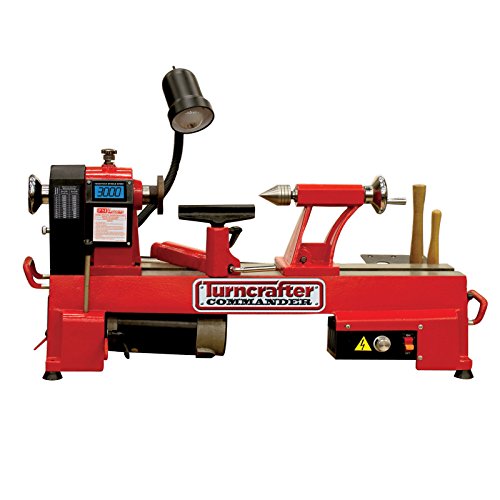
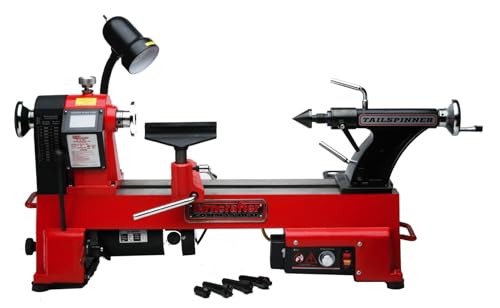
This guide is for pen turners stepping up to a first midi lathe, bowl turners who reverse work on the tailstock, and small-shop owners who need a benchtop machine that stores away. Both picks are PSI Woodworking Turncrafter lathes selected from their Amazon US listings, using the model names, capacities and speed ranges printed on those product pages.
Quick Picks
As an Amazon Associate we earn from qualifying purchases
| Product | Best for | Key spec from title |
|---|---|---|
| PSI Woodworking KWL-1018VS Turncrafter Commander 10-Inch Variable Speed Midi Lathe | Longer spindle work and general turning | 10-Inch Variable Speed |
| PSI Woodworking TCLT10VS Turncrafter Commander Tailspinner 10-Inch Variable Speed Midi Lathe | Bowl turners who reverse blanks | Tailspinner live tailstock |
How to Choose
Swing and distance between centers
Swing tells you the largest diameter that clears the bed, and distance between centers tells you the longest spindle you can mount. Both lathes here swing 10 inches, which covers pens, bottle stoppers, pepper mills and modest bowls, but their lengths differ. The Commander holds 18 inches between centers, enough for chair spindles, rolling pins and tool handles. The Tailspinner holds 14-1/2 inches, fine for bowls and short spindles yet tight for long handles. Measure your longest planned blank before choosing, because an optional extension bed is the only way to gain length later.
Speed control and belt positions
Every Turncrafter in this roundup uses electronic variable speed paired with two belt positions, so the dial handles fine adjustments while the belt sets the working range. Low range is where roughing happens: it gives the torque to true up an unbalanced blank without stalling. High range suits pens, small spindles and final sanding, where surface speed keeps cuts clean. The Commander spans its ranges a little wider at the bottom, while the Tailspinner starts slightly lower for gentle bowl roughing. Either way, plan to move the belt when you switch between roughing and finishing stages.
Standard tailstock versus the Tailspinner live tailstock
On a conventional lathe the tailstock holds a center, and reversing a bowl means removing the chuck, flipping the piece and re-centering it by eye. The Tailspinner changes that hardware: its tailstock spindle is threaded and tapered exactly like the headstock spindle, so a chuck or faceplate mounts on either end. You can leave the work attached, flip it, and turn the other side while it stays on the same axis. The spindle also locks with a handle when you want ordinary tailstock behavior. If most of your work is spindles, this matters little; for bowls, it removes a fiddly step.
Weight, footprint and growing room
Both machines weigh 82 pounds and sit on the same 31 by 7-1/4 inch cast iron footprint, so either one anchors a sturdy bench yet can still be lifted aside by two people or carried with its built-in handles. That shared footprint matters for upgrades too: both accept PSI extension beds, the TCLC10XB and KWLXBED10, which stretch spindle capacity well beyond the stock bed for occasional long work. Check that your bench depth suits the footprint plus room behind the tailstock to slide it off, and confirm the listing shows the current model code before ordering either machine.
The 2 Best Options
PSI Woodworking KWL-1018VS Turncrafter Commander 10-Inch Variable Speed Midi Lathe
The Commander 10 is the straightforward choice when your projects lean toward spindle work. Its 18 inches between centers swallow table legs in sections, rolling pins and baseball bat blanks in shorter lengths, while the 10-inch swing still leaves room for small bowls and platters. The variable speed motor and SBC microprocessor hold a steady dialed speed as the cut loads up, and the 24 indexing positions with spindle locking help with fluting and layout work. It replaces the older TCLC10VS and carries ETL listing through Intertek, which matters to buyers who want a certified machine.
Specs
- Model: KWL-1018VS, replaces the TCLC10VS
- Motor: 3/4 HP variable speed motor with SBC microprocessor control
- Speeds: 500 to 2,000 RPM and 1,500 to 3,600 RPM across two belt positions
- Swing over bed: 10 inches
- Distance between centers: 18 inches
- Headstock thread: 1 inch x 8 TPI; headstock and tailstock taper: #2MT
- Construction: cast iron
- Indexing: 24 positions with spindle locking
- Certification: ETL Listed, certified by Intertek
- Weight: 82 pounds
- Warranty: 3 years
Best for: Turners whose work is mostly spindles, pens and small bowls, and who want the longest between-centers capacity in the PSI midi line.
Watch out for: The tailstock is a conventional design, so reversing a bowl blank means re-chucking and re-centering it yourself; if that step frustrates you, look at the Tailspinner below instead.
PSI Woodworking TCLT10VS Turncrafter Commander Tailspinner 10-Inch Variable Speed Midi Lathe
The Tailspinner is built around a single idea: the tailstock should work like a second headstock. Its tailstock spindle carries the same 1 inch x 8 TPI thread and number 2 Morse taper as the headstock, so the chuck holding your bowl can mount on either end. Reverse the blank to hollow or finish the foot and it stays registered on the same axis, with no re-chucking and no hunting for center. A handle locks the live tailstock spindle when you want standard tailstock support for spindle work, and the included dead centers, mandrel saver and safety center suit pen turning as well.
Specs
- Model: TCLT10VS, red and black finish
- Tailstock: live tailstock spindle identical to the headstock spindle, 1 inch x 8 TPI thread and #2 Morse taper, lockable with a handle
- Motor: 1 HP variable speed 110V motor with SBC microprocessor control
- Speeds: 450 to 1,700 RPM and 950 to 3,800 RPM across two belt positions, with digital readout
- Swing over bed: 10 inches
- Distance between centers: 14-1/2 inches
- Quill travel: 4 inches
- Indexing: 24 positions
- Construction: cast iron base, footprint 31 x 7-1/4 inches, built-in handles
- Work light: flexible cable light, 18 inches
- Includes: 6 inch and 12 inch tool rests with 5/8 inch post, 3 inch faceplate, two 4-prong dead spur centers, 60 degree dead center, dead mandrel saver, dead safety center, tool caddy, hex wrenches, screwdriver, knockout rod, safety goggles
- Accepts optional extension beds TCLC10XB and KWLXBED10
- Weight: 82 pounds
Best for: Bowl turners who reverse blanks to finish the base, and anyone who wants chuck work to stay centered when flipped end for end.
Watch out for: Between-centers capacity drops to 14-1/2 inches, so long spindles need the optional extension bed, which is a separate purchase; confirm the bed matches this model code before adding one.
Which One Fits Your Situation
You turn mostly pens, stoppers and small spindle gifts
Take the Commander 10. Pens, bottle stoppers, seam rippers and similar small work live comfortably inside its 18 inches between centers, and the standard tailstock setup is exactly what mandrel work expects. The wider top speed range polishes small diameters quickly, and you keep the option of adding an extension bed later if a longer project shows up unexpectedly.
You turn bowls and hate re-centering after a flip
Take the Tailspinner. Bowl work constantly asks you to turn the blank around: shape the outside, reverse it, hollow the inside, then reverse again for the foot. Because its tailstock accepts the same chuck as the headstock, the piece stays mounted and centered through every flip. That single hardware difference saves the most tedious minutes in a bowl session and protects the rim from off-center remounts.
Your shop is a shared bench that has to clear
Either lathe works, since both share the same footprint, weight and carry handles, so choose by project type instead of space. Bolt or clamp the machine down while turning, then lift it aside when the bench is needed for assembly. The Tailspinner’s shorter bed is marginally easier to store on a shelf, but the difference is small enough that capacity should decide the purchase.
You plan to attempt longer spindles down the road
Start with the Commander 10, because its 18-inch stock capacity already covers most furniture parts, and both machines accept the same PSI extension beds when a project outgrows the bed. Buying the longer lathe first delays the extension purchase until you truly need it, and the extension then turns an occasional long job into a setup task rather than a second machine purchase.
Common Mistakes
- Buying on swing alone and forgetting between-centers length, then discovering a rolling pin or spindle blank will not fit the shorter Tailspinner bed.
- Roughing an unbalanced bowl blank at high speed instead of starting in the low belt range, which shakes the bench and stresses the bearings.
- Ordering chucks or centers without checking the thread and taper; every lathe here uses 1 inch x 8 TPI and #2MT, which differs from larger floor lathes.
- Skipping the extension bed question at purchase time, then paying separate shipping later when a long project appears.
- Assuming the Tailspinner tailstock replaces a chuck; you still need a chuck or faceplate that threads onto its spindle to hold work.
Frequently Asked Questions
Are PSI Woodworking lathes the same company as Penn State Industries?
Yes. PSI Woodworking is the tool brand of Penn State Industries, the Philadelphia company behind the Turncrafter lathe line and a large catalog of pen kits and turning accessories. That shared ownership is why Turncrafter lathes, extension beds, mandrels and project kits are designed around the same spindle sizes and tapers, and why parts and manuals are sold under both names.
Can I use the same chuck on both of these lathes?
Yes, as long as the chuck threads onto a 1 inch x 8 TPI spindle or mounts with an insert that does. Both headstocks use that thread with a number 2 Morse taper, and the Tailspinner’s tailstock spindle matches it as well. Chucks with a different factory thread need a threaded insert or adapter, so check the chuck’s specification against the spindle before ordering.
Which lathe is better for a complete beginner?
The Commander 10 is the simpler starting point. Its conventional headstock and tailstock layout matches most beginner books and videos, its capacity covers the usual first projects, and there is less hardware to understand. The Tailspinner rewards bowl-focused beginners, but its live tailstock makes more sense once you have felt the annoyance of re-centering a flipped bowl blank yourself.
Does either lathe include a stand?
No stand is listed with either machine. Both are benchtop lathes with cast iron bases and rubber feet, designed to sit on a solid workbench. Plan on a bench that can carry 82 pounds plus the force of an unbalanced blank at startup, or budget separately for a stand rated for midi lathes, and leave clearance behind the tailstock for removal.
Related guides
More from Amazon
Programs that pair well with the guide above. Offers and eligibility are set by Amazon and may change.
A free business account with business pricing and bulk-buying tools for work, shop or home office.
Create a business accountFree shipping on eligible items, Prime Video and more. Eligible new members can start with a free trial.
Start a Prime free trialAudiobooks and podcasts to listen to on the go. Eligible new members can start with a free trial.
Try Audible freeAd-free music streaming. Eligible new subscribers can start with a free trial.
Try Music Unlimited freeAs an Amazon Associate we earn from qualifying purchases.









