What's inside
As an Amazon Associate I earn from qualifying purchases. This post may contain affiliate links at no extra cost to you.
A vacuum muffler can reduce the exhaust hiss from a shop vacuum, but it does not make a loud vacuum quiet, and it is not a substitute for a filter or dust separator. For fine-dust work, the useful choice depends on where the noise comes from, how much airflow your tool needs, and whether the muffler will fit the vacuum’s exhaust outlet.
As an Amazon Associate we earn from qualifying purchases at no extra cost to you.


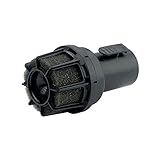

What a muffler can and cannot do
A shop vacuum draws air through its hose and filter, then pushes it out through an exhaust port. A muffler or exhaust silencer attaches at that outlet and helps soften the rushing-air sound. It may make the vacuum less irritating nearby, but the motor, vibration, and air leaks still make noise. Expect a modest change rather than a dramatic transformation; results vary with the vacuum, muffler design, and setup.
For fine dust, exhaust treatment is secondary to filtration and collection at the tool. A muffler does not capture dust, and a poorly fitted attachment can restrict airflow or send exhaust where it disturbs settled dust. Use a suitable fine-dust filter and, when the material or task requires it, a properly rated dust extractor. Keep the exhaust pointed away from the operator and work surface.
Which type to buy
For occasional use, start with a muffler made for your vacuum’s outlet rather than assuming a universal part will fit. Check the outlet diameter, attachment style, and whether the manufacturer permits an exhaust accessory. A shop-vac exhaust muffler is the simple option when the fit is clear and the vacuum is used intermittently.
If you run the vacuum for long sessions or connect it to sanders, prioritize airflow and heat management over the lowest price. Some silencers use a larger chamber or sound-absorbing material, but added restriction can reduce suction at the tool. A low-restriction exhaust silencer is worth considering if its specifications match your vacuum; “quiet” in a product title is not an airflow rating.
Muffler choices at a glance
| Option | Best for | Trade-off | Check before buying |
|---|---|---|---|
| Basic outlet muffler | Short jobs and occasional cleanup | May have limited noise reduction | Outlet fit and secure attachment |
| Larger silencer | Longer runs where exhaust noise is prominent | Bulkier; restriction varies by design | Airflow, temperature, and clearance |
| DIY exhaust extension | Redirecting exhaust away from the operator | Not necessarily quieter; can add back pressure | Wide, short path with no blocked outlet |
| No muffler | Low-cost, simple setups | Full exhaust hiss remains | Keep outlet clear and direct it safely |
Set up for fine dust first
A muffler cannot compensate for a clogged or unsuitable filter. Use the filter specified for your vacuum and dust, and inspect it often. Fine sanding dust can load a filter quickly, reducing airflow and making a vacuum seem weak even when the motor is running normally. If the vacuum has a filter-cleaning feature, use it as directed; do not knock a delicate filter against a hard surface unless its instructions allow it.
For repeated sanding or routing, a pre-separator can keep larger debris out of the vacuum and extend filter life. It adds another container and hose connection, so check for leaks and avoid narrow fittings that choke the system. A cyclone separator for a shop vacuum can be useful for bulk dust and chips, but it does not replace final filtration, especially for fine particles.
Use a hose sized for the tool port and keep it as short and straight as the work allows. Every bend, reducer, and leaking joint costs airflow. If a sander’s dust port is small, an adapter may be necessary, but a long run of small-diameter hose can leave dust behind. Check that the tool’s ports are open and that the hose is not kinked before blaming the muffler.
Install and test without guessing
Unplug the vacuum before fitting anything to the exhaust. Make sure the muffler locks on securely and does not cover a cooling vent or obstruct the outlet. Do not seal a loose fitting with tape in a way that could peel inward or block airflow. Avoid improvised narrow tubes: a long, small-bore extension can increase back pressure, heat, and motor strain.
Test the system for a few minutes with the tool attached. Compare suction at the tool with and without the muffler, using the same hose and filter condition. Watch for a marked drop in pickup, unusual heat, a new motor tone, or an automatic thermal shutdown. If any appear, remove the muffler and check the fit and passage for obstructions. Do not run the vacuum with its exhaust blocked.
When the cheaper option is fine
If the vacuum is used for brief cleanup and the exhaust is not the main noise source, skip the muffler or choose a basic compatible one. Put the vacuum farther from the work, use a sound-dampening enclosure with generous ventilation, and secure hoses so they do not rattle. Never box in a running vacuum without allowing cooling air; overheating is a real failure mode, not a minor inconvenience.
For regular fine-dust extraction, spend first on the right filter, a sound hose connection, and reliable capture at the tool. Buy a muffler only if exhaust noise remains a problem and the accessory preserves usable airflow. Wear hearing protection when exposure warrants it: a muffler may improve comfort, but it does not certify the shop vacuum as safe to run without protection.