What's inside
As an Amazon Associate I earn from qualifying purchases. This post may contain affiliate links at no extra cost to you.
Fine wood dust is hard on a workshop floor. It drifts out from under machines, settles on shelves and gets stirred back into the air by shoes and broom bristles. A wet/dry vacuum can collect it, but a basic model with a poor filter may send the finest particles straight back into the shop. The best choice depends on the floor area, how often you clean and whether you already have dust collection at the machines.
As an Amazon Associate we earn from qualifying purchases at no extra cost to you.
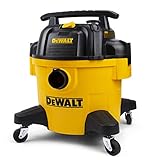


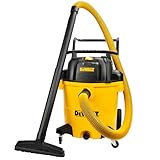
What matters in a workshop vacuum
For floor cleanup, prioritize filtration, airflow and a usable floor nozzle over tank capacity. A large tank is handy for chips, but it does not make a vacuum better at capturing fine dust. Look for a cartridge filter rated for fine dust, plus a sealed or well-fitting filter system. A HEPA filter can improve fine-particle capture, but only if air cannot bypass it around the filter or through the vacuum’s exhaust.
Airflow matters because a vacuum has to keep dust moving through the hose and nozzle. A narrow hose can clog with shavings; an oversized hose and wide floor tool can be awkward on a small shop floor. For routine cleanup, a roughly 1¼- to 2½-inch hose is common. Check the included floor tool: a smooth, wide nozzle works well on concrete, while a brush-equipped head can help on uneven floors or around benches.
Consider noise, storage and how the vacuum connects to other tools. Many shop vacuums are loud enough to make hearing protection sensible, especially in a small room. If you want one unit for machine dust collection and floor cleanup, check the port size, adapter availability and whether the vacuum supports automatic tool activation. Those features add convenience, but they do not replace a dedicated dust collector for machines that produce a lot of dust.
Vacuum types compared
| Type | Best use | Trade-off |
|---|---|---|
| Basic wet/dry vacuum with fine-dust filter | Small shops, occasional floor cleanup and general debris | Affordable, but filtration and sealing vary; inspect the filter often |
| Dust extractor with fine-particle filtration | Frequent cleanup and use with portable power tools | Better filtration and tool connections, but costs more and may have a smaller tank |
| Dust collector | Stationary machines that make a steady volume of chips and dust | Moves more air through larger ducts, but is less convenient for vacuuming floors |
Best choice for most small workshops
A wet/dry vacuum with a fine-dust cartridge filter is a sensible buy for a small shop that needs occasional floor cleanup. Pair it with a floor nozzle and a disposable collection bag if the vacuum accepts one. The bag catches much of the dust before it reaches the filter, making emptying cleaner and reducing filter loading. Bags add ongoing cost and can tear if sharp scraps get sucked in, so remove large chips and offcuts by hand first.
Compare wet/dry shop vacuums with fine-dust filters by checking filter availability, hose diameter, included attachments and bag compatibility—not just motor horsepower. If cleanup is occasional and your existing vacuum has a suitable filter, upgrading the filter and adding a bag may be cheaper than replacing the whole unit.
When a dust extractor is worth the cost
Choose a dust extractor if you vacuum fine dust frequently, connect to sanders or track saws, or need to minimize dust escaping during cleanup. Many extractors include better filter cleaning and tool-start features. Filter cleaning can be manual or automatic; either way, a clogged filter reduces suction, and a vacuum that seems weak may need filter maintenance rather than a larger motor.
Before buying, confirm the extractor has a floor kit or that a compatible nozzle is available. Some are optimized for tools and ship with a short hose or small accessories that are inconvenient for sweeping a full floor. A HEPA dust extractor for woodworking can be useful where fine-dust control is a priority, but its price is difficult to justify for a garage shop that only needs a quick cleanup every few weeks.
How to vacuum fine dust without spreading it
Let airborne dust settle before cleaning, then vacuum slowly with the nozzle close to the floor. Use overlapping passes rather than sweeping quickly; a fast pass can leave dust behind or push it into corners. Start at the far side of the shop and work toward the exit. Use a crevice tool around machine feet and wall edges, but avoid pressing a narrow nozzle hard against the floor, which can restrict airflow and reduce pickup.
Do not use a vacuum that lacks a suitable filter for fine dust. If dust appears around the exhaust, stop and check that the filter is seated, undamaged and appropriate for the material. A torn filter or missing seal can turn cleanup into dust distribution. Empty the tank outdoors where possible, wear a well-fitting respirator, and avoid dumping loose dust into an indoor trash can. Keep the filter clean according to the manufacturer’s instructions; banging it on the floor can damage it.
Common buying and maintenance mistakes
Do not treat a shop vacuum as the primary dust-control system for a table saw, planer or jointer. A vacuum may collect some debris, but many stationary machines need a dust collector with larger ducts and higher airflow. Capture dust at the source, then use the vacuum for residue and corners. Fine dust left in the air can still be a health hazard, so combine source collection with ventilation and suitable respiratory protection.
Also avoid assuming that a “HEPA-style” label means certified HEPA performance, or that a powerful motor guarantees good filtration. Read the filter specifications and look for replacement parts before buying. If your shop is small and use is light, a basic wet/dry vacuum with a proper fine-dust filter and collection bag is often enough. If you clean daily or connect the vacuum to tools, paying more for a sealed extractor and convenient filter cleaning can save time—and keep more dust out of the breathing zone.