
What's inside
As an Amazon Associate I earn from qualifying purchases. This post may contain affiliate links at no extra cost to you.
The NOVA Viking is the better choice for serious woodworkers who need large work capacity and electronically controlled speed, while the smaller NOVA Voyager makes more sense when bench space, budget, and portability matter more than maximum drilling depth. In 2026, the Viking sits in the premium floor-standing drill press category: powerful, unusually adjustable, and capable of handling large woodworking fixtures, but expensive and physically demanding to place.
As an Amazon Associate we earn from qualifying purchases at no extra cost to you.
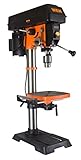
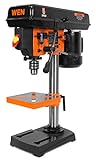


NOVA Viking drill press: what you are buying
The NOVA Viking uses NOVA’s DVR electronic drive system rather than a conventional stepped pulley arrangement. Its nominal specification is approximately 1.75 hp, an 18-inch swing, about 6 inches of quill travel, and electronically adjustable speed in a broad woodworking-oriented range. Exact electrical versions and published speed limits can vary by market, so confirm the specification plate before ordering.
The important distinction is not simply horsepower. The Viking lets you change speed without opening a belt cover and moving belts between pulleys. That is valuable when switching from a small brad-point bit to a large Forstner bit, sanding drum, plug cutter, or sanding accessory. The motor also maintains useful torque at lower speeds better than many inexpensive induction-motor presses.
It is still a drill press, not a milling machine. The column, quill, and table are designed for axial drilling and light accessory work. Forcing a side load into the quill, using it as a router, or attempting heavy metal milling can damage the machine and create a safety hazard.
Speed control and drilling performance
Speed control is the Viking’s strongest feature. A dial or electronic control allows fine adjustments, while the digital drive system can make repeatable settings easier than counting pulley positions. That matters when a project calls for different materials: hardwood, softwood, plastic, and thin metal all benefit from different speeds.
For wood, the broad adjustment range is useful because bit diameter changes the recommended speed dramatically. A small 1/4-inch bit can run much faster than a 2-inch Forstner bit. At the other end, large hole saws and Forstner bits need slower operation to reduce heat and prevent burning.
Electronic control does not eliminate technique. A dull bit, excessive feed pressure, a poorly supported workpiece, or a clogged flute can still overheat the cut. The Viking’s torque makes it easier to keep a large cutter moving, but it can also hide the warning signs of an overly aggressive feed.
Capacity, table usability, and footprint
The approximately 18-inch swing gives the Viking a 9-inch working distance from the bit center to the column. That is enough for many cabinet doors, wide drawer parts, chair components, and large shop-made jigs. Around 6 inches of quill travel is also generous for boring deep holes without repeatedly resetting the workpiece.
The table is one of the reasons to choose a floor model. It provides substantially more support than a typical benchtop press and can be paired with a sacrificial wooden surface or a custom fence. Look for a table with reliable height adjustment and locking hardware; a table that shifts under load defeats the accuracy advantage of a large machine.
Its disadvantages are practical. The Viking needs permanent floor space, a stable base, and enough clearance to rotate or move long stock. The head and column are heavy, so assembly is not a casual one-person setup. Measure the machine’s footprint plus the space needed to feed long boards before buying. A corner that fits the base may still be unusable if the workpiece hits a wall.
| Press or type | Nominal power | Approx. swing | Approx. quill travel | Speed approach | Typical 2026 market range |
|---|---|---|---|---|---|
| NOVA Viking | 1.75 hp | 18 in. | 6 in. | Electronic variable speed | $2,000–$3,000 |
| NOVA Voyager | About 1 hp | Benchtop class, approximately 18 in. | About 3 in. | DVR electronic variable speed | $1,000–$1,600 |
| JET JDP-17 | 3/4 hp | 17 in. | About 4 in. | Stepped pulley | $900–$1,300 |
| Powermatic PM2800B | 1 hp | 18 in. | About 4-5/8 in. | Stepped pulley | $1,500–$2,200 |
| 12-inch benchtop press | 1/2–3/4 hp | 12 in. | 2-3 in. | Stepped pulley or basic electronic control | $250–$700 |
These are broad new-equipment ranges rather than fixed quotations. Configuration, voltage, dealer inventory, shipping, and regional pricing can move the final cost considerably. The NOVA Voyager drill press is included because it is the closest NOVA alternative for buyers who want the DVR control system without committing to the Viking’s floor-standing size.
Viking versus Voyager: which NOVA fits your shop?
The Voyager gives up power, depth, and some heavy-work stability, but its smaller format is a major advantage in a compact shop. It can sit on a stout bench or dedicated stand, and it is easier to move when the shop must serve several purposes. For furniture hardware, doweling, small mortises, pen-making accessories, and ordinary cabinet work, the Voyager may provide nearly all the useful capability at a lower cost.
Choose the Viking when the work regularly includes large panels, deep boring, wide workpieces, large Forstner bits, repeated production drilling, or custom jigs that benefit from a spacious floor-model table. Choose the Voyager when the press is used several times a month rather than continuously, when most bits are under 1 inch, or when floor space is more valuable than maximum capacity.
Decision matrix
| Your situation | Best fit | Why |
|---|---|---|
| Small shop, shared bench, occasional drilling | NOVA Voyager | Smaller footprint and lower investment while retaining electronic speed control |
| Frequent cabinet and furniture production | NOVA Viking | Greater quill travel, table support, torque, and repeatable speed adjustment |
| Lowest purchase price | 12-inch benchtop press | Much cheaper, though with less capacity and less refined speed control |
| Large workpieces but preference for mechanical simplicity | Powermatic PM2800B or similar floor press | Strong capacity without electronic drive complexity |
| Mostly small holes and light jigs | Voyager or quality benchtop press | The Viking’s extra capacity may remain unused |
Ownership realities and common mistakes
The first items likely to show wear are chuck jaws, belts or drive components, quill-return parts, table-lock hardware, and the cutting tools themselves. Electronic drive systems remove routine belt changes but do not make the machine maintenance-free. Keep dust away from controls and ventilation openings, vacuum the column and table after use, and lubricate moving points according to the manual rather than applying heavy grease everywhere.
Accuracy depends heavily on setup. Level the base, ensure the column is firmly secured, check that the table is square to the quill, and verify chuck runout with a suitable test indicator if precision matters. A common mistake is treating a large drill press as automatically accurate after unboxing. A loose table lock or a fence mounted to an unstable sacrificial board can introduce more error than the machine itself.
Budget for accessories. A good drill press vise, clamp set, sacrificial insert, depth-stop method, brad-point bits, Forstner bits, and a dust-management solution can add several hundred dollars. If you buy the Viking but use only a small twist bit and a basic table, you are paying for capacity you may not exploit.
Value verdict
The NOVA Viking drill press is good value for a woodworker who will use its capacity and variable-speed system frequently. Its premium price is easier to justify when speed changes are frequent, large cutters are routine, and the machine will remain a central production tool for years. It is less compelling for occasional drilling, small projects, or a shop where every square foot matters.
For most compact workshops, the NOVA Voyager is the more balanced purchase. For the lowest-cost entry, a conventional 12-inch benchtop press is sufficient for many basic operations. The Viking earns its place when its 18-inch-class reach, deeper quill, larger table, and stronger electronic drive will save setup time or make work possible that smaller presses cannot handle.
Bottom line
Buy the NOVA Viking for high-frequency woodworking, large workpieces, deep holes, and precise control over changing bit sizes. Buy the NOVA Voyager drill press for a capable, space-conscious shop that still wants modern electronic speed adjustment. Before ordering either one, confirm the exact voltage, speed range, table dimensions, included chuck, and service support for your region; those details can affect both compatibility and long-term value.