What's inside
As an Amazon Associate I earn from qualifying purchases. This post may contain affiliate links at no extra cost to you.
A compact edge sander can remove material quickly, but it also produces a steady stream of fine dust along the entire sanding belt. The machine’s small footprint does not mean it has small dust-collection needs. A weak shop vacuum may catch the larger chips while allowing fine dust to escape around the belt, table, and workpiece.
The best setup depends on the sander’s dust port, how often you use it, and whether you already own a shop vacuum or dust collector. For occasional edge sanding, a good 2-1/2-inch vacuum hose and a high-efficiency filter can be enough. For regular furniture work, a 4-inch dust collector with a cyclone separator is usually the more reliable choice.
As an Amazon Associate we earn from qualifying purchases at no extra cost to you.

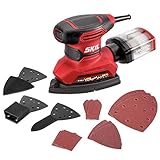


Start With the Sander’s Dust Port
Measure the outside diameter of the machine’s dust port rather than relying on the port’s advertised size. A nominal 2-1/2-inch port may measure slightly differently, and adapters can introduce restrictions. Keep the hose as short and straight as possible. A long, flexible hose with several reducers can cut airflow enough to leave dust behind.
Check whether the port is connected to the lower belt enclosure, the sanding table, or both. Some compact sanders collect reasonably well from the lower housing but leak dust at the exposed belt. If the design has two ports, connect both when practical. If you must choose one, prioritize the port closest to the point where the belt returns into the machine, because that area often carries dust into the enclosure.
A simple test is to place a strip of tissue near the machine’s gaps while the collector is running. The tissue should pull toward the enclosure, not blow outward. This is not a substitute for measuring airflow, but it quickly reveals a reversed or poorly sealed connection.
Choose the Right Collector
| Setup | Typical airflow | Best use | Main limitation |
|---|---|---|---|
| Shop vacuum with 2-1/2-inch hose | About 80–150 CFM at the tool | Occasional sanding and short hoses | Filter loading and limited capacity |
| Single-stage dust collector with 4-inch hose | About 300–600 CFM at the tool | Frequent edge sanding and larger workpieces | Less convenient and louder |
| Collector with cyclone separator | Similar airflow to its collector | Regular use and fine-dust control | Higher cost and more floor space |
For a compact edge sander, aim for roughly 150 CFM at the machine with a vacuum setup, or 300 CFM or more with a 4-inch dust collector. These are practical targets, not guarantees. Airflow falls sharply through small ports, clogged filters, undersized hoses, and restrictive blast gates.
A HEPA shop vacuum with a 2-1/2-inch hose is the sensible low-cost option when the sander is used for a few minutes at a time. It is also easier to roll out of the way in a small shop. The cheaper option is fine if you empty the drum before it is half full and clean or replace the filter as soon as airflow drops.
When a Dust Collector Makes More Sense
Choose a dedicated 1.5 HP dust collector with a 4-inch hose if you sand hardwood regularly, run the machine for long sessions, or share the collector with a planer or table saw. A larger hose moves more air with less resistance, which helps capture dust before it leaves the sanding enclosure.
A single-stage collector with a fabric bag can work, but the upper bag must be rated for fine dust. A loose-woven bag may pass the finest particles directly into the room. A cartridge-filter collector generally provides better filtration, but the filter only works well when it is clean. Do not judge performance by the sound of the motor; judge it by airflow at the sander and the dust left on nearby surfaces.
A cyclone separator is useful when the sander generates a lot of material. It removes most of the heavier debris before it reaches the vacuum or collector filter. That keeps suction more consistent and reduces filter cleaning. A small cyclone placed between a shop vacuum and the sander is often a better upgrade than buying a more powerful vacuum.
Hoses, Fittings, and Sealing
Use the largest hose that matches the machine without creating a sharp transition. For a shop vacuum, a smooth-bore 2-1/2-inch hose is preferable to a narrow accessory hose. For a dust collector, use 4-inch flexible hose and avoid reducing it at the collector outlet.
Seal loose joints with foil HVAC tape or purpose-made dust-collection gaskets. Do not permanently glue fittings until you have confirmed the best hose arrangement. A leak at an adapter can waste a surprising amount of airflow, especially on a vacuum system.
Install a blast gate near the collector if other tools share the line. Keep unused branches closed. An open branch can reduce suction at the edge sander enough to turn acceptable collection into visible dust leakage. Grounding a long plastic duct system may reduce static shocks, but it does not replace proper filtration or safe electrical wiring.
Filtration and Maintenance
Fine sanding dust is the health concern, not just the visible pile in the drum. Use a sealed vacuum with a high-efficiency or HEPA filter, and make sure the filter is intended for the dust type and machine. A disposable collection bag can improve containment and simplify emptying, although it adds operating cost.
Clean the filter outside, wearing a suitable respirator and eye protection. Do not shake a fine-dust filter inside the shop. Inspect the hose for packed dust, especially at reducers and elbows. If the motor sounds strained or suction drops after only a few minutes, stop sanding and find the restriction instead of continuing with a partially blocked system.
Layout and Safe Operation
Put the collector close enough to the sander that the hose stays under 10 feet if possible. Keep the hose away from the belt, workpiece, and operator’s feet. A wall-mounted hose reel or a ceiling drop can save floor space, but it should not pull sideways on the machine’s dust port.
Run the collector before starting the belt and leave it running for at least 15 seconds after sanding stops. Never sand with the enclosure door open or with a removed guard. Fine dust can ignite under unusual conditions, so keep sparks, open flames, and hot grinding debris away from the collection hose and drum. Empty the collector before it becomes heavy enough to restrict airflow or make the machine unstable.
For most compact shops, the buying decision is straightforward: choose a HEPA shop vacuum for light, intermittent work; add a cyclone when filter loading becomes a nuisance; and move to a 4-inch dust collector when the edge sander is a regular production tool. The collector is only part of the solution. Short hose runs, sealed fittings, a clean filter, and a closed unused branch often improve results more than a larger motor.