
What's inside
- Best budget table saws under $500 at a glance
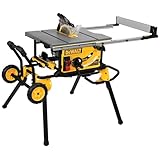
- 1. DEWALT DWE7485: the best low cost table saw for most people
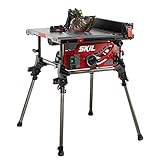
- 2. SKILSAW SPT99: the power pick when a sale brings it below $500
- 3. Metabo HPT C10RJS: maximum rip capacity for the money
- 4. Craftsman 10-inch jobsite saws: the best low priced table saw for occasional projects
- 5. Ryobi benchtop saws: compact and affordable, with clear limits
- Head-to-head: which saw fits your situation?
- What you really save with a sub-$500 saw
- Setup checks that matter more than the brand
- Ownership realities and common mistakes
- What about SawStop and Craftsman table saw prices?
- Final verdict
- Related Guides
As an Amazon Associate I earn from qualifying purchases. This post may contain affiliate links at no extra cost to you.
The best low price table saw for most buyers in 2026 is the DEWALT DWE7485, while the SKILSAW SPT99-11-style portable category is worth considering when cutting power matters more than weight; for the lowest-cost occasional-use option, choose a Craftsman or Ryobi benchtop saw and budget for a better miter gauge.
Below $500, every table saw makes a compromise. A jobsite model usually gives you a more useful fence and larger rip capacity, but costs more and may arrive with a mediocre miter gauge. A benchtop model saves money and storage space, but typically has a smaller table, less rigid fence, and less comfortable long-sheet support.
As an Amazon Associate we earn from qualifying purchases at no extra cost to you.


Best budget table saws under $500 at a glance
| Model or product family | Typical 2026 price range | Blade | Rip capacity | Approx. weight | Best for |
|---|---|---|---|---|---|
| DEWALT DWE7485 | $350–$450 | 8-1/4 in. | 24-1/2 in. | 46 lb | Best overall jobsite saw |
| SKILSAW SPT99 portable family | $400–$500 when discounted | 10 in. | About 30–32 in., depending on version | About 70–80 lb | Thick stock and demanding cuts |
| Metabo HPT C10RJS | $350–$500 | 10 in. | About 35 in. | About 96 lb with stand | Large rip capacity on a rolling stand |
| Craftsman 10-in. jobsite saws | $250–$400 | 10 in. | About 24–30 in., depending on model | About 50–65 lb | Value-conscious DIY work |
| Ryobi 8-1/4-in. or 10-in. benchtop saws | $200–$350 | 8-1/4 or 10 in. | About 12–24 in., depending on model | About 50–75 lb | Small shops and occasional projects |
Prices are broad market ranges rather than fixed quotes; included stands, promotions, blade packages, and regional availability can change the final price. Verify the exact model suffix before buying, because manufacturers often sell visually similar saws with different fences or stands.
1. DEWALT DWE7485: the best low cost table saw for most people
The DWE7485 is the strongest all-around choice when you want a compact saw that is easy to store but still capable of breaking down plywood. Its rack-and-pinion fence is the key advantage: the front and rear fence ends move together, making width adjustments quicker and usually more repeatable than the sliding fences on cheaper saws.
- Rip capacity: 24-1/2 inches to the right of the blade.
- Out-of-box fence: Usually the most confidence-inspiring in this group, although the rails and fence should still be checked for parallel alignment.
- Miter gauge: Functional but basic. It has limited support and can have noticeable side play in the slot.
- Where it cuts corners: The smaller 8-1/4-inch blade has less maximum depth than a 10-inch saw, and the compact table offers limited support for full plywood sheets.
Choose it for cabinets, shelving, trim, and repeated dimensional cuts. It is the best low priced table saw here for a user who values setup speed and fence accuracy more than maximum cutting depth.
2. SKILSAW SPT99: the power pick when a sale brings it below $500
The SKILSAW SPT99 portable saw family is aimed at heavier jobsite work. Its worm-drive motor and 10-inch blade give it more cutting authority through thick framing lumber than most compact benchtop saws. Some configurations are close to or above the $500 ceiling, so it qualifies only when the specific version is discounted.
- Rip capacity: Roughly 30–32 inches, depending on the version.
- Out-of-box fence: Strong and stable once adjusted, with better large-panel support than compact saws.
- Miter gauge: Usable for crosscuts, but not a precision accessory; expect to improve repeatability with a crosscut sled or aftermarket gauge.
- Where it cuts corners: It is heavy, louder, and less convenient to carry. The larger motor does not eliminate the need for dust collection and careful alignment.
This is the best low cost table saw for a remodeling crew or serious DIY user who regularly cuts 2-by material, hardwood, or wide panels. It is a poor fit for someone who must lift the saw onto a bench every time.
3. Metabo HPT C10RJS: maximum rip capacity for the money
The C10RJS appeals to buyers who see a large rip number as the priority. Its 10-inch blade and included rolling stand provide a more useful working height and wider panel capacity than many compact saws.
- Rip capacity: Approximately 35 inches to the right of the blade.
- Out-of-box fence: Adequate for construction work, but inspect the locking action and confirm that the fence remains parallel at both ends.
- Miter gauge: Basic and somewhat loose compared with the miter slots; suitable for rough crosscutting rather than fine joinery.
- Where it cuts corners: The stand makes it bulky and heavy, and the fence may require more initial tuning than the DEWALT.
Pick this model when you frequently rip wide plywood or countertop parts and want a stand included. Do not choose it solely because it has the largest specification: a wide fence is useful only if it locks squarely and stays rigid during the cut.
4. Craftsman 10-inch jobsite saws: the best low priced table saw for occasional projects
Craftsman’s 10-inch jobsite offerings are often among the least expensive ways to get a full-size blade and a folding or rolling support system. They can handle construction lumber, shelving, and basic furniture work when carefully set up.
The main trade-off is consistency. Fence extrusion, locking force, and table flatness can vary more across budget models than they do on premium jobsite saws. The included miter gauge is generally a starter part with modest adjustment range and limited support. Before cutting valuable stock, check the blade-to-slot relationship, fence parallelism, and scale accuracy with a reliable square and tape measure.
A Craftsman is a sensible low cost table saw when your budget is closer to $300 and you use the saw a few times per month. The money saved can be put toward a better blade, featherboards, and a plywood outfeed surface.
5. Ryobi benchtop saws: compact and affordable, with clear limits
Ryobi’s 8-1/4-inch and 10-inch benchtop saws make sense where storage is the deciding factor. They are easier to place on a workbench and commonly cost less than jobsite saws. Their smaller tables and lighter fences are adequate for short boards, narrow stock, and small furniture components.
They are less satisfying for repeated plywood breakdown. The miter gauge is typically the weakest part of the package, while the fence may flex if pushed sideways during a cut. These saws also benefit greatly from a level auxiliary table, an outfeed support, and a separate dust extractor.
Head-to-head: which saw fits your situation?
| Your situation | Best choice | Why |
|---|---|---|
| First table saw, limited experience | DEWALT DWE7485 | The rack-and-pinion fence reduces adjustment frustration. |
| Small apartment or crowded garage | Ryobi benchtop model | Lower storage demand and lower entry price. |
| Weekly plywood and cabinet work | DEWALT DWE7485 or Metabo HPT C10RJS | Choose the DEWALT for precision adjustments; Metabo for width. |
| Frequent thick lumber and framing | SKILSAW SPT99 | The 10-inch blade and strong motor favor demanding cuts. |
| Lowest practical purchase price | Craftsman or Ryobi | Acceptable for occasional work if you allow time for tuning. |
What you really save with a sub-$500 saw
A low price table saw is not necessarily inexpensive to own. Suppose a $300 saw is used 20 times per year for five years: that is 100 uses, or $3 per use before blades, dust collection, and replacement parts. A $450 saw used 150 times over the same period costs $3 per use. If the more accurate fence saves 10 minutes per session, it saves 25 hours across those 150 uses—often worth more than the initial $150 difference.
Budget for at least one quality general-purpose blade, a stable outfeed solution, push sticks, and a method of collecting dust. A $250 saw with a poor blade and no support can be less useful than a $400 saw properly equipped.
Setup checks that matter more than the brand
- Check the blade to the miter slot. Measure at the front and rear of the blade with a combination square or dial indicator. Correct alignment reduces burning and binding.
- Set the fence parallel to the blade. A slightly wider rear gap is safer than a rear toe-in, which can pinch the workpiece.
- Test the fence lock. Lock it, apply moderate pressure at both ends, and remeasure. Any movement changes cut width.
- Inspect the riving knife and guard. They should track with the blade and not be bent or forced out of position.
- Support long stock. Use an outfeed table or roller support at the same height as the saw table. Do not rely on a helper to lift the offcut.
Ownership realities and common mistakes
On budget saws, the first parts to frustrate owners are usually the blade, throat plate, miter gauge, and fence adjustment hardware—not the motor. Keep the tabletop clean and lightly protected from rust, vacuum packed sawdust from the elevation and bevel mechanisms, and avoid forcing the fence lock. Replace a dull or damaged blade rather than compensating with excessive feed pressure.
Never use rip capacity as a substitute for safe support. A 35-inch fence does not mean the saw can safely handle a full sheet without an outfeed arrangement. Also remember that a 10-inch blade does not automatically mean better accuracy; fence rigidity and alignment matter more for repeatable joinery.
What about SawStop and Craftsman table saw prices?
SawStop’s compact and jobsite table saws are normally well above the sub-$500 class in 2026. A SawStop table saw price reflects its brake technology, engineering, and support system, so it belongs in a different budget discussion rather than this comparison. If that safety system is your priority, compare its total cost with your workshop needs instead of expecting a new SawStop to compete with a basic low cost table saw.
Craftsman table saw price is generally more approachable, especially for occasional users, but model specifications vary. Check the exact rip capacity, stand, fence design, and included guard before comparing a discounted Craftsman with a DEWALT or Metabo HPT.
Final verdict
Buy the DEWALT DWE7485 for the best balance of fence accuracy, portability, and useful capacity. Choose the SKILSAW SPT99 if heavy cutting power matters and you find the right configuration under $500. Choose the Metabo HPT C10RJS for wide rips and a rolling stand. Choose Craftsman or Ryobi when purchase price and compact storage matter more than out-of-box refinement.