
What's inside
As an Amazon Associate I earn from qualifying purchases. This post may contain affiliate links at no extra cost to you.
Best Inexpensive Drill Presses That Still Drill Accurately
The best inexpensive drill press for accurate work is usually a well-adjusted 8- or 10-inch benchtop model with a cast-iron table, a solid quill, and accessible belt-driven speed changes—not the cheapest machine with the largest advertised capacity. For occasional woodworking, a 10-inch press offers a useful balance of reach and footprint; for small parts and tight shops, a sound 8-inch model can be the better buy.
At this price level, “accurate” depends as much on setup and condition as on the nameplate. Check spindle runout, column and table movement, and the feel of the quill before buying. A low-cost press with a stable table and a straight spindle can outperform a larger, poorly assembled one.
As an Amazon Associate we earn from qualifying purchases at no extra cost to you.
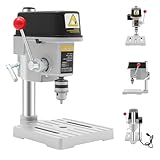


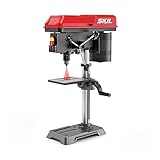
What separates a bargain from a false economy?
- Runout: This is how far the chuck or spindle deviates from a true rotation. Excessive runout makes holes oversized and can cause vibration. Measure at the spindle or a straight test rod with a dial indicator; check again with a bit installed to distinguish spindle error from a damaged or poorly seated bit.
- Column and table stability: Lock the table at working height and press gently against it in several directions. Noticeable movement can shift a hole off layout. The head should also stay secure on the column after you tighten its clamp.
- Quill feel: Lower the quill through its travel. It should move smoothly, without catching or obvious side play. A depth stop that locks reliably is more useful than a long list of speed settings.
- Belt changes: Belt-driven presses are common in this category. Open the cover and see whether the pulleys are easy to reach and the tension adjustment is practical. If changing speeds is awkward, you may leave the machine at one speed even when another is better for the work.
- Durability clues: Look for a rigid cast-iron table, a sturdy base, secure locking handles, and parts that can be adjusted without forcing them. A light machine may be fine for small holes, but anchoring it to a solid bench helps limit movement.
Shortlist by use case
These are established product lines to consider, not a claim that every unit has the same fit, finish, or current price. Models and specifications vary by version and market, so check the exact model’s manual before purchasing.
| Press or type | Typical size class | Approximate weight class | Best fit | What to verify |
|---|---|---|---|---|
| WEN 4208T | 8-inch benchtop | About 34 lb | Small parts, light-duty drilling, limited bench space | Table lock, quill play, and spindle runout on the specific unit |
| WEN 4210T | 10-inch benchtop | About 57 lb | General home-shop drilling with more reach than a compact press | Head and table alignment, belt access, and base mounting |
| Shop Fox W1667 | 8-inch benchtop | About 50 lb | Small-shop work where a compact footprint matters | Quill smoothness, table rigidity, and the exact version’s specifications |
| Used 10-inch cast-iron benchtop press | 10-inch class | Varies by model | Buyers willing to inspect and adjust a machine | Rust, missing guards or handles, pulley condition, and spindle play |
“Swing” is the nominal distance from the spindle center to the column, doubled; it is not the depth of hole the machine can drill. A larger swing lets you position wider work under the bit, while throat capacity and quill travel determine other practical limits. Confirm the full specification sheet for the exact model and revision.
Choose by budget, space, and workload
| Your situation | Practical choice | Why |
|---|---|---|
| Very limited space; small holes in short parts | 8-inch benchtop press | Smaller footprint and lower cost; less reach for wide stock |
| First press; mixed household and woodworking tasks | 10-inch benchtop press | More room for typical projects without moving to a floor model |
| Frequent use or repeated deep, large-diameter holes | Heavier press with a rigid table and serviceable parts | Stability and repairability matter more than the lowest purchase price |
| Low budget and comfortable inspecting machinery | Used cast-iron press in sound condition | Can offer better mass for the money, but only if wear and missing parts are acceptable |
For a beginner, prioritize uncomplicated controls, a useful depth stop, and a table that locks without drifting. For occasional use, paying extra for a bigger motor is usually less valuable than getting a machine that stays aligned. If you drill the same material regularly, accessible speed changes are worth more because the correct speed reduces heat and bit wear.
Inspect before you buy
- Check the spindle: With the machine unplugged, rotate the spindle by hand and feel for roughness. If you have a dial indicator, measure a clean spindle surface or a straight test rod held in the chuck. There is no single runout number that suits every woodworking task, but visible wobble or a large, repeatable deviation is a reason to pass or investigate further.
- Test the locks: Raise and lower the table, then tighten its lock. Apply light hand pressure; it should not visibly twist or slide. Check that the head clamp also holds securely.
- Try the quill and depth stop: Move the quill through its travel and operate the return spring. Set the stop, release the handle, and confirm it stays put. A sticking quill undermines repeatability.
- Look over the drive: Inspect the belt for cracks, glazing, or slack, and check that pulleys are not visibly damaged. On a new machine, follow the manual’s instructions for belt tension and initial setup rather than tightening by guesswork.
- Budget for setup: Include a sound bench or stand, mounting hardware, a clamp or vise, and a square for aligning the table. These can improve results more than a modest jump in motor power.
Ownership costs and common wear points
On an inexpensive press, the first frustrations are often loose or awkward adjustments, a worn belt, a table that needs frequent realignment, or a chuck that does not hold small bits consistently. Bearings and the quill can become costly problems if the machine has been run with excessive vibration or poor maintenance. With a used model, ask whether the chuck, guards, handles, and belt cover are present; replacing missing parts can erase the apparent savings.
Keep the table and column clean, wipe away pitch and moisture, and apply a light protective film to bare cast iron when the shop is damp. Do not use the press to force a bit through work: secure the stock with a clamp or vise, choose an appropriate speed, and clear chips when needed. Forstner bits and large hole saws can demand more from a small press than ordinary twist bits; slow down, feed steadily, and stop if the belt slips or the motor labors.
Bottom line
For most home woodworkers, the best inexpensive drill press is a stable 10-inch benchtop model from an established line, provided its spindle runs true and its table and head lock firmly. Choose an 8-inch press when space and small work dominate, and consider used cast iron only if you can inspect it carefully. In every case, verify the exact model’s specifications, test the moving parts, and treat a stable setup as part of the purchase—not an optional upgrade.