
Our Top Picks
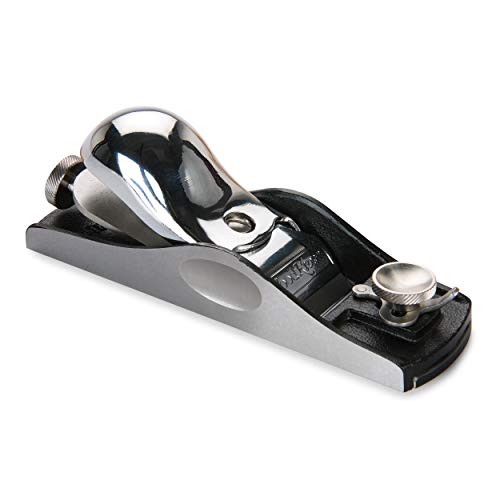 Woodriver Low Angle Block Plane With Adjustable Mouth7.85 x 3.15 x 2.75 Inches2.04 poundsCheck on Amazon

What's inside
As an Amazon Associate I earn from qualifying purchases. This post may contain affiliate links at no extra cost to you.
If you only add one hand plane to a power-tool workshop, make it a block plane. For most woodworkers the best block plane is a low-angle No. 60-1/2 pattern with an adjustable mouth: the shallow bed slices end grain cleanly, the sliding toe tightens the mouth for figured stock, and the whole tool works one-handed for chamfers, flush trimming and fitting doors and drawers.
The five picks below cover the full range, from a premium ductile-iron low-angle plane with an A2 iron down to a pocket-size Stanley No. 102 that costs very little and asks almost nothing of its owner. Each one is a current Amazon listing, and every specification is taken from published manufacturer or listing data.
As an Amazon Associate, we earn from qualifying purchases.
Quick Answer
For most benches, choose a low-angle block plane with an adjustable mouth: the Stanley Sweetheart No. 60-1/2 and the WoodRiver Low Angle cover the premium end, the Jorgensen No. 60-1/2 delivers the same pattern for less, the Stanley 12-220 is the budget standard-angle option, and the Stanley No. 102 is the pocket pick.
Table of Contents
- Stanley Sweetheart No. 60-1/2 Low Angle Block Plane
- WoodRiver Low Angle Block Plane
- Jorgensen No. 60-1/2 Low Angle Block Plane
- Stanley Block Plane 12-220
- Stanley No. 102 Block Plane
- How to Choose
- Who Should Skip
- FAQ
- Final Verdict
- Product and ASIN Reference
Stanley Sweetheart No. 60-1/2 Low Angle Block Plane
Stanley’s Sweetheart line is its premium hand plane range, and the 60-1/2 is the low-angle member of the family. The body is cast from ductile iron rather than grey iron, which better tolerates the knocks a bench-side tool collects, and the sole and sides are precision ground. The iron is A2 tool steel at a full 1/8 inch thick, so it holds an edge longer between honings than the thin irons on economy planes, and it resists chatter when the cut gets heavy.
The adjustable mouth is the feature that earns its keep: slide the toe forward for a tight mouth on reversing grain, or open it up when you need to take a thicker shaving off softwood end grain. Brass adjustment hardware handles depth and lateral settings. At about two pounds it is one of the heavier block planes here, and that mass helps it plow through end grain without extra downward pressure from your hand.
Specs
- Model: 12-139
- Body: ductile iron, precision ground sole and sides
- Length: 6-1/2 inches
- Blade: A2 tool steel, 1-3/4 inches wide, 1/8 inch thick
- Bed angle: 12 degrees
- Mouth: adjustable
- Adjustment: depth and lateral, brass hardware
- Weight: about 2 pounds
- Tier: premium
WoodRiver Low Angle Block Plane
WoodRiver is Woodcraft’s house brand, and this low-angle block plane follows the classic Stanley No. 65 pattern, complete with the knuckle-style lever cap that no other current maker offers. The cap pivots open for quick blade removal and its rounded knuckle profile sits comfortably in the palm, which matters on a tool you push with one hand all day.
The blade is high-carbon tool steel, 1-5/8 inches wide and 0.125 inch thick, ground to a 25-degree bevel. Bedded at 12 degrees bevel-up, that gives an effective cutting angle suited to end grain and cross-grain cleanup on dovetails and tenon shoulders. The body is ductile iron at 2 inches wide by 7 inches long, the longest sole in this roundup, which helps it register on wider edges. Fine Woodworking’s review of the WoodRiver block plane pair noted flawless machining on the current versions, and the published weight matches the Sweetheart at about two pounds.
Specs
- Model: 151125W
- Body: ductile iron
- Length: 7 inches; width: 2 inches
- Blade: high-carbon tool steel, 1-5/8 inches wide, 0.125 inch thick, 25-degree bevel
- Bed angle: 12 degrees
- Mouth: adjustable
- Lever cap: knuckle style
- Weight: about 2 pounds
- Tier: premium
Jorgensen No. 60-1/2 Low Angle Block Plane
Jorgensen, long known for its clamps, now sells a full hand plane line, and its No. 60-1/2 is the value pick among the low-angle planes here. The body is ductile iron, and the maker lists it as drop-tested, a nod to job-site and shared-shop use. The blade is O1 tool steel at 3 mm thick. O1 gives up some edge life compared with A2, but it hones quickly on almost any stone, which suits woodworkers who touch up little and often.
The listing publishes a 13.5-degree bed angle, slightly steeper than the classic 12 degrees, which adds a touch of support behind the edge on long-grain work while still cutting end grain cleanly. Both the mouth and the cutting depth adjust, so it gives up nothing in function to the premium pair above. At 1.48 pounds it is noticeably lighter in the hand, and at 6-1/4 inches long by 1-3/4 inches wide it matches the traditional 60-1/2 footprint.
Specs
- Model: No. 60-1/2
- Body: ductile iron
- Length: 6-1/4 inches; width: 1-3/4 inches
- Blade: O1 tool steel, 1/8 inch (3 mm) thick
- Bed angle: 13.5 degrees, as listed
- Mouth: adjustable
- Adjustment: cutting depth and mouth
- Weight: 1.48 pounds
- Tier: budget to mid-range
Stanley Block Plane 12-220

The 12-220 is Stanley’s long-running standard-angle block plane and the budget benchmark in this category. Its cutter rests at 21 degrees, bevel down against a cast frog in the traditional layout, which makes it a general-purpose trimmer rather than an end-grain specialist. That is a fair trade for a lot of shops: for breaking edges, planing small chamfers, flushing plugs and trimming softwood, a standard-angle plane with a sharp iron does everything asked of it.
Both depth of cut and lateral alignment adjust mechanically, and the grey iron body has machined sides, so it can be guided against a shooting board edge or a square reference face. The body runs 7 inches long with a 1-5/8 inch cutter, the same width as the WoodRiver. It lacks an adjustable mouth, so on wild grain you manage tear-out with a finer depth setting and a freshly honed iron instead. Stanley lists this model as discontinued by the manufacturer, but it remains widely stocked through Amazon sellers; check the listing is for the single plane before ordering.
Specs
- Model: 1-12-220
- Body: grey cast iron, machined sides
- Length: 7 inches
- Cutter: 1-5/8 inches wide
- Bed angle: 21 degrees
- Mouth: fixed
- Adjustment: depth of cut and lateral alignment
- Tier: budget
Stanley No. 102 Block Plane
The No. 102 is the minimalist of the group: a 5-1/2 inch pocket plane with a 1-3/8 inch cutter, a fixed mouth and no adjustment mechanism at all. You set the iron by hand, nudging it forward or sideways with light hammer taps or thumb pressure, and a knurled wheel on the lever cap locks it down. Stanley describes it as a manually adjustable general-purpose plane aimed at model makers, craft work and light-duty jobs, and that positioning is honest.
What it gives up in refinement it returns in simplicity and size. It rides in an apron pocket without complaint, the cutting angle is 20 degrees per the manufacturer’s manual data, and there is nothing on it to go out of adjustment. For easing an edge, trimming a dowel flush or cleaning up a small part at the bench, it is often the fastest tool to reach for. It is not the plane for wide end grain or figured panels, but as a second, always-at-hand block plane it makes a strong case.
Specs
- Model: 1-12-102
- Body: cast iron
- Length: 5-1/2 inches
- Cutter: 1-3/8 inches (35 mm) wide
- Cutting angle: 20 degrees
- Mouth: fixed
- Adjustment: manual, no mechanical adjuster
- Tier: budget
How to Choose
Start with bed angle. Low-angle planes, bedded at 12 to 13.5 degrees with the bevel up, slice end grain with far less effort and are the better first purchase for furniture work. Standard-angle planes around 20 to 21 degrees support the edge better on long grain and cost less, but they push harder through end grain.
Next, decide whether you need an adjustable mouth. If you plane figured hardwood, veneer or reversing grain, the ability to close the mouth down is the single most useful tear-out control a block plane offers. For painted trim, softwood and general fitting, a fixed mouth is fine.
Blade steel is the third call. A2 irons, like the one in the Sweetheart, hold an edge longer but take more effort to hone and prefer diamond or ceramic abrasives. O1 and high-carbon steels sharpen fast on basic stones and suit anyone who hones frequently. Finally, weigh size and mass: a two-pound, 7-inch plane tracks straighter on long edges, while a short, light plane like the No. 102 wins for one-handed detail work and apron-pocket carry.
Who Should Skip
Skip this category entirely if your work is mostly sheet goods and machine dimensioning; a block plane earns its place on solid-wood edges, end grain and fitting work, and it will sit unused in a plywood-only shop. Skip the premium low-angle models if you only break edges on construction lumber, because the Stanley 12-220 or No. 102 covers that work for far less. And skip the No. 102 as your only block plane if you plan to shoot end grain or plane figured stock, since its fixed mouth and manual blade setting leave you without the two controls those jobs demand.
FAQ
Is a low-angle or standard-angle block plane better for a first plane?
For most woodworkers, low-angle. A 12-degree bed with a bevel-up iron cuts end grain cleanly, and you can hone a steeper bevel onto a spare iron to raise the effective angle for difficult long grain. A standard-angle plane cannot go the other direction.
Does an adjustable mouth really matter?
It matters most on figured or reversing grain, where a tight mouth supports the fibers right ahead of the edge and limits tear-out. On straight-grained softwood and general trimming, a fixed-mouth plane such as the 12-220 or No. 102 performs the same work without the extra setting to manage.
How thick should the blade be?
The premium planes here use irons around 1/8 inch thick, which resist flex and chatter better than the thin irons on the cheapest planes. Thickness is one of the clearest dividing lines between the tiers in this roundup, and it is worth prioritizing if you plane hardwoods often.
Can a block plane replace a smoothing plane?
No. A block plane is a one-handed trimming tool with a short sole; it follows surface contours instead of flattening them. Use it for end grain, chamfers, flush trimming and fitting small parts, and keep a bench plane for flattening and smoothing board faces.
Final Verdict
Buy the Stanley Sweetheart No. 60-1/2 if you want the best-finished low-angle block plane of the group, with an A2 iron and an adjustable mouth in a ductile-iron body. The WoodRiver matches it feature for feature and adds the knuckle cap and a longer sole. On a tighter budget, the Jorgensen No. 60-1/2 keeps the low-angle layout, adjustable mouth and a thick O1 blade for much less. The Stanley 12-220 remains the sensible budget standard-angle trimmer, and the little No. 102 is the pocket plane every bench deserves as a second tool.
Related guides
More from Amazon
Programs that pair well with the guide above. Offers and eligibility are set by Amazon and may change.
A free business account with business pricing and bulk-buying tools for work, shop or home office.
Create a business accountFree shipping on eligible items, Prime Video and more. Eligible new members can start with a free trial.
Start a Prime free trialAudiobooks and podcasts to listen to on the go. Eligible new members can start with a free trial.
Try Audible freeAd-free music streaming. Eligible new subscribers can start with a free trial.
Try Music Unlimited freeAs an Amazon Associate we earn from qualifying purchases.


