Best Table Saw Accessories: 5 Upgrades for Safer, Straighter Cuts
Compare the best table saw accessories across five jobs: a 3D pushblock, a precision miter gauge, a spiral featherboard, a crosscut sled and a digital angle gauge.
As an Amazon Associate I earn from qualifying purchases. This post may contain affiliate links at no extra cost to you.
As an Amazon Associate we earn from qualifying purchases.
A table saw leaves the factory as a capable machine with a short list of weak points. The stock miter gauge usually has play in the slot and a scale that is hard to read. The blade tilt pointer can sit a degree or more away from the truth. Nothing in the box holds stock firmly against the fence through a rip, nothing supports a wide panel through a crosscut, and the push stick included with many saws gives the hand very little control. The accessories in this guide each fix one of those gaps, which is why the list is deliberately mixed: one safety pushblock, one precision miter gauge, one featherboard, one crosscut sled, and one digital setup gauge.
That spread is the honest shape of this keyword. Table saw accessories divide into three jobs. The first is control and safety at the blade: pushblocks and featherboards that keep hands clear and stock pinned down and against the fence. The second is guidance: miter gauges and sleds that carry the workpiece through the cut at a set angle. The third is setup: gauges that verify the blade itself is square or at the bevel the scale claims. A well-equipped saw needs something from each group.
Every pick below is a genuine table saw accessory, sold as an add-on for a saw the buyer already owns; there are no saws in this list. Compatibility notes matter more here than in most guides, because so much of this category mounts in the standard 3/4 inch by 3/8 inch miter slot or reads against a steel blade. Specifications are taken from the manufacturers and their published listings, and fit should be confirmed against the saw in the shop before ordering.
Quick comparison
Accessory
Type
Key specification
Fit requirement
Best for
MICROJIG GRR-RIPPER+ GR-100+
3D pushblock
Three adjustable legs, rips down to 1/4 inch, SafeRip Kit included
Works over the blade; no slot required
Narrow rips and small parts with hands clear
Kreg Precision Miter Gauge System KMS7102
Miter gauge system
24-inch fence and bar, vernier to 1/10 degree, stops at 0, 10, 22-1/2, 30 and 45 degrees
Standard 3/4 inch by 3/8 inch miter slot
Repeatable crosscuts and miters
Hedgehog Spiral Featherboard HH-100
Featherboard
Single-knob spiral body, expanding aluminum miter bar
3/4 inch wide by 3/8 inch deep miter slot; does not fit 5/8 inch slots
Holding rip stock tight to the fence
Rockler Crosscut Sled with Telescoping Fence
Crosscut sled
1/2-inch phenolic base, fence telescopes 25 to 38-1/4 inches, 90 to 45 degree range
Standard miter slot; cabinet and contractor saws
Wide panels and dead-square crosscuts
Wixey WR300 Type 2 Digital Angle Gauge
Digital angle gauge
Plus or minus 180 degree range, 0.1 degree resolution, magnetic base
Steel blade and table to zero against
Setting blade square and bevels accurately
How to choose table saw accessories
Start with the cut that goes wrong most often
The right first accessory is the one aimed at the failure already visible in the work. Boards that lift, drift from the fence, or burn along one edge during rips point to control accessories: a featherboard, or a pushblock that applies downward and inward pressure through the whole cut. Crosscuts a fraction off square, or mitered frames whose fourth corner will not close, point to guidance: a better miter gauge, or a sled whose fence is set once and stays. Bevels that do not match the scale point to setup: a digital angle gauge that reads the blade itself rather than the pointer.
Check the miter slot before anything slot-mounted
Three of the five picks here mount into a miter slot, and slot dimensions are the category’s biggest compatibility trap. The standard slot on cabinet, hybrid, contractor, and larger jobsite saws measures 3/4 inch wide by 3/8 inch deep, sometimes with a T-slot profile at the bottom. Many compact benchtop saws use a smaller or tabbed slot, and no adjustment makes a standard bar fit those tables. Measure the slot before ordering any gauge, featherboard, or sled. Where a bar is adjustable, that adjustment removes side play in a standard slot; it does not adapt the bar to a different slot size.
Sequence the kit: control, guidance, then measurement
If the budget only stretches to one or two pieces at a time, buy in the order the cuts demand. Control accessories come first because they change the safety of cuts already being made every session. Guidance comes next, because square and angled cuts are the bulk of furniture and cabinet work. A digital gauge is the smallest purchase here, and there is a real argument for buying it early, since every later accessory performs better on a verified saw.
The GRR-RIPPER+ is the safety pick of this guide and the accessory most often recommended as the first upgrade for a working saw. It is a pushblock built around three-directional control: the block straddles the blade on adjustable legs and applies pressure downward onto the stock, inward toward the fence, and forward through the cut at the same time, which keeps both the keeper piece and the offcut under control instead of letting the offcut rattle against the back of the blade. The maker’s published figures put its narrowest controlled rip at 1/4 inch material, the territory where a plain push stick gives the least control and the hand passes closest to the blade.
The design details separate it from a simple shoe-style block. Three legs with a proprietary high-friction gripping surface contact the work, the centre leg adjusts sideways to straddle different blade positions and kerf widths, and a balance support stabilises narrow stock so it cannot tip into the cut. The handle adjusts and angles for hand position, keeping the hand above the block and behind the leading edge. This Plus version includes the SafeRip Kit, an indexing aid whose scale matches the rip fence setting and whose cursor shows where the centre leg sits relative to the blade, so the leg can be positioned clear of the cut line before the saw starts. MICROJIG covers the tool with a three-year warranty, according to the listing.
The limits belong in the open. The block is a hand-fed device for rip cuts and narrow work; it does not replace a sled for panels, and its gripping legs are wear parts that lose effectiveness if run into the blade or loaded with pitch and dust. It also asks for a setup habit — checking the centre leg position against the fence setting on every narrow rip.
The Kreg KMS7102 is the guidance pick for crosscuts and miters, sold as a complete system — gauge head, fence, and stop — rather than a bare protractor head. Its accuracy story rests on two features. First, positive stops at 0, 10, 22-1/2, 30, and 45 degrees, engaged by a brass pin, cover the angles that dominate frame, box, and trim work, so common settings are mechanical rather than read off a scale. Second, a vernier scale between those stops adjusts to 1/10 of a degree, the resolution segmented work needs when a small error is multiplied by every joint in the piece. Kreg describes the system as factory calibrated.
The running gear matches the head. The miter bar is 24 inches long, sized 3/4 inch wide by 3/8 inch thick for the standard slot, with five bar adjusters that expand to take play out of the slot fit — side play being the single largest accuracy error in any miter gauge. The 24-inch anodised aluminium fence supports stock well past the blade, carries a self-adhesive measuring tape, and includes Kreg’s Swing Stop, which registers repeat lengths and swings out of the way when a cut does not need it. That stop turns the gauge into a batch tool: parts for a frame or a set of drawers can be cut to one setting without re-measuring each piece.
Fit and limits are straightforward. The bar needs the standard slot, so compact saws with tabbed or undersize slots are out. A 24-inch fence is generous for a gauge but still a gauge fence; wide panels that overhang it belong on the sled below.
The Hedgehog HH-100 is the featherboard pick, and its difference from the familiar twin-knob featherboard is visible at a glance: the body is a spiral, and it mounts and adjusts at a single pivot point with one knob. A conventional featherboard clamps at two points, so setting its pressure means loosening, sliding, test-fitting, and tightening twice. The Hedgehog drops into the miter slot on its cast, CNC-milled aluminium expanding bar, rotates against the stock until its spiral fingers flex to the required pressure, and locks with the one knob — a sequence that can be done one-handed while the other hand holds the workpiece in place.
The working principle is the standard featherboard one, executed well. The angled fingers yield in the feed direction and resist backward movement, so the stock is pressed continuously against the rip fence, feed stays even, and the board’s tendency to drift, chatter, or kick back is reduced. The body is moulded from high-impact nylon, the design is reversible for feeding from either side, and the same tool moves to a router table or band saw with the same standard slot.
The fit warning is absolute: the expanding bar fits a 3/4 inch wide miter slot, and the maker states plainly that it does not fit a 5/8 inch slot. Owners of compact saws with the smaller slot should measure before ordering. Placement discipline matters too: a featherboard belongs ahead of the blade, never alongside it where it can trap the offcut.
The Rockler crosscut sled is the panel pick: a ready-made sled for the cuts a miter gauge handles worst — wide crosscuts, sheet-goods parts, and any workpiece that needs full support and a zero-clearance backing as it passes the blade. Its base is 1/2-inch phenolic, a dense laminate that stays flat and slides freely, where a shop-made plywood or MDF base can swell or cup with the seasons. The sled’s fence and protractor arrangement covers cuts from 90 degrees down to 45 degrees, and a replaceable zero-clearance insert supports the fibres at the cut line to reduce tear-out, then swaps out when worn.
The fence is the working headline. The extruded aluminium fence telescopes from 25 inches to 38-1/4 inches, so long stock registers against a continuous reference instead of being balanced past the end of a short fence, and the included micro-adjust flip stop sets repeat lengths precisely. The kit is complete in the box according to the listing: an adjustable miter bar, a hold-down clamp, an extension work support, a jig handle, and a replacement zero-clearance insert. At roughly 17.9 pounds the sled has the mass to track steadily, and it is plainly a bench-stored fixture rather than a drawer tool.
The compatibility note is the one to read before buying: Rockler positions this sled for cabinet and full-size contractor saws running a standard miter slot, and it is not the pick for compact benchtop or portable jobsite saws, whose slots and table sizes fall outside its design. For owners of full-size saws who crosscut cabinet parts and furniture panels, a sled is usually the single largest accuracy jump available to a table saw, because the workpiece, fence, and stop move through the blade as one registered unit.
The WR300 Type 2 is the setup pick, and the smallest tool in this guide: a magnetic digital gauge that reads the angle of the blade itself. The procedure is the whole product. Set the gauge on the saw table and press zero, which establishes the table as the reference; then place it against the blade plate, where magnets in its base hold it clear of the carbide teeth, and tilt the blade until the display shows the target. That method is why a gauge like this outperforms the saw’s own pointer scale, which reads the tilt mechanism rather than the blade and can drift with wear or dust in the trunnion.
Wixey publishes a complete specification, which is rarer in this category than it should be: a range of plus or minus 180 degrees, resolution of 0.1 degree, accuracy of plus or minus 0.2 degree, and repeatability of plus or minus 0.1 degree. The Type 2 version adds a backlit, fixed display readable under a blade tilted away from the light, and the unit runs on a single AAA battery with auto shut-off. The housing measures about 2.3 by 2.3 by 1.1 inches, small enough to sit on a 10-inch blade between the teeth and to live in the saw’s accessory drawer. Its home job is verifying 90 degrees after every blade change, and setting 45 and other bevels by number instead of by test cut.
Two caveats keep expectations right. The gauge measures blade-to-table angle only; it cannot detect a blade that is not parallel to the miter slot, and it must be removed from the blade before the saw runs — it is a setup tool, never a cutting accessory. For the finest frame work, a confirming test cut remains good practice.
FAQ
What is the first table saw accessory to buy?
For most shops, a pushblock such as the GRR-RIPPER+ comes first, because it changes the safety and control of rip cuts that are already being made. A digital angle gauge is a close second and the smallest purchase here: verifying that the blade is truly at 90 degrees improves every cut the saw makes.
Do these accessories fit every table saw?
No, and the miter slot is the deciding measurement. The Kreg gauge, the Hedgehog featherboard, and the Rockler sled all depend on the standard 3/4 inch by 3/8 inch miter slot found on cabinet, hybrid, contractor, and larger jobsite saws. Many compact benchtop saws use smaller or tabbed slots that none of them fit, and the Hedgehog’s maker states explicitly that its bar does not fit a 5/8 inch slot. The pushblock and the angle gauge need no slot at all.
Is a crosscut sled better than a miter gauge?
They divide the work rather than compete. A miter gauge is compact, sets angles quickly, and handles narrow and medium stock, especially with a fence and stop like the Kreg system. A sled supports wide panels fully, backs the cut with a zero-clearance insert for cleaner edges, and holds its square setting as a fixed platform. Shops cutting mostly narrow stock can start with the gauge; shops cutting cabinet panels will get more from the sled, and many eventually own both.
Where should a featherboard be positioned?
Ahead of the blade, pressing the workpiece against the rip fence before the cut begins. Positioned alongside or behind the blade, a featherboard can pinch the offcut into the blade and cause the kickback it exists to prevent. It also complements rather than replaces a pushblock: the featherboard holds the stock in, and the pushblock carries it through the end of the cut.
Can a digital angle gauge replace test cuts?
It replaces most of them. Zeroing on the table and reading the blade directly removes the error in the saw’s pointer scale, and a published accuracy of plus or minus 0.2 degree is tighter than most scales can be read. For joinery where errors compound, a single confirming test cut after setup is still cheap insurance.
Conclusion
The best table saw accessories are not five versions of one thing; they are one tool for each job the stock saw does badly. The MICROJIG GRR-RIPPER+ takes over narrow rips and small parts with three-directional control and the hand held clear. The Kreg KMS7102 replaces the loose stock miter gauge with indexed stops, a vernier scale, and a fence-and-stop system built for repeat work. The Hedgehog HH-100 holds rip stock to the fence with a one-knob spiral design that sets in seconds. The Rockler sled gives wide panels full support, a telescoping fence, and zero-clearance backing. The Wixey WR300 Type 2 verifies the blade itself, so every other accessory works against a saw that is actually square. Check the miter slot before ordering anything slot-mounted, and confirm the exact package contents on the live listing.
Disclosure
Disclosure: This article contains affiliate links. If you buy through those links, a commission may be earned at no additional cost to you. Product information was taken from the listings and manufacturer details available at the time of writing, and specifications should be confirmed on the live listing before purchase.
J
JD's Woodworks Editorial Team
We compare specs, warranty terms, long-term owner feedback and street pricing before anything earns a spot. Rankings are never paid.
Affiliate disclosure. As an Amazon Associate we earn from qualifying purchases at no extra cost to you. Prices accurate as of the date shown.
Four hobby TIG welders compared for home shops: AC/DC picks for aluminum, a compact DC model for steel, listed specs, included gear and honest tradeoffs.
The best Creality Falcon engravers compared: Falcon A1 10W, CR-Laser Falcon 10W, Falcon2 Pro 22W and Falcon2 Pro S 40W, by power, work area and enclosure.
The best CNC machines for manufacturing compared: large-bed routers and closed-loop desktop mills with the work area, spindle and control for batch work.

 MICROJIG GRR-RIPPER+ GR-100+ 3D Pushblock
 Kreg Precision Miter Gauge System KMS7102
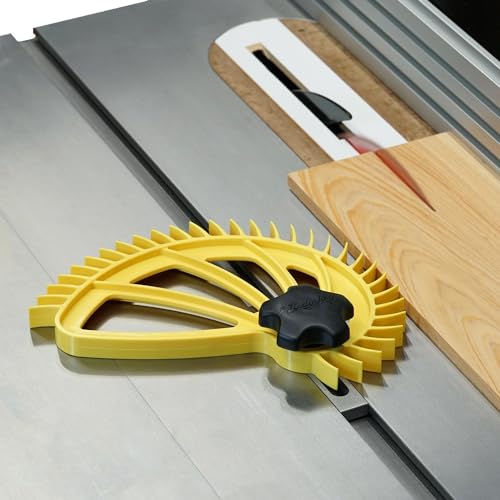 Hedgehog Spiral Featherboard HH-100
 Rockler Crosscut Sled with Telescoping Fence
 Wixey WR300 Type 2 Digital Angle Gauge









