As an Amazon Associate I earn from qualifying purchases. This post may contain affiliate links at no extra cost to you.
Choosing a Jet lathe comes down to matching swing and bed length to the work you actually turn, because every model in this lineup is a JWL wood lathe built for bowls, spindles and furniture parts. A compact benchtop machine suits pens and small bowls, while the full-size floor models add the mass and capacity that long spindles and wide platters demand from a machine.
This guide compares five Jet wood lathes for home workshops, dedicated hobby turners and small production shops. Each pick was chosen from the specifications on its product listing, including swing, distance between centers, motor output, voltage and speed control, so you can match a machine to your bench space, your power supply and the turning you plan to do most often.
Quick Picks
As an Amazon Associate we earn from qualifying purchases
Product
Best for
Key spec
JET JWL-1221VS 12 x 21-inch Variable-Speed Wood Lathe
JET JWL-1440VS 14 x 40-inch Variable-Speed Wood Lathe
Mid-size bowls and spindles
14 x 40-inch capacity, variable speed
How to Choose
Match swing and bed length to your work
Swing is the largest diameter blank the lathe can rotate over the bed, and distance between centers is the longest spindle it can hold. A 12-inch swing covers pens, bottle stoppers and modest bowls, while a 16-inch swing opens the door to wide platters and larger hollow forms. Bed length matters just as much: 21 inches handles short spindles, but table legs, tool handles and stair parts call for 40 inches or more between centers. Buy for the biggest work you realistically plan, not the smallest.
Check motor power and voltage before ordering
Motor output decides how aggressively you can cut without stalling the workpiece, and heavier roughing work on big blanks rewards the stronger motors in this lineup. Voltage is the detail buyers most often miss. Most of these lathes run on a standard 115V household circuit, but the 2 HP model in this guide needs a 230V supply. Confirm what your shop panel can deliver before you order, because running a new circuit after delivery adds cost and delay that have nothing to do with the lathe itself.
Decide how you want speed control to work
Turning speeds change constantly: roughing a bowl blank runs slow, while finishing a pen blank runs fast. Variable-speed models let you dial the speed without stopping to move a belt, and the electronic variable speed systems on the larger lathes here hold a steadier speed under load. The benchtop pick in this guide spans 60 to 3,600 RPM, a range that covers everything from cautious roughing to fine finishing. If you switch between bowl and spindle work often, easy speed changes save real time every session.
Plan for weight, stands and accessories
A lathe is only as steady as what it sits on. Benchtop models need a rigid bench or a dedicated stand, and floor models need clear floor space plus a plan for getting a heavy machine through the door. Accessories shape the real cost too: tool rests in more than one length, indexing for fluting and layout work, and a bed extension if your projects grow longer. Check which of these the listing confirms for the model you choose, and budget for the stand and basic turning tools if you are starting from nothing.
The JWL-1221VS is the benchtop entry in this lineup, pairing a 12-inch swing with 21 inches between centers, enough for pens, small bowls, handles and short spindles. Its variable speed runs from 60 to 3,600 RPM, so one machine covers slow roughing and fast finishing without belt changes. The 24 indexing positions help with fluting and layout work, and the included 6-inch and 10-inch tool rests suit both short and longer tools. For a first lathe or a compact shop, it is the most versatile size here.
The JWL-1642EVS steps up to a 16-inch swing and 42 inches between centers, a combination that handles wide bowls and genuinely long spindles such as table legs on the same machine. Its 1.5 HP motor runs on a standard 115V circuit, which keeps installation simple in most home shops. Electronic variable speed lets you adjust turning speed from the control rather than by moving belts. It is an older model in the Jet line, superseded by the newer 1640EVS series, so it suits buyers who find the capacity appealing and confirm current listing details first.
The JWL-1642EVS-2 shares the 16-inch swing and 42-inch bed of its sibling but swaps in a 2 HP motor running on 230V, making it the strongest option in this guide. That extra power matters when you rough out large, unbalanced bowl blanks or take heavy cuts on long spindles without slowing the work down. Electronic variable speed keeps speed changes quick across that workload. Despite the similar name, this is a separate model from the 115V version above, with a different motor and a different power requirement for your shop.
JET JWL-1640EVS 16 x 40-inch EVS Wood Lathe, 115V (719500)
JET JWL-1640EVS 16 x 40-inch EVS Wood Lathe, 115V (719500)
Best for: Buyers who want a current full-size floor lathe with big capacity that still runs on 115V power.
The JWL-1640EVS is the current full-size model in this guide, with a 16-inch swing and 40 inches between centers on a 115V supply. That capacity covers nearly everything a home or small pro shop turns, from wide platters to long furniture spindles, while still plugging into ordinary household power. Electronic variable speed handles the constant speed changes between roughing, shaping and finishing. As the newer line that replaced the 1642EVS models, it is the natural pick for buyers who want the big-bed format in its current form rather than the earlier generation.
JET JWL-1440VS 14 x 40-inch Variable-Speed Wood Lathe
JET JWL-1440VS 14 x 40-inch Variable-Speed Wood Lathe
Best for: Turners who want long-bed capacity for spindles plus enough swing for medium bowls, without moving to the largest models.
Swing: 14 inches
Distance between centers: 40 inches
Speed control: Variable speed
Motor output: Not stated in the confirmed listing details
The JWL-1440VS sits between the benchtop and the big floor models, with a 14-inch swing and a full 40 inches between centers. That pairing suits turners who work on medium bowls and platters but also turn long pieces like tool handles, rolling pins and furniture parts. Variable speed control keeps speed changes simple as you move between roughing and finishing cuts. It gives up two inches of swing to the 16-inch models in this guide, but for many shops that trade is invisible in daily work, since most projects never approach either limit.
Which One Fits Your Situation
You are setting up your first turning bench
Start with the benchtop model in this guide. A 12-inch swing and 21 inches between centers cover the projects most beginners actually make, and the wide speed range lets you learn roughing and finishing on one machine. You will spend less on the lathe itself and more on the tools, chucks and sharpening gear that turning demands from day one.
You turn long spindles and furniture parts
Length is your deciding factor, so look at the models with 40 to 42 inches between centers. Table legs, stair parts and long handles all need that bed, and a 14-inch or 16-inch swing still leaves room for the occasional bowl. Match the motor and voltage to your shop, then choose between the mid-size and full-size frames.
Your shop already has a 230V circuit wired
The 2 HP model earns its place in your shop. Heavy roughing cuts on large blanks are where the extra power shows, holding speed where a smaller motor would bog down. If your turning leans toward big bowls and hollow forms, that headroom is worth more than any other single specification difference in this lineup.
You want one lathe you will not outgrow
Choose a full-size 16-inch model and be done with it. The capacity covers bowls, platters and long spindles for years of projects, and electronic variable speed keeps daily work convenient. Buy the current-generation model if you prefer the newer line, and plan your floor space, stand and dust collection around it from the start.
Common Mistakes
Buying by swing alone and forgetting bed length, then finding table legs and long spindles simply do not fit between centers.
Ordering a 230V lathe for a shop that only has 115V circuits, and discovering the problem on delivery day.
Confusing the two 1642EVS versions, which share a name and capacity but run on different voltages with different motors.
Setting a benchtop lathe on a light or wobbly bench, which turns normal cutting forces into vibration and chatter.
Spending the whole budget on the lathe and leaving nothing for turning tools, a chuck and a way to sharpen them.
Frequently Asked Questions
What size lathe do I need for turning bowls?
Swing decides bowl size, because it is the largest diameter that clears the bed. A 12-inch swing handles small to medium bowls, while a 14-inch or 16-inch swing suits wide platters and larger hollow forms. Remember the finished bowl must start as a blank smaller than the swing, so buy a little more capacity than your largest planned project.
Can these Jet lathes run on a normal household outlet?
Most of the models in this guide run on 115V, which is standard household power in North America. The exception is the 2 HP JWL-1642EVS-2, which needs a 230V circuit like those used for large shop equipment. Always match the lathe’s stated voltage to your shop supply before ordering, and have an electrician add a circuit if needed.
What does variable speed actually do for a turner?
Variable speed lets you change how fast the workpiece spins without stopping to move a drive belt. Slow speeds are safer for roughing large, unbalanced blanks, and high speeds give cleaner finishing cuts on small work. Electronic variable speed systems also hold the set speed more steadily under cutting load, which makes the whole process more predictable.
Is a benchtop lathe enough for furniture work?
For many furniture parts, yes. Legs, knobs, handles and spindles for chairs and tables fit comfortably on a benchtop lathe with enough length between centers. The limits show up with very long spindles and large-diameter work, where a floor model with a longer bed and bigger swing takes over. Match the machine to the parts list of the furniture you actually build.
J
JD's Woodworks Editorial Team
We compare specs, warranty terms, long-term owner feedback and street pricing before anything earns a spot. Rankings are never paid.
Affiliate disclosure. As an Amazon Associate we earn from qualifying purchases at no extra cost to you. Prices accurate as of the date shown.
Four hobby TIG welders compared for home shops: AC/DC picks for aluminum, a compact DC model for steel, listed specs, included gear and honest tradeoffs.
The best Creality Falcon engravers compared: Falcon A1 10W, CR-Laser Falcon 10W, Falcon2 Pro 22W and Falcon2 Pro S 40W, by power, work area and enclosure.
The best CNC machines for manufacturing compared: large-bed routers and closed-loop desktop mills with the work area, spindle and control for batch work.


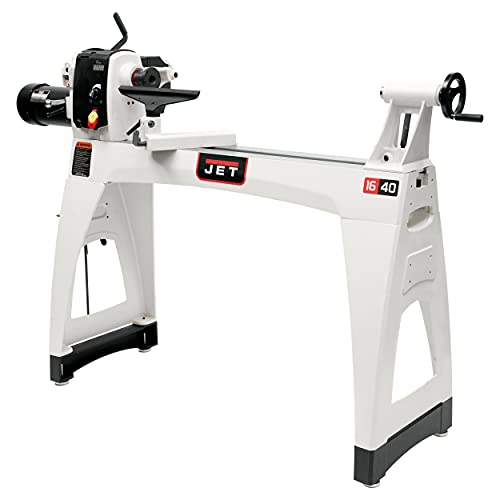 JET JWL-1640EVS 16 x 40-inch EVS Wood Lathe, 115V (719500)
 JET JWL-1440VS 14 x 40-inch Variable-Speed Wood Lathe









