Best JET Lathes: 4 Wood Lathes From Benchtop to Floor Models
Compare the best JET lathes for woodturning, from the 10-inch JWL-1015VS benchtop to the 16-inch JWL-1640EVS floor lathe, on swing, speed and motor power.
As an Amazon Associate I earn from qualifying purchases. This post may contain affiliate links at no extra cost to you.
As an Amazon Associate we earn from qualifying purchases.
A JET lathe search narrows quickly once the work is defined, because the current JET wood lathe line is built as a ladder rather than a crowd of near-duplicates. At the bottom sits a 10-inch benchtop mini lathe for pens and small bowls. Above it, a 12-inch midi adds a full horsepower and a much slower minimum speed. The next step is a 14-inch machine with 40 inches between centers and a pivoting headstock, and at the top of this guide a 16-inch floor lathe with electronic variable speed, forward and reverse, and the mass to rough out large blanks without drama. Every model below is a genuine JET wood lathe, and every one runs on ordinary single-phase shop power.
That brand focus matters for practical reasons. JET lathes share a design language: cast iron beds, MT2 tapers through most of the range, cam-lock tool rests and tailstocks, and spindle threads that follow the two common North American standards, 1 inch by 8 TPI on the smaller machines and 1-1/4 inch by 8 TPI on the larger ones. Parts, stands, and service support come from the same JET dealer network, and the warranty structure is consistent across the line.
This guide compares the four JET wood lathes that cover the realistic buying range for a home or small professional shop, using the specifications JET and its retailers publish for each model. Metal lathes, which JET also sells under different model families, are outside the scope here: every pick below is a woodturning lathe.
Quick comparison
Model
Swing over bed
Between centers
Motor
Speed range
Spindle thread
Format
JET JWL-1015VS
10 inches
15-1/2 inches
1/2 HP, 115V
200 to 3,600 RPM, three ranges
1 inch x 8 TPI
Benchtop
JET JWL-1221VS
12-1/2 inches
21 inches
1 HP, 115V
60 to 3,600 RPM, three ranges
1 inch x 8 TPI
Benchtop
JET JWL-1440VS
14-1/2 inches
40 inches
1 HP, 115/230V
400 to 3,000 RPM, variable
1-1/4 inch x 8 TPI
Benchtop or stand
JET JWL-1640EVS
16 inches
40 inches
1-1/2 HP, 115V
40 to 3,200 RPM, electronic
1-1/4 inch x 8 TPI
Floor standing
The pattern in the table is the whole story of the range. Swing grows from 10 to 16 inches, motor power triples from the smallest model to the largest, and minimum speed falls from 200 RPM on the mini lathe to 40 RPM on the floor lathe — the low end that makes roughing out heavy, unbalanced bowl blanks a controlled job instead of a wrestling match.
How to choose a JET lathe
Start with swing, then with length
Swing over the bed is the first specification to settle, because it cannot be changed later and it decides the largest diameter that can turn. A 10-inch swing handles pens, bottle stoppers, tool handles, small boxes, and bowls up to roughly 9 inches in finished diameter. A 12-1/2-inch swing opens up salad-bowl territory and gives clearance for blanks that start rough. A 14-1/2- or 16-inch swing is for turners who regularly work with large faceplate work and wide platters.
Distance between centers is the second capacity figure, and it is about spindle work rather than bowls. Fifteen and a half inches covers most small turnings and short spindles. Twenty-one inches adds longer handles, rolling pins, and chair parts. Forty inches is table-leg and bed-post territory, and it is the point where a lathe becomes a genuine all-purpose shop lathe. Buyers who know furniture parts are in their future should weigh this figure heavily, because a longer native bed is always the stiffer solution.
Speed control: ranges, Reeves drive, and full electronic control
The four lathes here use three different approaches to speed. The two smaller VS models pair an electronic dial with three belt-selected ranges: the belt sets the neighbourhood, and the dial trims the speed inside it. The JWL-1440VS uses a variable-speed drive adjusted by lever, covering 400 to 3,000 RPM without range changes. The JWL-1640EVS is fully electronic, with infinitely variable speed, a digital readout, and forward and reverse rotation, which bowl turners value for sanding.
Minimum speed deserves as much attention as the top figure. Roughing a green or unbalanced blank is the most demanding moment in turning, and a lathe that can run at 60 or 40 RPM lets that work start at a crawl and build up as the blank comes into balance. High top speeds matter mainly for small-diameter spindle work and pens. All four lathes here reach at least 3,000 RPM, so the real separator is the floor of the range, not the ceiling.
Motor power and electrical supply
Motor ratings step from 1/2 HP on the JWL-1015VS through 1 HP on the two middle lathes to 1-1/2 HP on the JWL-1640EVS. Power shows up as torque at low speed: holding a cut on a large blank without stalling. Small work rarely troubles even the smallest motor here; large, dense bowl blanks are where the bigger motors earn their place.
All four lathes run on single-phase power a home shop can supply. The JWL-1015VS, JWL-1221VS, and JWL-1640EVS are 115V machines, and the JWL-1440VS is prewired for 115V with a 115/230V motor. None of the four requires three-phase service or a special circuit beyond what a typical shop outlet provides.
Spindle thread, tapers, and indexing
Accessory compatibility follows two numbers. The spindle thread decides which chucks screw on directly: 1 inch by 8 TPI on the JWL-1015VS and JWL-1221VS, the standard thread of the mini and midi class, and 1-1/4 inch by 8 TPI on the JWL-1440VS and JWL-1640EVS, the standard of full-size lathes. Turners who already own chucks should match the thread to the lathe or budget for an adapter or a new chuck body. All four models use MT2 tapers in the headstock and tailstock, so spur centers, live centers, drill chucks, and mandrels carry across the whole range.
Indexing is the quiet differentiator. The JWL-1015VS and JWL-1221VS each provide 24 indexing positions, and the JWL-1640EVS provides 36. Indexing locks the spindle at even intervals for fluting, drilling layouts, and decorative work done with the lathe stationary.
Weight, footprint, and stands
Cast iron is the through-line of the JET range, and it shows in the weights. The JWL-1015VS weighs about 73 pounds and can share a bench with other tools. The JWL-1221VS, at roughly 130 pounds, is a semi-permanent bench resident. The JWL-1440VS weighs about 220 pounds in its benchtop configuration and is more realistically paired with its optional stand. The JWL-1640EVS is a floor-standing machine of about 377 pounds with legs included, planned as a fixed installation. Weight is not a drawback in a lathe; it is what keeps a machine planted when a blank is out of balance. The question is only whether the shop can give the machine a permanent home.
The JWL-1015VS is the entry point to the JET lathe line and the pick for a turner whose work is pens, stoppers, small bowls, and short spindles, or whose shop space is a shared bench. Its defining feature is the three-range variable speed system: belt-selected ranges of 200 to 1,050, 300 to 1,750, and 600 to 3,600 RPM, with an electronic dial trimming speed inside the selected range. The 200 RPM floor is slow enough to rough out a small unbalanced blank with control, and most speed changes during a project happen without opening the belt cover.
Capacity is honestly mini class: a 10-inch swing over the bed and 15-1/2 inches between centers. That covers the classic small-turning repertoire and bowls up to about 9 inches, and it is the limit of the machine; work longer than the bed needs the optional JET bed extension rather than improvisation. The 1/2 HP motor runs on standard 115V power and is matched to this capacity, driving the spindle through the belt ranges without the electronics of a larger inverter machine to service.
Construction follows the JET pattern of cast iron for the bed, headstock, and tailstock, which is why the lathe weighs about 73 pounds despite its compact footprint. That mass is the point: the machine sits still on a bench and damps the vibration that lighter sheet-metal lathes transmit into a cut. The spindle is threaded 1 inch by 8 TPI with MT2 tapers at both ends, the most common accessory standard in this class, and JET builds in 24 indexing positions for fluting and layout work. Published packages include a live center, spur center, tool rest, faceplate, and knockout rod, and the lathe carries JET’s five-year warranty for non-commercial use. For a first lathe bought with the intention of keeping it, this is the compact JET to choose; turners who already know bowls above 10 inches are the goal should step directly to the next model.
The JWL-1221VS is the midi lathe of the range and the most balanced JET for a dedicated home turning shop. The step up from the mini lathe is substantial: swing grows to 12-1/2 inches over the bed, distance between centers to 21 inches, and the motor doubles to 1 HP on 115V power. That combination covers medium bowls, longer spindles, and hollow forms of modest size, which is the working centre of most hobby turning.
Speed control is the headline. Three variable ranges span 60 to 3,600 RPM in total, and the 60 RPM minimum is the figure that separates this lathe from most benchtop machines: a large, wet, out-of-round blank can be started at a genuine crawl and accelerated as it trues up. JET also fits an Acme-thread tailstock quill, a detail borrowed from metalworking practice that makes drilling on the lathe smoother and more precise, and 24 integrated indexing positions for decorative layout work. A spring-loaded spindle lock simplifies chuck and faceplate changes.
The lathe is cast iron and weighs roughly 130 pounds, so it behaves like a fixed bench machine rather than a portable one, and JET offers an optional stand for shops that would rather give it a floor footprint. The spindle keeps the 1 inch by 8 TPI thread and MT2 tapers of the smaller model, so chucks and centers bought for the mini class carry straight over. The warranty is five years for non-commercial use. Turners choosing one JET lathe to grow with, without committing floor space to a full-size machine, will land here most often.
The JWL-1440VS changes the shape of the range. With a 14-1/2-inch swing and a full 40 inches between centers, it is the first lathe in this guide that treats long spindle work — table legs, posts, and architectural turnings — as a core job rather than an occasional stretch. It is sold as a benchtop machine, with an optional stand and an optional bed extension that stretches capacity further for shops that need it.
Its most distinctive feature is the headstock. The headstock slides along the bed and pivots a full 360 degrees, locking at seven positive positions, so faceplate work can be turned at an angle that suits the turner instead of forcing the turner to lean over the bed. That makes the JWL-1440VS the bowl-and-spindle crossover of the line: large faceplate work and long between-centers work on the same machine.
Speed is variable from 400 to 3,000 RPM through a mechanical variable-speed drive, adjusted without stopping to move belts between ranges. The minimum speed is higher than the electronic models in this guide, which is the honest trade of this design: roughing very large unbalanced blanks calls for more care at the start. The 1 HP motor is prewired for 115V and can run on 230V, the spindle moves up to the full-size 1-1/4 inch by 8 TPI thread with MT2 tapers, and the machine weighs about 220 pounds in benchtop form, so a stout bench or the maker’s stand is part of the plan. JET covers it with a five-year warranty for non-commercial use. For turners whose project list mixes furniture spindles with bowls, this is the JET that fits.
JET JWL-1640EVS 16 x 40 Electronic Variable Speed Wood Lathe
JET JWL-1640EVS 16 x 40 Electronic Variable Speed Wood Lathe
The JWL-1640EVS is the floor-standing top of this guide and the JET lathe for a turner who has stopped asking whether the machine is big enough. A 16-inch swing over the bed and 40 inches between centers cover large bowls, wide platters, and full-length furniture spindles on one bed, and the included cast legs set the machine up as a permanent installation of about 377 pounds.
The drive is the most capable here: a 1-1/2 HP motor on 115V power with electronic variable speed spanning 40 to 3,200 RPM, controlled without belt changes and shown on a digital readout. The 40 RPM floor is the slowest in this guide, which is exactly what roughing a heavy, unbalanced 15-inch blank calls for, and forward and reverse rotation support sanding and finishing work from either side of a form. Thirty-six indexing positions, the most in this group, serve fluting and drilling layouts on larger work.
Fittings move fully into the full-size standard: a 1-1/4 inch by 8 TPI spindle nose with MT2 tapers, and published inclusions such as the tool rest, tool shelf, riser blocks, knockout rod, and leveling feet alongside the legs. JET’s warranty is five years for non-commercial use. Turners who turn large work weekly, or who are buying the last lathe they intend to buy in this size class, are the audience; smaller shops turning small work will not use what this machine adds over the JWL-1221VS.
FAQ
Which JET lathe is best for a beginner?
The JWL-1015VS suits a beginner whose projects are pens and small bowls, because its capacity matches that work and its three speed ranges teach speed selection without belt changes at every step. A beginner who already knows bowls are the goal should start with the JWL-1221VS instead: the 12-1/2-inch swing, 1 HP motor, and 60 RPM minimum speed leave room to grow.
What is the difference between the JET VS and EVS lathes?
In JET’s naming, the VS models in this guide pair an electronic dial with belt-selected ranges, or in the JWL-1440VS a mechanical variable-speed drive, while the EVS model, the JWL-1640EVS, is fully electronic: infinitely variable speed across its range, a digital readout, and forward and reverse rotation. The practical differences are the minimum speed, the convenience of changing speed mid-project, and reverse, which matters mainly for sanding bowls and hollow forms.
Can a JET benchtop lathe turn bowls, or only spindles?
Both, within the swing rating. Bowls are turned on the faceplate or in a chuck over the bed, so the finished diameter must stay under the swing figure, with a margin while the blank is still rough. The JWL-1015VS realistically suits bowls up to about 9 inches, the JWL-1221VS up to about 11 to 12 inches, and the larger lathes scale from there.
Do JET lathes need 220V or three-phase power?
None of the four lathes in this guide does. Three run on 115V single-phase power, and the JWL-1440VS is prewired for 115V with a motor that also accepts 230V. Even the 16-inch floor lathe is built to run in a home shop without new wiring.
Which chucks and accessories fit these lathes?
Chucks must match the spindle thread: 1 inch by 8 TPI for the JWL-1015VS and JWL-1221VS, and 1-1/4 inch by 8 TPI for the JWL-1440VS and JWL-1640EVS, unless an adapter or insert-type chuck is used. Centers, drill chucks, and mandrels are simpler, because all four lathes use MT2 tapers, so those accessories are interchangeable across the whole group.
Conclusion
The best JET lathe is the one whose swing and bed length match the work, because the range is built as a clean ladder. The JWL-1015VS is the compact benchtop choice for pens, small bowls, and short spindles. The JWL-1221VS is the balanced midi: 1 HP, a 60 RPM floor, and 21 inches between centers in a bench footprint. The JWL-1440VS adds 40 inches of bed and a pivoting headstock for turners who mix long spindles with faceplate work. The JWL-1640EVS is the floor-standing step, with a 16-inch swing, electronic speed down to 40 RPM, and reverse. Match the machine to the largest work honestly planned, confirm the spindle thread against any chucks already owned, and check the live listing for the exact package contents before ordering.
Disclosure
Disclosure: This article contains affiliate links. If you buy through those links, a commission may be earned at no additional cost to you. Product information was taken from the listings and manufacturer details available at the time of writing, and specifications should be confirmed on the live listing before purchase.
J
JD's Woodworks Editorial Team
We compare specs, warranty terms, long-term owner feedback and street pricing before anything earns a spot. Rankings are never paid.
Affiliate disclosure. As an Amazon Associate we earn from qualifying purchases at no extra cost to you. Prices accurate as of the date shown.
Four hobby TIG welders compared for home shops: AC/DC picks for aluminum, a compact DC model for steel, listed specs, included gear and honest tradeoffs.
The best Creality Falcon engravers compared: Falcon A1 10W, CR-Laser Falcon 10W, Falcon2 Pro 22W and Falcon2 Pro S 40W, by power, work area and enclosure.
The best CNC machines for manufacturing compared: large-bed routers and closed-loop desktop mills with the work area, spindle and control for batch work.

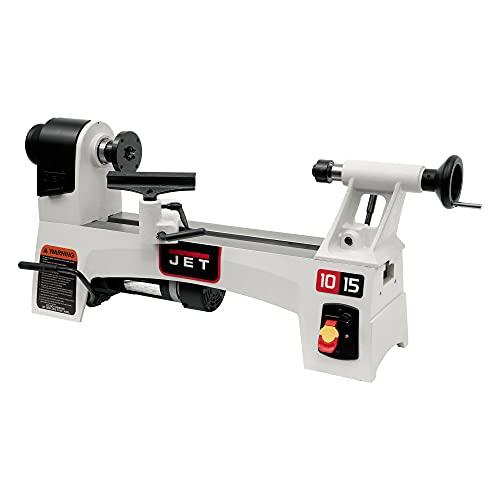 JET JWL-1015VS 10 x 15 Variable Speed Wood Lathe
 JET JWL-1221VS 12 x 21 Variable Speed Wood Lathe
 JET JWL-1440VS 14 x 40 Variable Speed Wood Lathe
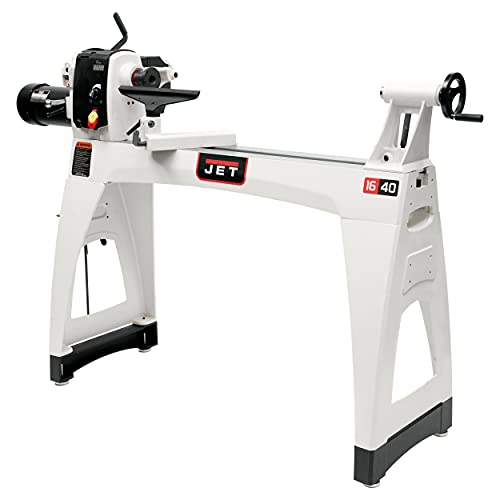 JET JWL-1640EVS 16 x 40 Electronic Variable Speed Wood Lathe









