As an Amazon Associate I earn from qualifying purchases. This post may contain affiliate links at no extra cost to you.
A wood CNC router turns a digital design into repeatable cuts, carved signs, inlays, joinery parts, and shaped panels that would take far longer to lay out and cut entirely by hand. For a home or small workshop, the practical choice is usually a desktop or benchtop machine, large enough for the boards you actually make, rigid enough to hold a line in hardwood and plywood, and simple enough in its controls that you spend your time designing and cutting rather than troubleshooting the machine itself.
OUR TOP PICK
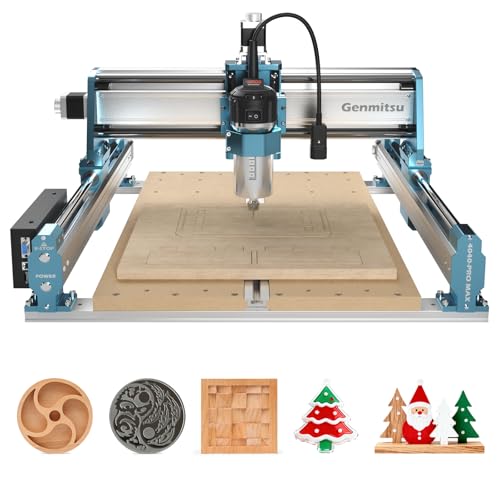
Genmitsu 4040-PRO MAX CNC Router Machine with 710W Spindle
This guide compares five desktop and benchtop CNC routers suited to woodworking, from a compact 3018-class machine for learning and small work to larger 4040-class machines with trim routers and deeper Z travel for thicker stock. Every model below is the same type of product, a CNC router machine for wood, and the differences that matter are work area, spindle power, frame and drive design, and how the machine handles dust, clamping, and everyday setup in a wood shop.
As an Amazon Associate, we earn from qualifying purchases.
How to Choose a Wood CNC Router
Start with work area, measured in three directions. The X and Y travel decide the largest sign, panel, or board you can cut in one setup, while Z travel decides how thick a workpiece and how tall a bit you can fit under the gantry. A 300 by 180 millimeter class machine suits coasters, small signs, plaques, and learning cuts. A 400 by 400 millimeter class machine suits larger signs, cabinet doors, cutting boards, and repeated small parts laid out across one sheet. If your typical work is wider than the bed, plan on tiling designs in software or choose the larger frame from the start, because repositioning stock accurately takes practice.
Spindle choice shapes what the machine can do in wood. Small DC spindles on entry machines are quiet and adequate for engraving, shallow carving, and thin stock with light passes. A 300 watt spindle adds headroom for deeper carving in hardwood. A trim router in the 710 watt class, used as the spindle on the largest machine in this guide, brings the cutting feel closer to a handheld router, with more power for pocketing and profiling, provided feeds, step-down depth, and bit choice stay sensible for the frame. More power does not replace rigidity, so match the spindle to the frame rather than treating power alone as capability.
Frame and drive design affect accuracy and repeatability. All-metal frames, C-beam extrusions, lead screws, ball screws, and linear rails resist flex better than lighter constructions when the bit meets end grain or a knot. Lead screw and linear rail machines tend to move with less play than basic belt and wheel arrangements, which matters for inlay work, tight-fitting joinery, and lettering where a small deviation shows. Look also for limit switches, an emergency stop, and a Z probe, because those features make homing, tool changes, and repeat setups calmer and more consistent.
Control and software deserve a check before buying. Most machines in this class use GRBL control and connect to a computer for sending G-code, with some supporting offline controllers or optional wireless modules sold separately. Confirm that the machine works with design and toolpath software you are willing to learn, that the post-processor matches GRBL, and that you have a plan for dust collection, eye and hearing protection, and secure workholding. A spoilboard, clamps, and a way to flatten stock are part of the real system, even when they are not the headline specification.
Finally, think about the work you will repeat. Sign makers need clean V-carving and enough width for lettering. Furniture makers need Z clearance, reliable probing, and room for joinery parts. Small shops cutting repeated parts need repeatability and a bed they can resurface or replace. Beginners benefit from pre-assembled modules, clear manuals, and a smaller bed that keeps early mistakes inexpensive. The best wood CNC for one shop is the machine whose size, spindle, and controls match its repeat jobs, not simply the largest specification list.
Genmitsu 4040-PRO MAX CNC Router Machine with 710W Spindle
Top Pick
Genmitsu 4040-PRO MAX CNC Router Machine with 710W Spindle
The Genmitsu 4040-PRO MAX is the most powerful machine in this guide, built around a 710 watt trimmer router and linear rail motion. Its listed work area of 410 by 405 by 77 millimeters gives room for signs, panels, and batches of smaller parts, while the trimmer format suits woodworkers who already understand router bits, collets, and the importance of conservative depth per pass in hardwood and plywood.
The listing describes an upgraded X-axis and Z-axis linear guide structure, GRBL control, and support for an optional wireless module. For wood work, the combination of a larger bed and a router-class spindle makes this the pick for pocketing, profiling, and carving where smaller DC spindles would require many more light passes.
Who It Suits
This machine suits woodworkers who have outgrown a first 3018-class router and want a desktop machine with router power for larger signs, trays, and panel work. It is less suited to a first-time buyer who wants the simplest, quietest learning machine, because a trim router demands careful attention to feeds, bit selection, and dust and noise control.
The Genmitsu PROVerXL 4030 stands out for Z travel. Its 400 by 300 by 110 millimeter work area is narrower than the 4040 models in one direction, but the 110 millimeter Z dimension gives more clearance for thicker stock, taller fixtures, and deeper relief carving. The listing describes a C-beam frame, NEMA 23 stepper motors, and pre-assembled modules intended to shorten initial assembly.
A 300 watt spindle rated to 12,000 RPM is fitted as standard, and the listing notes a mount arrangement for a compact router upgrade path. Limit switches, an emergency stop, and a Z probe are included in the described package, which helps with repeatable setup on wood parts that need a second operation or a flip.
Who It Suits
This machine suits carvers and furniture makers whose work needs height, such as deep relief panels, thick blanks, and boxed or raised work held in fixtures. Buyers who mainly cut wide flat signs may prefer a square 4040 bed instead, because width, not height, is the limiting dimension for that work.
Genmitsu 4040-PRO CNC Router Machine
The Genmitsu 4040-PRO offers the square 4040 format without the trim router focus of the MAX version. The listing gives a work area of 400 by 400 by 78 millimeters, described in inches as 15.7 by 15.7 by 3.1, with lead screw drive and GRBL control. That bed size is a practical middle ground for a benchtop wood shop, large enough for many signs and doors while still fitting on a sturdy bench or stand.
The frame uses a rigid structure with steel elements as described in retailer listings, and the machine supports spindle and accessory upgrades within the Genmitsu system, including mounts for larger spindles described in its manual material. For woodworking, its appeal is balance: a useful area, screw-driven motion, and a broad accessory ecosystem, without requiring the buyer to start with a router-powered setup.
Specs
Specification
Detail
Brand
Genmitsu
Model
4040-PRO
Work area
400 x 400 x 78 mm
Drive
Lead screw driven, 3-axis
Control
GRBL
Materials listed
Wood, acrylic, MDF, and metal cutting and milling as listed
ASIN
B0BKSJJS34
Who It Suits
This machine suits general woodworking use, including signs, MDF templates, plywood parts, and carved panels, where a square bed and screw drive matter more than maximum spindle power. It suits a buyer who may add accessories over time. A buyer who knows from the start that most work will be heavy pocketing in thick hardwood should compare it carefully with the trim router equipped MAX model above.
The FoxAlien Masuter Pro is an all-metal desktop router with a 400 by 400 by 60 millimeter active working area. Retailer listings describe an all-aluminum structure, a linear rail Z-axis, and a compact controller box with an emergency stop and home controls. Main parts are described as pre-assembled and pre-wired, with assembly time presented as short, which will appeal to buyers who want to reach a first cut without building a machine from loose components.
The standard spindle arrangement is modest, described as a 775 spindle at 10,000 RPM with 60 watt class power in listing details, and the machine is supplied with two spindle clamps, 52 millimeter and 65 millimeter, supporting spindle and router upgrade paths described by the maker. In wood, that means the standard setup favors engraving, lettering, and light carving, while deeper cutting depends on sensible passes or an upgrade the buyer plans deliberately.
Who It Suits
This machine suits beginners and hobby woodworkers who want a 4040-size bed, a metal frame, and fast initial assembly for signs, plaques, and light carving in wood, acrylic, MDF, and nylon. It is not the strongest standard spindle in this guide, so buyers planning frequent deep cuts in dense hardwood should budget attention, and possibly an upgrade, rather than expecting the stock spindle to behave like a trim router.
The Genmitsu 3018-PROVer V2 is the compact learning machine in this group. Amazon listing data describes a working area of 284 by 180 by 40 millimeters, an upgraded Z-axis, and an aluminum spoilboard, with limit switches and an emergency stop. That smaller footprint fits a desk or a corner of a bench, and the lower material size keeps early practice pieces, jigs, and test cuts manageable.
For wood, a 3018-class machine is best understood as a tool for engraving, small signs, coasters, inlay trials, and learning toolpaths, feeds, and workholding before moving to larger stock. It works in wood, acrylic, MDF, and plastic as listed, but its Z clearance and spindle class set natural limits on thickness and cutting depth. Those limits can be an advantage for a new user, because they encourage light passes and careful setup.
Who It Suits
This machine suits a first-time CNC buyer, a small shop adding a dedicated engraving station, or a woodworker who mainly makes small items and wants to learn CNC workflow without giving up much bench space. It does not suit buyers whose regular work is large signs, cabinet parts, or thick hardwood panels, because both bed size and Z travel will require tiling, flipping, or a larger machine.
FAQ
What size wood CNC router should a beginner choose?
A beginner who mainly wants to learn and make small signs or plaques can start with a 3018-class machine and keep material costs low while learning design, toolpaths, and workholding. A beginner who already knows the work will be larger signs or panels should consider a 4040-class machine from the start, because bed size cannot be changed by software alone, although some models offer extension accessories.
Can a desktop CNC router cut hardwood, or only softwood and MDF?
A desktop CNC router can cut hardwood when the bit is sharp, the stock is held firmly, and the toolpath uses suitable feed rates and shallow step-down passes for the spindle and frame. Dense hardwood, deep pockets, and large diameter bits place more load on the machine than MDF or softwood engraving, so the trim router and larger spindle models in this guide have more headroom for that work.
What bits are most useful for wood CNC work?
A practical starting set for wood includes a downcut or compression style end mill for clean edges in plywood and sheet goods, a straight or upcut end mill for pocketing, a V-bit for lettering and sign carving, and a ball nose bit for three dimensional relief work. Bit diameter must match the collet and spindle, and smaller machines using an ER11 style collet will use smaller shank tooling than a trim router.
How important is dust collection on a wood CNC router?
Dust collection is important for visibility, machine cleanliness, and workshop air quality, and it also helps keep the cutting area clear so the bit is not recutting loose chips. Even a basic dust shoe and extraction setup, paired with eye and hearing protection and a clear emergency stop routine, makes long carving and pocketing jobs easier to supervise safely.
Final Verdict
For most woodworkers choosing a first serious desktop machine, the Genmitsu 4040-PRO is the balanced recommendation, with a square work area, lead screw drive, and room to grow through accessories. For more cutting power on a similar footprint, the Genmitsu 4040-PRO MAX adds a 710 watt trimmer and linear rail motion. For thick stock and deeper relief, the PROVerXL 4030 gives the most Z clearance here, while the FoxAlien Masuter Pro offers a metal 4040 frame with quick assembly and a modest standard spindle. The 3018-PROVer V2 remains the sensible compact choice for learning and small work. Choose by the size and thickness of the wood pieces you make every month, then confirm spindle, collet, and software compatibility on the listing before ordering.
Product and ASIN Reference
Product
ASIN
Genmitsu 4040-PRO MAX CNC Router Machine with 710W Spindle
B0DFWLVQC4
Genmitsu PROVerXL 4030 CNC Router Machine
B08L6314MW
Genmitsu 4040-PRO CNC Router Machine
B0BKSJJS34
FoxAlien Masuter Pro CNC Router Machine
B09ZTYGGTJ
Genmitsu 3018-PROVer V2 CNC Milling Machine
B0CMTJ6CZC
J
JD's Woodworks Editorial Team
We compare specs, warranty terms, long-term owner feedback and street pricing before anything earns a spot. Rankings are never paid.
Affiliate disclosure. As an Amazon Associate we earn from qualifying purchases at no extra cost to you. Prices accurate as of the date shown.
Four hobby TIG welders compared for home shops: AC/DC picks for aluminum, a compact DC model for steel, listed specs, included gear and honest tradeoffs.
The best Creality Falcon engravers compared: Falcon A1 10W, CR-Laser Falcon 10W, Falcon2 Pro 22W and Falcon2 Pro S 40W, by power, work area and enclosure.
The best CNC machines for manufacturing compared: large-bed routers and closed-loop desktop mills with the work area, spindle and control for batch work.

 Genmitsu 4040-PRO MAX CNC Router Machine with 710W Spindle
 Genmitsu PROVerXL 4030 CNC Router Machine
 FoxAlien Masuter Pro CNC Router Machine
 Genmitsu 3018-PROVer V2 CNC Milling Machine










