As an Amazon Associate I earn from qualifying purchases. This post may contain affiliate links at no extra cost to you.
The real decision when kitting out a welding bench is not the machine, it is which smaller pieces you will reach for on every single joint. Gloves that split at the seams, a helmet window too small to read the puddle, parts that will not stay put during fit-up, and a gun nozzle clogged with spatter all slow the work down, and each one can turn a simple repair into a frustrating redo halfway through the job.
OUR TOP PICK
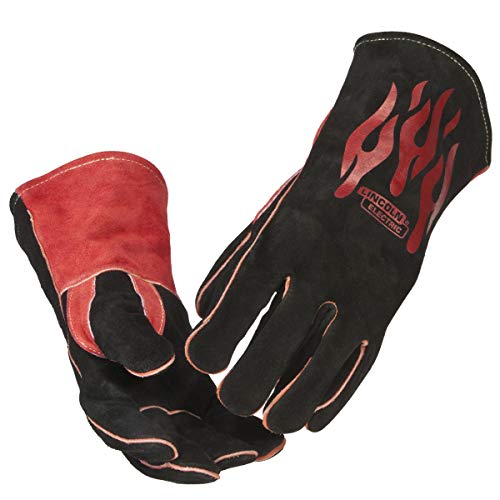
Lincoln Electric Traditional MIG/Stick Welding Gloves
This roundup is for home-shop welders setting up a first bench, hobby fabricators who want fit-up help, and MIG owners who want gun upkeep covered. The four picks below span hand protection, eye protection, workholding, and gun care, and each one was chosen from the product names and specifications published on its Amazon page, so the details quoted here match what the listing itself states.
Quick Picks
As an Amazon Associate we earn from qualifying purchases.
Product
Best for
Key spec from title
Lincoln Electric Traditional MIG/Stick Welding Gloves
Everyday MIG and stick work
14-inch split cowhide with Kevlar stitching
YESWELDER LYG-M800H Auto Darkening Welding Helmet
A wide view of the weld puddle
3.93 x 3.66 in viewing area, 1/1/1/1 true color
ABN Arrow Welding Magnet Set, 6 Pack
Hands-free fit-up at set angles
25, 50, and 75 lb magnets for 45, 90, 135 degrees
IRWIN VISE-GRIP MIG Pliers, 8-Inch
MIG gun upkeep between passes
Spring-loaded jaws with a spatter-removal nose
How to Choose
Match the Gloves to the Process
Start with the process you actually run. MIG, stick, and flux-core work throw more spatter and radiant heat, so a lined split-cowhide gauntlet with a long cuff earns its place there. TIG work trades that armor for thinner, more flexible leather that lets you feel the filler rod as you feed it. Check three listing details before anything else: the shell material, the liner, and the stitching thread, since seams tend to fail before leather does. One-size gloves are common in this category, so if your hands run small or large, look for sized options or accept a looser fit.
Read the Helmet Lens Specifications First
The shell graphics matter far less than four figures on the listing. Viewing area decides how much of the joint you can see without moving your head. Optical clarity, written as four digits, describes how true the view is, and 1/1/1/1 is the top mark. Sensor count affects how reliably the lens darkens when your body or the workpiece blocks one sensor, and the shade range should cover every process you use, including a grind mode. Power setup matters too: solar assist with a replaceable battery avoids a helmet that goes dark for good in the middle of a project.
Choose Workholding for Your Usual Joints
Magnets are the simplest fit-up help, but only when their strength matches the stock. Holding figures on listings assume clean, flat, bare steel, and real grip drops on painted, rusty, or curved pieces, so buy a step stronger than your typical workpiece seems to need. A graduated set with several sizes beats a single large magnet, because small parts get pushed out of square by oversized holders. Check which angles the shape offers, usually 45, 90, and 135 degrees, and remember that magnets hold position for tacking while clamps still carry the load on heavy assemblies.
Plan for Gun and Consumable Upkeep
Accessories that maintain the gun rarely get attention until a clogged nozzle ruins a bead. MIG pliers combine wire cutting, tip and nozzle handling, and spatter removal in one tool, and they only help if they live within reach of the machine. While comparing listings, think about the consumables around the gun as well: spare contact tips in your wire size, replacement helmet lenses, and nozzle gel all belong in the same drawer. Buying the maintenance pieces alongside the main accessories means the first clogged nozzle costs you minutes, not a second order and a stalled project.
The 4 Best Options
Lincoln Electric Traditional MIG/Stick Welding Gloves
Top Pick
Lincoln Electric Traditional MIG/Stick Welding Gloves
Best for: MIG and stick welders who want one durable everyday pair.
MIG and stick welders who want one durable everyday pair.
Watch out for
One size only, so very small or very large hands cannot fine-tune the fit; the listing also notes the gloves are not waterproof and should not be washed.
If your glove spending goes on one pair, make it a lined leather gauntlet like this one. The 100 percent split cowhide shell shrugs off spatter and sparks during MIG, stick, and flux-core work, while the full cotton liner adds a layer of heat insulation and soaks up sweat during longer sessions. Every seam is sewn with Kevlar thread and reinforced with a leather welt, which matters because stitching is usually where lesser gloves fail first. The 14-inch length covers the wrist and lower forearm, and the straight thumb keeps a natural grip on the gun or electrode holder.
Watch out for: One size only, so very small or very large hands cannot fine-tune the fit; the listing also notes the gloves are not waterproof and should not be washed.
YESWELDER LYG-M800H Auto Darkening Welding Helmet
Runner-Up
YESWELDER LYG-M800H Auto Darkening Welding Helmet
Best for: Welders who want a wide, true-color view for fabrication and garage projects.
Welders who want a wide, true-color view for fabrication and garage projects.
Watch out for
This listing is sold by YESWELDER and ships from Amazon rather than being sold by Amazon itself, so check the seller name at checkout; this ASIN is the blue style, so confirm the color variant before ordering.
A small viewing window forces you to move your whole head to follow a joint, and this helmet answers that problem directly. Its 3.93 by 3.66 inch viewing area is among the widest in its class, and the 1/1/1/1 true color lens shows the puddle and joint edges without the green cast of older filters. Four arc sensors trigger the darkening, and the adjustable shade range covers cutting and grinding modes as well as TIG, MIG, and stick work. Solar assist plus the included lithium battery keep the lens powered, and three spare lenses come in the box.
Watch out for: This listing is sold by YESWELDER and ships from Amazon rather than being sold by Amazon itself, so check the seller name at checkout; this ASIN is the blue style, so confirm the color variant before ordering.
ABN Arrow Welding Magnet Set, 6 Pack
ABN Arrow Welding Magnet Set, 6 Pack
Best for: Solo fabricators who need an extra hand during fit-up.
Brand: ABN (Autobody Now)
Set contents: 6 arrow welding magnets
Sizes and holding power: (2) 3 inch at 25 lb, (2) 4 inch at 50 lb, (2) 5 inch at 75 lb
Solo fabricators who need an extra hand during fit-up.
Watch out for
Holding figures assume clean, flat steel, so rust, paint, and curved surfaces reduce grip; magnets position parts for tacking and do not replace clamps on heavy assemblies.
Fit-up is where solo fabricators lose the most time, and a graduated magnet set quietly fixes that. This six-piece ABN set pairs two magnets at each of three sizes, so small brackets get the 3-inch, 25 lb holders while heavier plate gets the 5-inch, 75 lb pair. The arrow shape presents flat faces for 45, 90, and 135 degree joints, covering the angles that show up in frames, gates, and table builds. The bright red finish is easy to spot in a cluttered drawer, and the larger magnets have center holes that make them simpler to pull off the steel.
Watch out for: Holding figures assume clean, flat steel, so rust, paint, and curved surfaces reduce grip; magnets position parts for tacking and do not replace clamps on heavy assemblies.
IRWIN VISE-GRIP MIG Pliers, 8-Inch
IRWIN VISE-GRIP MIG Pliers, 8-Inch
Best for: MIG owners who clean nozzles and swap tips often.
Brand: IRWIN VISE-GRIP
Model: 1873303
Length: 8 inches
Nose: Shaped for removing welding spatter from nozzles
The functions are MIG-gun specific, so stick and TIG welders will get far less use from the jaws; confirm the 1873303 model number, since similar-looking pliers come in several variants.
A MIG gun stays reliable when someone cleans it, and this is the tool built for that five-minute routine. The specially shaped nose reaches into the nozzle to pull out spatter, the multiple jaws draw wire through and grip contact tips and nozzles for removal and installation, and the induction-hardened edge trims wire cleanly. A small hammer face handles light gun maintenance taps, and the spring-loaded action with dipped grips keeps the tool comfortable during repeated use. It is a single-purpose design, which is exactly why it lives on the welding cart instead of in a general toolbox.
Watch out for: The functions are MIG-gun specific, so stick and TIG welders will get far less use from the jaws; confirm the 1873303 model number, since similar-looking pliers come in several variants.
Which One Fits Your Situation
Setting Up a First Home Welding Bench
Start with protection, then fit-up help. The Lincoln Electric gloves and the YESWELDER helmet cover hands and eyes for MIG, stick, and light TIG practice, and the ABN magnet set holds your first frames and brackets square while you tack them. Add the IRWIN pliers once a MIG gun joins the bench, because nozzle cleaning starts with the very first spool of wire you run.
Running MIG Work Most Weekends
Your wear items are gloves and gun parts. The K2979-ALL gloves handle the spatter load of regular MIG and flux-core sessions, and the VISE-GRIP pliers keep nozzles clear and tips fresh between passes. The wide-view helmet helps on longer beads where you track a moving puddle, and the magnets speed up the repetitive fit-up of brackets, tabs, and small frames.
Fabricating Alone Without a Helper
Working solo means your accessories hold the work while your hands run the gun. The graduated ABN magnets act as extra hands at 45, 90, and 135 degrees, and the stronger 75 lb pair manages heavier plate. Pair them with the helmet’s four sensors, which keep the lens darkening reliably when a workpiece blocks your usual angle to the arc.
Equipping a Shared or School Shop
Shared benches reward durable, general-purpose picks. The one-size Lincoln gloves fit most users without a sizing chart, the YESWELDER helmet includes spare lenses so a scratched cover does not sideline it, and the magnet set spreads across several benches at once. The spring-loaded pliers survive being borrowed constantly, since every function a MIG station needs sits in one tool.
Common Mistakes
Buying gloves by process name alone and ignoring the liner and stitching, which decide how long the pair actually lasts.
Choosing a helmet for its shell graphics while skipping the viewing area, optical clarity, sensor count, and shade range on the listing.
Trusting magnet holding figures on painted or rusty steel, where real grip falls well below the number printed on the package.
Leaving MIG nozzle cleaning until the wire starts feeding badly, instead of clearing spatter with the right pliers after each session.
Ordering a helmet or pliers variant by photo alone without confirming the exact model number in the listing title.
Frequently Asked Questions
Do I need different gloves for TIG and MIG welding?
MIG and stick work usually call for thicker, lined leather because spatter and heat are heavier, while TIG welders often prefer thinner unlined gloves for filler-rod feel. A lined gauntlet like the Lincoln Electric pair in this roundup suits MIG, stick, and flux-core work; if you mostly run low-amp TIG, look for a slimmer goatskin style instead.
What does the 1/1/1/1 figure on a welding helmet mean?
It is the optical clarity class of the auto-darkening lens, scored across four measures, with 1 as the best mark in each. A 1/1/1/1 lens gives the least distortion and the most natural color, which helps you read the puddle and joint edges. Lower classes can look slightly hazy or tinted, especially toward the edges of the viewing area.
Can welding magnets hold parts while I finish the whole weld?
Magnets are fit-up aids, not clamps. They hold pieces in position at set angles so you can tack them, and the tacks then carry the joint while you finish welding. Heat near the magnet and heavy parts can overwhelm the hold, so tack promptly, keep magnets a sensible distance from the arc, and add clamps for large assemblies.
Why do MIG pliers have so many different jaw shapes?
Each jaw profile matches one gun task. The narrow nose cleans spatter from inside the nozzle, the grooved jaws grip and draw wire, the rounded sections fit contact tips and nozzles for removal and installation, and the cutter trims wire to length. Combining them means one tool on the cart handles the whole cleaning routine without a toolbox trip.
J
JD's Woodworks Editorial Team
We compare specs, warranty terms, long-term owner feedback and street pricing before anything earns a spot. Rankings are never paid.
Affiliate disclosure. As an Amazon Associate we earn from qualifying purchases at no extra cost to you. Prices accurate as of the date shown.
Four hobby TIG welders compared for home shops: AC/DC picks for aluminum, a compact DC model for steel, listed specs, included gear and honest tradeoffs.
The best Creality Falcon engravers compared: Falcon A1 10W, CR-Laser Falcon 10W, Falcon2 Pro 22W and Falcon2 Pro S 40W, by power, work area and enclosure.
The best CNC machines for manufacturing compared: large-bed routers and closed-loop desktop mills with the work area, spindle and control for batch work.



 IRWIN VISE-GRIP MIG Pliers, 8-Inch









