4 Best Gasless MIG Welders for Shops (November 2026)
Compare the best gasless mig welder options for flux-core welding at home, from a YESWELDER machine to Hobart and ARCCAPTAIN picks, and choose the right one.
Compare the best gasless mig welder options for flux-core welding at home, from a YESWELDER machine to Hobart and ARCCAPTAIN picks, and choose the right one.
As an Amazon Associate I earn from qualifying purchases. This post may contain affiliate links at no extra cost to you.
A gasless MIG welder runs flux-core wire, which means no gas bottle, no regulator and no rental fees, and it welds outdoors where wind would blow shielding gas away. The flux inside the wire shields the weld as it burns, so the machine works on a driveway, a farm gate or a rusty trailer without a windbreak. The differences between machines come down to amperage, voltage settings, wire feed control and whether the welder also runs stick or TIG when a job calls for it. There is no bottle to haul or refill.
This guide is for home welders repairing steel around the property, hobbyists learning MIG without a gas setup, and small-shop owners who need a portable welder for outdoor work. Every welder below was chosen from the name and specifications shown on its Amazon product page, with attention to amperage, voltage, flux-core capability and included accessories. We compare four gasless MIG machines that cover budget repairs and capable multi-process work. Match amperage to your steel below.
Quick Picks
As an Amazon Associate we earn from qualifying purchases
Product
Best for
Key spec from title
YESWELDER MIG-205DS PRO
Multi-process welding on a budget
205-amp output
Hobart Handler 140 500559
Classic home MIG with gas option
140-amp output
Hobart Handler 140EZ
Simplest flux-core setup
Flux-core, no gas bottle
ARCCAPTAIN MIG200
Synergic control for beginners
200-amp output
How to Choose
Amperage and Material Thickness
Amperage sets the thickest steel you can weld in a single pass, and a 140-amp machine handles sheet metal up to about a quarter inch while a 200-amp machine covers thicker plate. Flux-core wire runs hotter than solid wire at the same setting, which helps penetration on rusty or painted steel but also means more spatter to clean. Choose by the thickest steel you weld regularly, and remember that thin sheet metal needs low amperage and a steady hand more than it needs a powerful machine. A machine with enough settings to dial in thin work is worth more than raw output alone. A machine with a smooth arc starts easier on thin sheet.
Voltage Settings and Wire Feed
Voltage settings control the arc length and bead shape, and a machine with five or more settings gives you room to tune the weld for different thicknesses. Synergic control goes further by linking wire speed to voltage, so one dial sets both and beginners get a good weld sooner. A smooth wire feeder matters more than most buyers expect, since a feeder that stutters or birds-nests the wire ruins the weld and wastes time. Check that the machine accepts both 2-pound and 10-pound wire rolls, so you can buy the size that suits your workload. A feeder that runs smoothly also wastes less wire on long jobs.
Gasless Flux-Core and Outdoor Work
Flux-core wire carries its own shielding in the flux, which burns off as the wire melts and protects the molten weld from the air. That makes gasless welding the right choice outdoors, where wind would scatter shielding gas and leave porosity in the weld. The trade-off is more spatter and smoke than gas-shielded MIG, so the work needs cleaning and the welder needs ventilation. If your work happens mostly outdoors or on dirty steel, flux-core is the practical choice, and a machine that also runs solid wire with gas gives you the clean option for indoor work. Flux-core also handles painted or rusty steel better than solid wire.
Gasless MIG Safety and Ventilation
Flux-core welding produces more fume and spatter than gas-shielded welding, so ventilation and protective gear matter more. The machines in this guide list thermal overload protection, which shuts the welder down before the internals overheat on long beads, and that protection only works when the vents stay clear and the duty cycle is respected. Weld in a ventilated area away from flammable materials, wear a proper welding helmet, gloves and long sleeves, and keep a fire watch on the work after welding. Let the workpiece cool before handling it, and never weld on a tank or container that held fuel. Keep the work area clear so sparks cannot reach sawdust.
The 4 Best Options
YESWELDER MIG-205DS PRO
Top Pick
YESWELDER MIG-205DS PRO
Best for: Multi-process welding on a budget with gasless flux-core.
The MIG-205DS PRO is the multi-process machine for welders who want MIG, TIG and stick in one box at a budget price. Its 205-amp output covers steel up to a useful thickness, and the dual voltage design runs on a household outlet or a 220-volt circuit for full power. Flux-core wire runs without a gas bottle, and the machine handles both 2-pound and 10-pound rolls so you can buy the size that suits the job. The IGBT inverter keeps the arc stable, and the multi-process design means one machine covers most home welding work. The simple dials also make setup fast for beginners.
Watch out for: The included accessories are basic, so budget for a better helmet and extra contact tips.
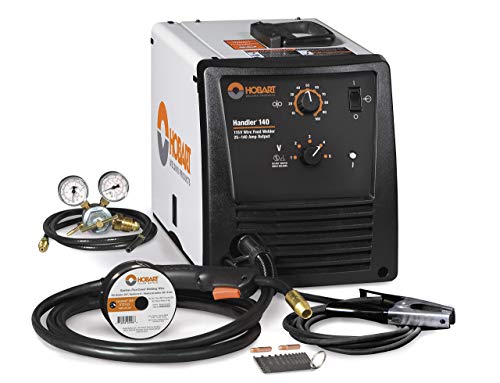
Hobart Handler 140 500559
Runner-Up
Hobart Handler 140 500559
Best for: A proven home MIG welder with a gas option for indoor work.
The Handler 140 is the classic home MIG welder, with a 140-amp output that handles sheet metal and steel up to a quarter inch. It runs flux-core wire without gas and switches to solid wire with a gas bottle when you want cleaner welds indoors, which makes it the most flexible machine in this group for its size. Five voltage settings give you room to tune the arc, and the 115-volt input plugs into any household outlet. It is the machine to buy when you want a proven, simple welder that holds its value. The sturdy case also survives transport to a job site without damage.
Watch out for: The 140-amp ceiling limits thick plate, so heavy fabrication needs a larger machine.
Hobart Handler 140EZ
Hobart Handler 140EZ
Best for: Simple flux-core welding outdoors without a gas setup.
The Handler 140EZ is the simplest flux-core welder in this group, built for welders who want to plug in and start without a gas bottle or a regulator. Its 140-amp output handles sheet metal and steel up to a quarter inch, and the flux-core wire shields the weld outdoors where wind would scatter gas. The 115-volt input runs on any household outlet, and the compact frame carries easily to the job. It is the right pick when the work is outdoors, the steel is dirty and the setup must stay simple. The compact frame also fits a crowded garage shelf easily between jobs.
Watch out for: Flux-core only means more spatter to clean, and there is no gas option for cleaner indoor welds.
ARCCAPTAIN MIG200
ARCCAPTAIN MIG200
Best for: Easy setup and more power for home welding.
The MIG200 pairs a 200-amp output with synergic control, which links wire speed to voltage so beginners get a good weld with one dial. Its multi-process design runs MIG, TIG and stick, and flux-core wire works without a gas bottle for outdoor repairs. Dual voltage covers a household outlet and a 220-volt circuit, and the IGBT inverter keeps the arc stable across the range. It suits a home welder who wants more power and easier setup than a basic 140-amp machine without paying for a professional unit. The synergic dial also saves time on repeat jobs with the same steel thickness and settings.
Watch out for: Synergic settings suit common thicknesses best, so unusual joints still need manual tuning.
Which One Fits Your Situation
One Machine for Most Home Welding
Pick the MIG-205DS PRO when one welder must cover MIG, TIG and stick work around the property. Its 205 amps and dual voltage handle most home jobs, and flux-core wire keeps the setup simple outdoors. It is the best value when the budget covers one machine and the work varies from week to week. It also switches to stick for thicker steel when a repair needs deeper penetration.
A Proven Welder That Holds Value
Pick the Handler 140 when you want the classic home MIG with a gas option for indoor work. The 140 amps cover sheet metal and quarter-inch steel, and the five voltage settings give you real control. It is the safest choice for a first welder, and it sells easily if you upgrade later. The five voltage settings also let you tune the bead for thin sheet without burn-through.
Outdoor Repairs Without Gas
Pick the Handler 140EZ when the work happens outdoors on fences, gates and trailers. Flux-core wire needs no gas bottle, and the 115-volt input plugs in anywhere. Keep a wire brush handy for the spatter, and the machine will handle most property repairs without fuss. The light frame carries easily to a fence line, and wind will not spoil the weld the way it spoils gas-shielded work outdoors.
More Power With Easier Setup
Pick the MIG200 when you want 200 amps and synergic control that sets wire speed for you. The multi-process design covers MIG, TIG and stick, and dual voltage means it works in the garage and the shop. It is the right step up when a 140-amp machine starts limiting the work you can take on. Dual voltage also means the same machine works in the garage and at a site with a circuit.
Common Mistakes
Choosing a machine by its top amperage alone while ignoring the voltage settings and wire feed that control the bead.
Welding outdoors with solid wire and gas, then wondering why the weld is full of porosity after the wind scatters the shielding gas.
Skipping ventilation, so flux-core fume builds up in a closed garage while you work and lingers long after the arc stops.
Running long beads without respecting the duty cycle, then tripping the thermal protection mid-weld and waiting for the machine to cool.
Buying the cheapest wire available, then fighting bird-nests and poor feed for the life of the roll on every single job.
Frequently Asked Questions
What is the difference between gasless MIG and regular MIG?
Gasless MIG uses flux-core wire, which carries shielding flux inside the wire that protects the weld as it burns, so no gas bottle is needed. Regular MIG uses solid wire with a shielding gas bottle, which gives cleaner welds but needs calm air. Gasless welding suits outdoor work, while gas-shielded welding suits clean indoor work.
Can I weld outside with a gasless MIG welder?
Yes, gasless flux-core welding is the best choice for outdoor work, since the flux shields the weld even when wind would blow shielding gas away. Gas MIG struggles outdoors because wind scatters the gas and leaves porosity. Wear a helmet and gloves, keep the area ventilated, and brush spatter off the finished weld.
How thick can a 140-amp MIG welder weld?
A 140-amp machine welds steel from 24-gauge sheet metal up to about a quarter inch in a single pass, which covers most home repairs, fences and brackets. Thicker steel needs multiple passes or a higher-amperage machine, and very thick plate is better left to a 200-amp unit.
Do I need a special helmet for flux-core welding?
You need a proper welding helmet with the right shade for MIG welding, since the arc is bright enough to damage your eyes and the spatter can burn skin. An auto-darkening helmet is the easiest choice for beginners, because it darkens the moment the arc strikes and lightens when you stop.
J
JD's Woodworks Editorial Team
We compare specs, warranty terms, long-term owner feedback and street pricing before anything earns a spot. Rankings are never paid.
Affiliate disclosure. As an Amazon Associate we earn from qualifying purchases at no extra cost to you. Prices accurate as of the date shown.
Four hobby TIG welders compared for home shops: AC/DC picks for aluminum, a compact DC model for steel, listed specs, included gear and honest tradeoffs.
The best Creality Falcon engravers compared: Falcon A1 10W, CR-Laser Falcon 10W, Falcon2 Pro 22W and Falcon2 Pro S 40W, by power, work area and enclosure.
The best CNC machines for manufacturing compared: large-bed routers and closed-loop desktop mills with the work area, spindle and control for batch work.



 ARCCAPTAIN MIG200









