As an Amazon Associate I earn from qualifying purchases. This post may contain affiliate links at no extra cost to you.
A heavy duty plasma cutter is defined by two numbers that light-duty machines cannot match: the thickness it can cut cleanly all day, and the duty cycle it holds at full output while doing it. If your work involves half-inch plate, structural steel, trailer frames, farm equipment or demolition cutting, a compact 40 or 50 amp unit will spend as much time cooling down as it spends cutting. The machines in this guide sit in the 60 to 80 amp class, hold 60 percent duty cycle at maximum output, and are built to sever steel an inch thick or more.
This guide compares four heavy duty plasma cutters that are currently sold on Amazon US. Each one uses a pilot arc that fires without touching the workpiece, each one is rated for thick steel, and each one takes a different approach to the same problem: the Everlast pair bring industrial duty cycles and CNC-ready ports, the PrimeWeld balances power with dual-voltage flexibility, and the YESWELDER trades some cut capacity for a much lighter machine with extra operating modes. The sections below explain how to read the specifications that matter, then walk through each machine in detail.
As an Amazon Associate, we earn from qualifying purchases.
Quick Picks
Our Short List of 3
Editor’s Choice
Everlast PowerPlasma 62i
Best for: Trailer builders, farm repair and general fabrication shops cutting 1/2 to 1 inch steel every day
Output: 20–60 amps, IGBT inverter
Input: 240 V, single phase
Duty cycle: 60 percent at 60 amps; 100 percent at 50 amps
Rated cut: 1 inch mild steel; severance 1-1/4 inch
Amperage sets the ceiling. As a working rule, a plasma cutter cleanly cuts roughly its amperage class in plate: a 60 amp machine handles 3/4 inch to 1 inch steel at a reasonable travel speed, while an 80 amp machine treats 1 inch plate as routine work and severs thicker stock when needed. Buy for the thickest material you cut regularly, not the thickest you might cut once, because oversizing costs you fine control on thin sheet.
Duty cycle decides how the day goes. Duty cycle is the share of a ten-minute period the machine can cut at a given output before it must cool. Sixty percent at full output is the heavy duty benchmark used by every machine here. Just as important is the 100 percent figure: the Everlast 82i, for example, can cut continuously at 60 amps, which is why it suits long seams and CNC table work where stopping mid-cut leaves marks and restrike points.
Read cut ratings carefully. Manufacturers publish three numbers: the recommended or quality cut (clean edge at a usable speed), the production cut, and severance (the absolute maximum, with a rough edge and slow travel). Compare machines on the quality cut figure. A machine advertised only by its severance number will disappoint on plate near that thickness.
Match the machine to your power supply. The 80 amp class needs a 240 V circuit with serious breaker capacity and a large compressor. Dual-voltage machines such as the CUT60 and the CUT-65DS PLUS run at reduced output on a household outlet, which is useful for thin material away from the shop, but full heavy duty output always requires 240 V.
Air supply is half the system. Heavy cutting consumes a lot of clean, dry air. Plan on a compressor that comfortably exceeds the machine’s flow requirement, plus a dryer or quality water trap, because moisture destroys consumables quickly and roughens every cut. Everlast specifically notes that the regulator and water trap supplied with its machines do not remove all moisture, and a separate inline air dryer is required to protect the torch.
Pilot arc type matters around electronics. Blowback (non-high-frequency) pilot arc machines strike the arc without the burst of electrical interference that high-frequency designs produce. That makes them the safer choice near CNC controls, vehicle electronics and other sensitive equipment, and the pilot arc itself lets you cut painted, rusty or expanded metal without grinding the surface first.
Torch and consumable ecosystem. Check the torch lead length (14 to 25 feet in this group), whether consumables are standard patterns that are easy to source, and whether a machine torch is available if you plan to add a CNC table later. A CNC port with a voltage divider is the other feature to look for if mechanized cutting is on your roadmap.
Best Options
Everlast PowerPlasma 82i
The PowerPlasma 82i is the heavyweight of this group: an 80 amp inverter machine built for shops that cut thick plate as routine work rather than occasional projects. Everlast rates it for a quality cut up to 1-1/4 inches on steel at a slow, controlled travel speed, with severance up to 1-7/16 inches, and it holds a 60 percent duty cycle at its full 80 amp output. Turn it down to 60 amps and it runs at a 100 percent duty cycle, which is the figure that matters for long production cuts and CNC table sessions.
The iPT-80 hand torch uses a blowback pilot arc, so it fires through paint, rust and mill scale without high-frequency interference, and the power source includes a CNC connector for mechanized work. A digital air pressure setting guide with color-coded indicators helps you set pressure correctly for each job, and adjustable post-flow control lets you shorten the cooling air blast after short cuts. Everlast covers the machine with a five-year warranty, the longest in this group, though the torch itself carries a much shorter coverage period.
Specs
Output: 20–80 amps, IGBT inverter
Input: 240 V, single phase
Duty cycle: 60 percent at 80 amps; 100 percent at 60 amps
Quality cut: up to 1-1/4 inch steel; severance up to 1-7/16 inch
Torch: iPT-80 hand torch, 14 ft cable, Euro quick-connect
Pilot arc: blowback, non-high-frequency
CNC connector fitted for mechanized cutting
Warranty: 5 years on the power source
Best for: Fabrication and farm shops that cut 3/4 inch to 1 inch steel regularly and want the highest duty cycle available on single-phase 240 V power
Watch out for: It needs a large compressor and a healthy 240 V circuit to feed it, a separate inline air dryer is required beyond the supplied water trap, and at shop-machine weight it is not something you carry to the work
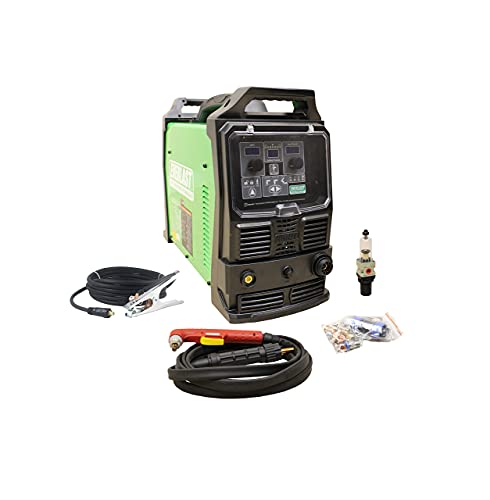
Everlast PowerPlasma 62i
Top Pick
Everlast PowerPlasma 62i
Best for: Trailer builders, farm repair and general fabrication shops cutting 1/2 to 1 inch steel every day
Output: 20–60 amps, IGBT inverter
Input: 240 V, single phase
Duty cycle: 60 percent at 60 amps; 100 percent at 50 amps
Rated cut: 1 inch mild steel; severance 1-1/4 inch
The PowerPlasma 62i applies the same formula as its bigger sibling one size down. Its 60 amp output is rated for a 1 inch cut on mild steel with severance to 1-1/4 inches, and the duty cycle figures are the real story: 60 percent at the full 60 amps, and a continuous 100 percent at 50 amps. For a shop whose daily work is 1/2 inch to 3/4 inch plate, that continuous rating at 50 amps covers most jobs without the machine ever asking for a rest.
It shares the family traits that make the i-series popular with fabricators: an iPT-60 blowback torch that cuts rusty and expanded metal cleanly, a CNC port for a future table, a digital pressure guide, and the same five-year power source warranty. It is the natural choice if the 82i’s appetite for air and power is more than your shop wiring and compressor can support, because it asks noticeably less of both while giving up relatively little cut capacity on the thicknesses most shops actually process.
Watch out for: It is 240 V only, so there is no household-outlet fallback for thin work, and the torch warranty is far shorter than the power source warranty
PrimeWeld CUT60
Runner-Up
PrimeWeld CUT60
Best for: Small fabrication shops and serious home shops that want genuine 60 amp heavy cutting plus the option of light work on household power
Output: 20–60 amps on 240 V; 20–30 amps on 120 V
Input: dual voltage 110/220 V, adapter included
Duty cycle: 60 percent at maximum output; 100 percent at 46 amps on 240 V
Cutting capacity: steel up to 7/8 inch under suitable conditions
Small fabrication shops and serious home shops that want genuine 60 amp heavy cutting plus the option of light work on household power
Watch out for
Output on 110 V is limited to 30 amps, so thick plate still requires a 240 V circuit, and it consumes consumables faster than the big industrial brands when pushed hard
The CUT60 is the most flexible machine in this guide. It delivers its full 60 amps on 240 V with a 60 percent duty cycle at maximum output, yet it also runs from a standard 110 V outlet at reduced output (20–30 amps) using the supplied adapter, which covers thin sheet and light repairs away from a 240 V receptacle. PrimeWeld rates it to cut steel up to 7/8 inch under suitable conditions, and the continuous pilot arc keeps the arc alive across expanded metal, grating and rusted surfaces without restriking.
The PT60 torch uses blowback initiation with a Euro central connection, and the machine includes a CNC interface port, so it can move from hand cutting to a plasma table without modification. Consumables follow the widely available IPT60 pattern. PrimeWeld backs the CUT60 with a three-year warranty and US-based support seven days a week, a combination that has made it a common recommendation for smaller shops that cannot afford downtime. At roughly 34 pounds it is also the most portable of the 240 V shop machines here.
Watch out for: Output on 110 V is limited to 30 amps, so thick plate still requires a 240 V circuit, and it consumes consumables faster than the big industrial brands when pushed hard
YESWELDER CUT-65DS PLUS
YESWELDER CUT-65DS PLUS
Best for: Repair shops, farm maintenance and mobile work where cutting is mixed with gouging and the machine has to be carried to the job
Output: 15–65 amps on 220 V; 15–45 amps on 110 V
Input: dual voltage 110/220 V
Duty cycle: 60 percent at 65 amps; 100 percent at 45 amps
Clean cut: 5/8 inch mild steel at 220 V; severance up to about 1 inch
Repair shops, farm maintenance and mobile work where cutting is mixed with gouging and the machine has to be carried to the job
Watch out for
Clean-cut capacity tops out at 5/8 inch, so routine 3/4 inch and thicker plate work belongs to the heavier machines above, and full output needs a generously sized breaker
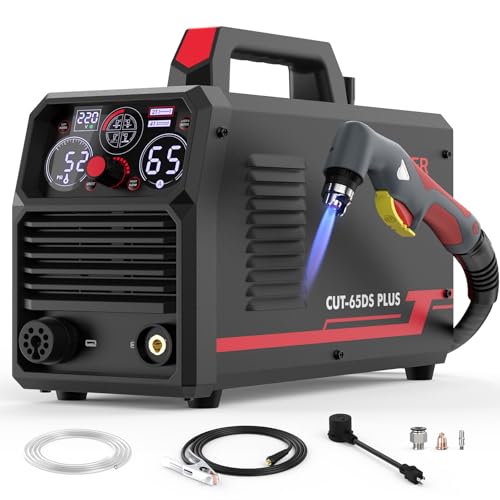
The CUT-65DS PLUS approaches heavy duty work from the repair bench rather than the production floor. Its 65 amp maximum output on 220 V cleanly cuts 5/8 inch mild steel and severs up to about 1 inch, with a 60 percent duty cycle at full output and continuous running at 45 amps. Where it stands apart is the mode dial: plate cutting, grid cutting, gouging and marking are separate functions on one machine, so the same box that cuts a trailer frame can gouge out a failed weld and mark layout lines.
The non-high-frequency blowback pilot arc fires without touching the metal, which suits painted and rusty repair work, and the dual displays show voltage and amperage at a glance. At about 22 pounds it is by far the lightest machine in this guide, and it runs at reduced output on 110 V for field repairs. It carries ETL certification and an IP21 enclosure rating. The trade-off for the light weight and extra modes is cut capacity: on plate beyond 5/8 inch it works harder and slower than the Everlast machines.
Watch out for: Clean-cut capacity tops out at 5/8 inch, so routine 3/4 inch and thicker plate work belongs to the heavier machines above, and full output needs a generously sized breaker
Which One Fits
You cut 1 inch plate most days: Choose the Everlast PowerPlasma 82i. Its 80 amp output, 1-1/4 inch quality cut rating and continuous running at 60 amps are built for exactly that workload.
Your work is 1/2 to 3/4 inch steel in a fixed shop: The Everlast PowerPlasma 62i covers it with duty cycle to spare, asks less of your compressor and wiring than the 82i, and keeps the same five-year warranty.
You want one machine for the shop and the occasional field repair: The PrimeWeld CUT60 is the pick. Full 60 amp output on 240 V at the bench, reduced but usable output on a household outlet, and a CNC port if a table comes later.
Your days mix cutting with gouging, mesh and marking: The YESWELDER CUT-65DS PLUS puts all four modes in a 22 pound box you can carry to the machine instead of bringing the machine to the bench.
You are planning a CNC table: Both Everlast models and the CUT60 have CNC connections and non-high-frequency arc initiation, which protects table electronics. Confirm the voltage divider and connector details for your specific table before ordering.
Common Mistakes
Buying on severance numbers. Severance is a rough, slow, last-resort cut. Size the machine by its quality cut rating for the plate you process every week, and treat severance as emergency headroom only.
Undersizing the compressor. A heavy duty cutter deprived of air eats consumables, leaves heavy dross and trips thermal protection. Match the compressor’s delivered flow at pressure, not its tank size or headline horsepower, and add a dryer.
Ignoring duty cycle at the amperage you actually use. A machine advertised at high amps but low duty cycle at those amps will stop mid-seam on long cuts. Compare the duty cycle at full output, and check the 100 percent figure for production work.
Running thick plate on 110 V. Dual-voltage machines cut their output roughly in half on household power. Thin sheet is fine; half-inch plate is not. Wire the 240 V circuit before the machine arrives.
Neglecting moisture and consumable discipline. Wet air is the fastest way to destroy electrodes and nozzles. Drain the tank daily, maintain the water trap, add an inline dryer for heavy use, and change consumables as a matched set.
Forgetting the rest of the circuit. An 80 amp cutter on a long extension cord or an undersized breaker will nuisance-trip and can damage the machine. Follow the manufacturer’s breaker and cable requirements exactly.
FAQ
How many amps do I need to cut 3/4 inch steel cleanly?
A 60 amp machine with a genuine 60 percent duty cycle at full output is the practical floor for routine 3/4 inch work. An 80 amp machine such as the PowerPlasma 82i does the same job faster and with more duty cycle in reserve, which matters on long cuts.
What is the difference between quality cut and severance?
The quality (or rated) cut is the thickness the machine cuts with a clean edge at a usable travel speed. Severance is the maximum it can push through slowly with a rough edge that needs grinding. Buy based on the quality figure.
Can a heavy duty plasma cutter run on a generator or engine drive?
Yes, provided the generator output is large enough and clean enough for inverter electronics; heavy cutters in this class typically need a generously sized engine drive. Check the machine manual for the minimum generator capacity before connecting one.
Do I need a CNC port if I only cut by hand?
Not today, but a CNC port and non-high-frequency initiation keep the option open if you add a table later, and blowback pilot arc is worth having for hand work anyway because it fires through paint and rust and re-fires cleanly on expanded metal.
Final Verdict
For maximum heavy duty capacity on single-phase power, the Everlast PowerPlasma 82i stands at the top of this group: 80 amps, a 1-1/4 inch quality cut and continuous running at 60 amps cover the thickest work most fabrication shops see. The PowerPlasma 62i is the smarter buy for the majority of shops, matching the same duty cycle discipline at 60 amps for daily 1/2 to 1 inch work. The PrimeWeld CUT60 adds dual-voltage flexibility and easy portability without giving up a real 60 percent duty cycle, and the YESWELDER CUT-65DS PLUS is the repair-bench specialist, trading some plate capacity for gouging and marking modes in a machine one person can carry anywhere. Match the machine to the thickest plate you cut every week, feed it dry air and full voltage, and any of these four will do heavy work for years.
J
JD's Woodworks Editorial Team
We compare specs, warranty terms, long-term owner feedback and street pricing before anything earns a spot. Rankings are never paid.
Affiliate disclosure. As an Amazon Associate we earn from qualifying purchases at no extra cost to you. Prices accurate as of the date shown.
Find the best steel plasma cutter for your shop. Compare four proven machines for clean cuts in mild steel, from a portable 12-amp unit to a 60-amp workhorse.
Best high frequency TIG welder guide: four HF-start AC/DC welders compared on output, duty cycle, dual voltage, torch, foot pedal and warranty for home shops.
Find the best gas shielded MIG welder for your shop. Compare four gas MIG machines by output range, duty cycle, voltage, weight, and included gas hardware.
Find the best 110 volt plasma cutter for home shops: dual-voltage 50-amp and 55-amp picks compared on cut capacity, pilot arc and air needs before you buy.
Compare deep cut portable band saws in the Milwaukee 6230 class: the 6232-21 kit, DEWALT DWM120K and two cordless rivals, by capacity, speed and weight.
Compare the best small plasma cutter options for garages and small shops with dual-voltage 50-amp models, pilot arc starts, and clean-cut limits explained.