As an Amazon Associate I earn from qualifying purchases. This post may contain affiliate links at no extra cost to you.
A 1200W gas generator sits in a useful middle ground: big enough to run lights, chargers and small tools, yet small enough to carry and store on a shelf. The real decision is not picking the loudest headline number on the box, but matching the generator to the loads you plan to run. A model that peaks at 1200 watts may only deliver 900 or 1000 watts continuously, and that gap decides whether your tool starts or trips the overload. Weight, engine type and noise matter just as much once you carry the machine to a campsite or a job site.
This guide is for campers, workshop owners and homeowners who need portable power for small loads without stepping up to a big generator. Every generator below was picked from its Amazon listing, using the rated and peak watts, engine size, weight and specifications shown on the product page. The three picks cover the two main designs in this size class: quiet inverter models and a simple conventional two-stroke model.
Quick Picks
As an Amazon Associate we earn from qualifying purchases.
Product
Best for
Key spec from title
Westinghouse iGen1200
Camping trips that need long runtime
1000 rated watts, 1200 peak watts
GENMAX GM1200i
Campsites where low noise and CO Detect matter
1000 running watts, 1200 peak watts
Pulsar G1200SG
Basic loads where a simple two-stroke engine is enough
1200 peak watts, 900 running watts
How to Choose
Read Rated Watts, Not Just Peak Watts
Peak watts describe the short burst a generator can supply when a motor starts, while rated watts describe the power it can deliver continuously. All three generators in this guide carry a 1200 watt peak figure, but their running output is lower: 1000 watts for the two inverter models and 900 watts for the Pulsar. Add up the running watts of everything you plan to power at the same time, then compare that total with the rated figure, not the peak figure. A load that fits inside the running watts will run steadily, while a load that only fits inside the peak watts will overload the machine after a few seconds.
Weigh Portability Against Power
A 1200W generator is meant to be carried, so weight deserves a close look before you order. The GENMAX GM1200i weighs 25.3 lb, the Westinghouse iGen1200 weighs 33 lb, and the Pulsar G1200SG weighs 39.68 lb, which is a real difference when you carry the machine across a campsite or load it into a truck bed. Lighter models are easier to move alone and to store on a shelf between trips, while heavier models can still work well if the generator mostly stays in one spot. Check the handle layout and the fuel tank position too, since a comfortable grip matters as much as the number on the scale.
Inverter or Conventional Two-Stroke
The two inverter models in this guide produce power through an inverter stage, which makes them a better match for laptops, battery chargers and other sensitive electronics. The Pulsar G1200SG is a conventional two-stroke generator instead, with a simpler engine that mixes oil into the fuel and runs louder. Two-stroke machines are straightforward and have fewer parts to worry about, but they need a fuel and oil mix before every fill, and their output is better suited to lights and basic tools than to delicate electronics. Choose the inverter design when electronics are on the list, and the conventional design when simple loads are all you need.
Run It Outdoors and Respect Carbon Monoxide
Every gas generator in this guide produces carbon monoxide, an invisible gas that can build up to dangerous levels in minutes inside a house, a garage or a tent. Run the generator outdoors only, well away from doors, windows and vents, and never inside an enclosed space even with a door open. The GENMAX GM1200i includes a CO Detect feature that shuts the engine down when carbon monoxide reaches a set level, but that feature is a backup, not a substitute for fresh air. Keep the generator dry, let it cool before refuelling, and store fuel in an approved container away from living spaces.
The 3 Best Options
Westinghouse iGen1200
Top Pick
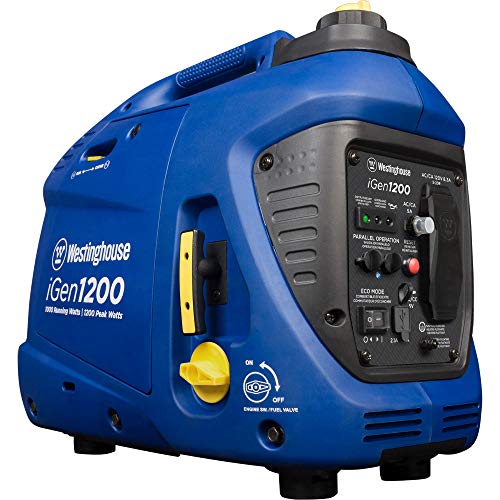
Westinghouse iGen1200
Best for: Campers and homeowners who want long runtime from an inverter generator.
The Westinghouse iGen1200 is the long-runtime pick of this group, an inverter generator built around a 54cc engine that delivers 1000 rated watts and 1200 peak watts. Its headline strength is endurance: the listing states a runtime of up to 9 hours, which covers an evening of lights and charging at camp or a stretch of backup power at home without a refill in the dark. At 33 lb it sits between the featherweight GENMAX and the heavier Pulsar, so one person can still carry it without much trouble. It suits buyers who want inverter power for small electronics and do not want to refuel often.
Watch out for: Plan your loads around the 1000 rated watts, not the 1200 peak figure.
GENMAX GM1200i
Runner-Up
GENMAX GM1200i
Best for: Campers who want the lightest generator with low noise and CO Detect.
The GENMAX GM1200i is the lightest and quietest generator in this guide, an inverter model with a 57cc OHV engine that delivers 1000 running watts and 1200 peak watts. At 25.3 lb it is the easiest of the three to carry, and its listed noise level of 57 to 58 dBA makes it the most neighbour-friendly choice for a campsite. It also carries a CO Detect feature that shuts the engine down when carbon monoxide reaches a set level, which adds a layer of protection on top of careful outdoor placement. This is the pick for buyers who carry their generator often and run it close to other people.
Watch out for: CO Detect is a backup only; always run the generator outdoors in fresh air.
Pulsar G1200SG
Pulsar G1200SG
Best for: Basic lights and tools on open job sites where a simple engine is enough.
The Pulsar G1200SG is the straightforward pick of the three, a conventional two-stroke generator rather than an inverter model. It delivers 1200 peak watts and 900 running watts from a 71cc two-stroke engine, and at 39.68 lb it is the heaviest machine in this guide. Its listed noise level of 80 dB makes it noticeably louder than the two inverter models, so it fits open job sites and yards better than crowded campsites. Because it is a two-stroke, it needs a fuel and oil mix, so read the manual for the exact ratio before the first fill and mix fuel in a separate container.
Watch out for: It is not an inverter generator, it needs a fuel and oil mix, and it runs louder than the other two picks.
Which One Fits Your Situation
Camping With Lights and Chargers
Pick the GENMAX GM1200i when the generator has to travel with you and run near other campers. Its 25.3 lb weight is the easiest to carry from the car to the pitch, its 57 to 58 dBA noise level keeps evenings quiet, and its 1000 running watts cover lights, phone chargers and a small fan at the same time. The CO Detect feature adds protection at a campsite, though it never replaces running the machine outdoors in fresh air.
Backup Power at Home
Pick the Westinghouse iGen1200 when the power goes out and you need steady backup for small essentials. Its runtime of up to 9 hours stretches a single tank through an evening, and its 1000 rated watts handle lights, chargers and a small fan together. Set it up outdoors away from doors and windows, run an extension lead inside, and keep the total load inside the rated watts so the machine runs steadily.
Small Tools on a Job Site
Pick the Pulsar G1200SG when the work is basic and the site is open. Its simple two-stroke engine handles lights and small corded tools within its 900 running watts, and there is no inverter stage to worry about. Keep the total load inside the running watts, mix fuel and oil exactly as the manual states, and accept the 80 dB noise level as the trade for a straightforward machine.
Sensitive Electronics
Pick the GENMAX GM1200i when laptops, camera batteries or other sensitive electronics are on the load list. Its inverter design is the better match for delicate gear, and its 1000 running watts leave room for a laptop charger and a few small devices at once. The Westinghouse iGen1200 is the other inverter option here if longer runtime matters more than the lightest carry weight.
Common Mistakes
Shopping by peak watts alone and overloading the generator once the running watts run out.
Running a gas generator inside a house, garage or tent where carbon monoxide can build up.
Guessing the fuel and oil mix on the two-stroke Pulsar instead of reading the manual first.
Plugging in too many loads at once instead of adding up their running watts beforehand.
Expecting a conventional two-stroke generator to run sensitive electronics as smoothly as an inverter model.
Frequently Asked Questions
How many watts can a 1200W gas generator actually run?
A generator labelled 1200W can only supply that figure as a short peak burst, usually when a motor starts. The continuous output is lower: 1000 watts for the Westinghouse iGen1200 and the GENMAX GM1200i, and 900 watts for the Pulsar G1200SG. Size your loads to the rated or running watts, and leave a margin so the machine does not run at its limit all day.
Can I run a 1200W gas generator indoors?
No, never run a gas generator indoors, in a garage, or inside a tent. The engine produces carbon monoxide, which is invisible and can reach dangerous levels in minutes in an enclosed space. Always run the generator outdoors, well away from doors, windows and vents. A CO Detect feature helps, but it is only a backup and never replaces fresh air.
Is the Pulsar G1200SG an inverter generator?
No, the Pulsar G1200SG is a conventional two-stroke generator, not an inverter model. It mixes oil into its fuel and runs louder than the two inverter picks in this guide, with a listed noise level of 80 dB. Its output suits lights and basic tools, while the inverter models are the better choice for laptops, chargers and other sensitive electronics.
What can I power with 1000 running watts?
One thousand running watts covers lights, phone and laptop chargers, a small fan and a few small devices at the same time, as long as their combined draw stays inside 1000 watts. Check the wattage printed on each device before you plug it in, and start motor-driven tools one at a time. Larger appliances such as heaters and air conditioners need a bigger generator.
J
JD's Woodworks Editorial Team
We compare specs, warranty terms, long-term owner feedback and street pricing before anything earns a spot. Rankings are never paid.
Affiliate disclosure. As an Amazon Associate we earn from qualifying purchases at no extra cost to you. Prices accurate as of the date shown.
Table saws under the 1500 mark compared: the Grizzly G0771Z and Shop Fox W1837 hybrid saws with cast iron tables, 2 HP motors and T-square fences, specs from their listings.
Table saws for fine woodworking compared: the SawStop Professional Cabinet Saw and Powermatic PM1000, judged on fence precision, table flatness and vibration from listing specs.
Table saw combos explained: saws sold with a stand and accessories in one listing, what to check in the box, and which bundle fits your shop or jobsite.
Compare the best planer digital thickness gauges and digital readout kits for portable planers, with fit, resolution and mounting checks before you buy.
Model table saws for scale modelling and hobby work compared: the precision Proxxon FET 37070 and the compact Saker mini table saw, with specs taken from their Amazon listings.
Three CoreXY 3D printers for product development, each with the architecture stated on its listing: an enclosed multicolor machine, a large-format enclosed model and a heated-chamber model.