
Our Top Picks
 SEESII Reciprocating Saw Cordless with 2 x 4.0Ah13.77 x 10.62 x 3.54 inches7.7 poundsCheck on Amazon


What's inside
As an Amazon Associate I earn from qualifying purchases. This post may contain affiliate links at no extra cost to you.
A full-size reciprocating saw is a wrecking tool, and mine lives on a shelf most of the year. It comes down for pallet teardown or a rotten fence post, and the rest of the time it is too long and too violent for what I actually need, which is one quick cut in an awkward spot. That gap is why I wrote this compact reciprocating saw review for a one-person garage shop instead of a demo crew.
My position up front: a compact recip saw is not a shrunken version of a big one. It is a different tool that happens to share a blade clamp. Buy it expecting to chew through 6×6 posts and you will be annoyed with it by lunch. Buy it to cut conduit, trim protruding fasteners, notch framing, lop off bolts and dowels, and break down scrap without hauling the big saw down off the shelf, and it earns wall space in about a week.
As an Amazon Associate we earn from qualifying purchases at no extra cost to you.


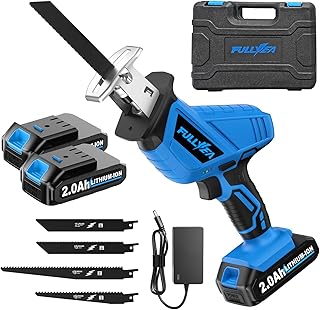
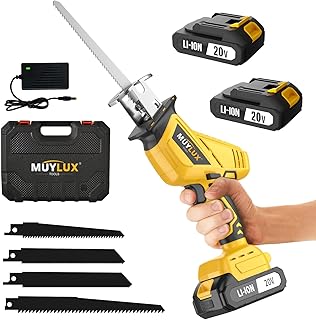
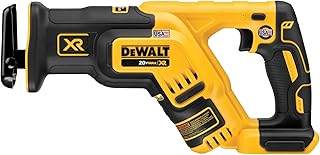


| Class | Handles well | Where it gives up |
|---|---|---|
| 12V one-hand | PVC, conduit, thin metal, pruning, tight cavities | Thick hardwood, nail-embedded lumber, long sessions |
| 18V or 20V compact brushless | 2x framing, pallets, light demo, plumbing | Heavy timbers, cast iron, production cutting |
| Full-size cordless or corded | Demo, beams, nail-embedded teardown | Overhead work, one-hand control, storage space |
| Oscillating multi-tool | Flush cuts, plunge cuts, fine trim | Cutting speed and depth of cut |
Why a Small Recip Saw Fits a Garage Shop
Space and reach, in that order. My shop is a single-car garage with a bench on one wall and lumber stored over the door, so half my cuts happen with my arms extended or my head turned sideways. A saw I can steer with one hand while the other hand holds the work is worth more to me than power I use twice a year.
For years I used a jigsaw for jobs that wanted a recip saw: cutting off a seized lag bolt, trimming a cabinet cleat in place, opening an old plywood wall to run a dust line. I snapped more blades than I want to admit and eventually cracked a shoe. A compact recip saw does that work with a cheap blade that is supposed to flex.
What Actually Matters in a Compact Reciprocating Saw Review
Stroke length
This one spec decides the rest. Compact saws run a shorter stroke than full-size saws, so each pass removes less material and clears fewer chips. A faster stroke rate makes up for that in metal and thin stock, and does not make up for it in thick or wet wood. If most of your cutting is 2x and up, take the longer stroke even if the tool gets bulkier.
Weight and balance
Judge weight with the battery you will actually run, not the bare-tool number on the box. A light saw with a fat pack hanging off the back is not a one-hand tool anymore. Pick it up and mime an overhead cut before you commit to it.
Shoe and blade clamp
A pivoting shoe keeps the saw planted and spreads wear along the blade. Fixed shoes chatter and eat blades. The clamp should be tool-free and should hold a blade inverted, because that is how you cut flush to a floor or a wall.
Brushless motor
I would pay for brushless here before I would pay for it on a drill. These little saws stall easily, stalling is what kills brushed motors, and brushless squeezes more runtime out of small packs.
12V One-Hand Recip Saws
If you already own 12V batteries, this is the cheapest way in. Strong on conduit, PVC, thin metal and pruning, and light enough to hold overhead. It will not enjoy framing lumber, and you need a second battery.
Battery Platform Beats Brand Loyalty
Buy on the platform you already own. The compact brushless saws in the DeWalt XR, Milwaukee FUEL and Makita LXT lines are all good enough that the deciding factor is whether you have three charged packs in the drawer. Starting from zero on a hobby budget, Ryobi ONE+ is defensible, and I would rather have a budget saw with spare batteries than a premium saw with one tired pack.
Battery size is a trade-off you make on purpose. Small packs keep the balance right. Big packs cut longer and sag less under load, and they turn a one-hand saw into a two-hand saw. I keep a compact pack on the tool for quick cuts and size up when I know I will be cutting for a while.
18V and 20V Compact Brushless Recip Saws
This is the class I would buy for a garage shop. Enough stroke and power for 2x lumber and light demo, still short enough to work between studs. Match it to the platform your drill uses and skip the kit if you already have chargers.
Blades Do More of the Work Than the Saw
Most people shop saws and cheap out on blades, then blame the tool when the cut wanders. My rough guide: 6 to 10 TPI for clean wood, 8 to 10 TPI bi-metal for nail-embedded lumber, 14 to 24 TPI for metal, and carbide-tipped for anything that has already killed a bi-metal blade.
Length matters more on a small saw. Long blades flex and waste stroke in a lightweight tool, so I keep 6-inch blades for most work and leave the 9 and 12-inch blades for the full-size saw. The blade still has to be long enough that the tip clears the work at the end of every stroke, or you will knock teeth out.
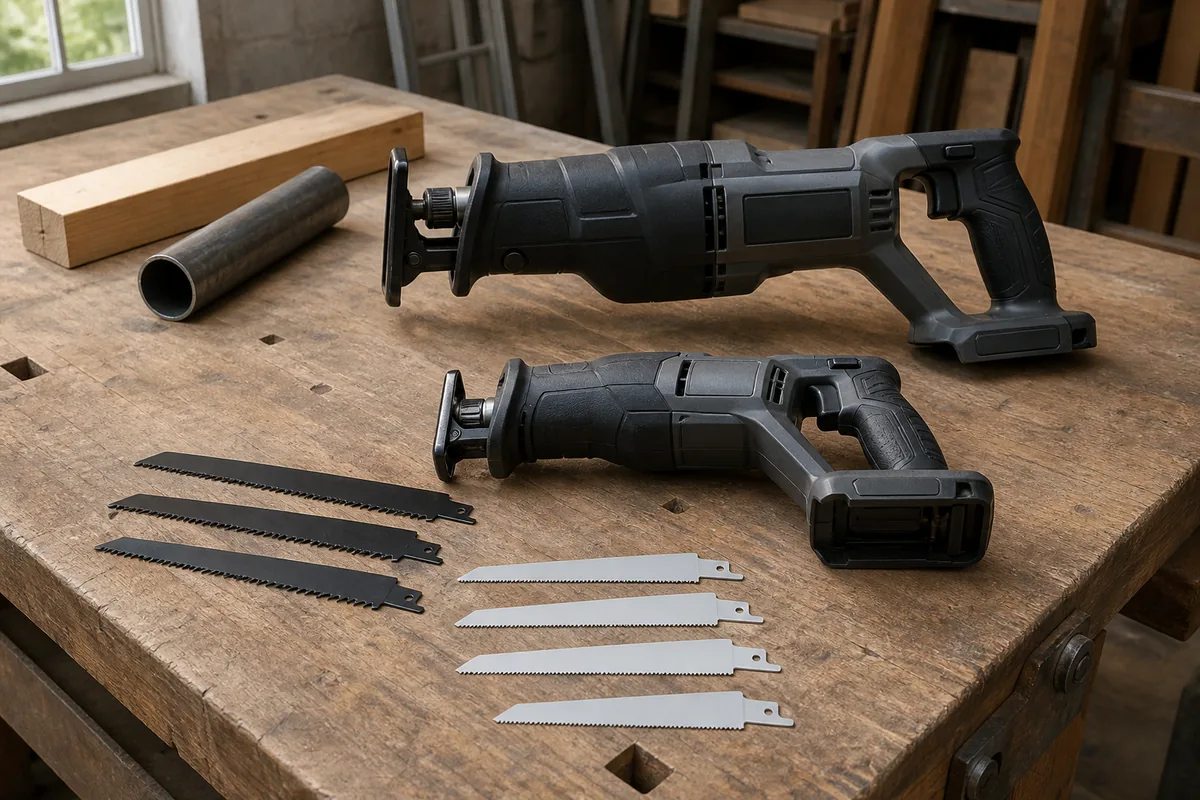
Short Recip Blade Variety Packs
A mixed pack of 6-inch wood, bi-metal and metal blades changes how any compact saw behaves. Stock up on the bi-metal ones, since those are what you grab for anything unknown or ugly.
Where Compact Recip Saws Let Me Down
Heat and duty cycle. Cutting steel with a small saw and a small pack heats the gearbox and the battery fast, and I have stalled one hard enough to trip its protection and have to reseat the pack. Wet pressure-treated lumber is the other weak spot. The blade gums up, the short stroke cannot clear it, and the big saw would have been faster.
- ✔ One-hand control in tight and overhead spots
- ✔ Stores in a bag instead of taking a shelf
- ✔ Much less kickback and collateral damage than a full-size saw
- ✔ Shares batteries with the drill you already own
- ✘ Short stroke bogs down in thick, wet or resinous stock
- ✘ Runtime drops fast on compact packs, especially in metal
- ✘ Fixed shoes on budget models chatter and shorten blade life
- ✘ Not a replacement for a full-size saw if you do real teardown
Compact Reciprocating Saw FAQ
Can a compact reciprocating saw cut through 2x4s? Yes, with a sharp 6 to 10 TPI wood blade. An 18V or 20V compact brushless saw handles 2x framing without drama. A 12V one-hand saw will get through, but slowly and at the cost of most of a small battery.
Is 12V enough, or should I go straight to 18V or 20V? Go 12V if your cutting is plumbing, conduit, pruning and trimming fasteners and you already own the batteries. Go 18V or 20V if lumber is in the mix. If you can only own one recip saw, the compact 18V or 20V class is the safer answer.
Does it replace my jigsaw or my full-size saw? Neither. A jigsaw makes controlled cuts and curves in flat stock, a compact recip saw makes rough cuts in awkward places, and the full-size saw still owns beams and nail-embedded teardown. I keep all three even though the big one barely gets used.
If you work alone in a garage, the compact class is the recip saw you will actually reach for, and that matters more than a spec sheet. Buy on the battery platform you already own, put the savings into blades, and keep the big saw for the jobs that deserve it.
Check prices on Amazon →