5 Best Portable Dust Collectors for Cabinets (November 2026)
Compare portable dust collectors for cabinet makers: airflow, filtration, bag size and mobility, with five rolling units suited to small cabinet shops.
As an Amazon Associate I earn from qualifying purchases. This post may contain affiliate links at no extra cost to you.
Cabinet making fills a shop with two kinds of waste: heavy chips from the planer and table saw, and fine dust from sanding and cutting sheet goods. A portable dust collector sits at the center of that problem because it rolls to the machine in use instead of asking the maker to run fixed ductwork through a small shop. The real decision is not which collector is biggest, but which one moves easily, connects to a standard four-inch port, and keeps fine dust out of the air while leaving room to work.
This guide is for cabinet makers working in single-car garages, basement shops, and small shared spaces, as well as job-site builders who carry dust control from one install to the next. The five collectors below were chosen from the names and specifications on their Amazon pages, with portability as the deciding factor: every unit rolls on casters or carries a handle, and every one connects to the machines cabinet makers run most.
Quick Picks
As an Amazon Associate we earn from qualifying purchases
Product
Best for
Key spec
WEN DC3401
Tight shops and benchtop tools
660 CFM, 12-gallon bag, rolling base
WEN DC1300
High chip volume from planers
1,300 CFM, 50-gallon bag, dual inlets
POWERTEC DC1512
Finer filtration with strong airflow
1,250 CFM, 2.5-micron bag, 1.5 HP motor
JET DC-650BK
One machine at a time, compact corner
650 CFM, 30-micron bag, four casters
VEVOR 1 HP 537 CFM
Rolling between benches on a job site
537 CFM, 15-gallon bag, handle and wheels
How to Choose
Match airflow to the machine
A table saw and a router table need steady suction at the port, while a planer throws a far larger volume of chips in a short burst. Check the airflow rating in cubic feet per minute and compare it with the tool you will connect most often, since a collector that is fine for a sander can choke on planer shavings. Cabinet makers usually run one machine at a time, so a single four-inch inlet is enough for most shops, but dual inlets help when two tools share one collector. Treat the rated figure as a ceiling measured with no hose attached, and expect real-world flow to drop once hose length and bends enter the picture.
Look closely at filtration
Fine dust from sanding, routing MDF, and cutting melamine is the dust that stays in the air longest and matters most for health, so the bag rating deserves as much attention as the motor. A 30-micron bag catches visible chips and coarse dust but lets the finest particles pass through, while a 2.5-micron or 5-micron bag holds back far more of the fine fraction. Cabinet makers who sand and rout sheet goods every day should favor the finer bag, even if it needs emptying and cleaning more often. Check whether the bag is a standard cloth bag or a finer filter bag, and confirm replacement bags are easy to find before committing.
Weigh portability against footprint
A portable collector earns its place by moving, so check the base, the wheels, and the weight before anything else. Lockable swivel casters let a unit roll to the table saw and stay put while cutting, and a carrying handle matters when the collector must travel to a job site or climb onto a shelf for storage. Measure the footprint against the gap between your machines, because a wide base can block walkways in a one-car garage shop. The lightest collectors store under a bench, while heavier floor units need a permanent corner and a short hose run to the machine they serve most.
Think about bag size and emptying
Bag capacity decides how often the work stops. A 12-gallon bag suits a maker who cuts and sands in short sessions, but a planer can fill it in a single afternoon of milling cabinet parts. Larger bags of 50 gallons or more let a busy shop run longer between empties, yet they also take up more floor space and grow heavy when full. Look for a zippered or quick-release bag that comes off without tools, and check how the top filter bag is cleaned, since a clogged bag cuts airflow long before the collection bag looks full. Keep a spare bag on hand so emptying never ends the working day.
The 5 Best Options
WEN DC3401 5.7-Amp 660 CFM Rolling Dust Collector
Top Pick
WEN DC3401 5.7-Amp 660 CFM Rolling Dust Collector
Best for: Cabinet makers in tight shops who move the collector from machine to machine.
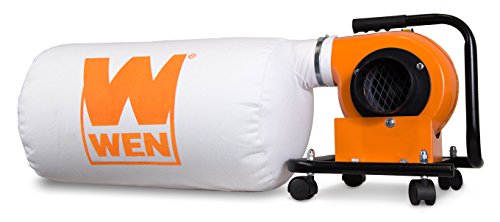
The WEN DC3401 is the lightest collector in this group, and that lightness is the point: it rolls to the saw, the router table, or the sander, then tucks under a bench when the day ends. Its 5.7-amp motor moves a rated 660 cubic feet per minute through a four-inch port, which suits single-machine work on benchtop and small cabinet-shop tools. A carrying handle, lockable swivel casters, and an optional wall mount give three ways to place it, and the 12-gallon zippered bag empties without a fight. For a cabinet maker short on floor space, it is the easiest unit here to live with.
Watch out for: Check the bag filtration rating before relying on it for fine sanding dust.
The WEN DC1300 is the heavy lifter of this group, built for cabinet shops that mill a lot of stock and need the chips gone. Its 14-amp motor and 10-inch steel impeller deliver a rated 1,300 cubic feet per minute through dual four-inch inlets, so it can serve a planer and a table saw setup without being moved constantly. The 50-gallon collection bag holds a long session of milling before it needs emptying, and the mobile base keeps the whole unit rolling. It takes more floor space than the smaller collectors here, but it repays that space with airflow and capacity.
Watch out for: Confirm the dual inlets match your hose sizes before ordering.
POWERTEC DC1512 1.5 HP 1,250 CFM Dust Collector
POWERTEC DC1512 1.5 HP 1,250 CFM Dust Collector
Best for: Cabinet makers who want finer filtration without giving up airflow.
The POWERTEC DC1512 pairs the strongest filtration in this group with serious airflow, making it a good fit for cabinet makers who sand and rout sheet goods all day. Its 1.5-horsepower motor runs at 3,450 RPM and moves a rated 1,250 cubic feet per minute through a four-inch inlet, while the upper filter bag is rated at 2.5 microns for finer dust. The portable base measures 21-1/2 by 33-1/2 inches and rides on caster wheels, so it rolls between the table saw and the planer. A keyed switch guards against accidental starts in a shared shop.
Watch out for: Check the overall height against your shop layout before assembly.
JET DC-650BK 1 HP 650 CFM Dust Collector
JET DC-650BK 1 HP 650 CFM Dust Collector
Best for: Cabinet makers who run one machine at a time in a compact shop.
The JET DC-650BK is a compact single-stage collector that suits a cabinet maker running one machine at a time. Its 1-horsepower motor delivers a rated 650 cubic feet per minute through a four-inch port, enough for a table saw, router table, or jointer in turn. The 30-micron bag filter keeps chips and coarse dust out of the shop air, and four casters let the unit move to whichever machine is running. With a 14-inch bag diameter and a 2.1-cubic-foot collection bag, it holds a useful amount of waste while keeping a modest footprint in a crowded shop.
Watch out for: The 30-micron bag passes fine dust, so pair it with good ventilation for sanding.
VEVOR 1 HP 537 CFM Wheeled Dust Collector
VEVOR 1 HP 537 CFM Wheeled Dust Collector
Best for: Cabinet makers who roll dust collection between benches and job sites.
The VEVOR 1 HP wheeled collector is the rolling helper of this group, built to follow the work around the shop or onto a job site. Its 1-horsepower motor produces a rated 537 cubic feet per minute through a four-inch inlet, and the 15-gallon bag holds chips from a session of cutting cabinet parts. A handle and wheels make it easy to pull from the table saw to the router table, and the whole unit stays light enough to load for off-site work. It is the simplest collector here, and for a cabinet maker who values movement over capacity, that simplicity is the appeal.
Watch out for: The 30-micron bag and smaller airflow suit lighter chip loads, not heavy planing.
Which One Fits Your Situation
A one-car garage cabinet shop
Floor space is the constraint, so the WEN DC3401 wins here: it rolls to the machine, works, and stores under a bench or against a wall. Its 660 CFM rating handles a benchtop table saw, a router table, and a sander in turn, and the carrying handle helps when the shop doubles as a parking space on weekends. Keep the hose short and the bag emptied, and this one collector covers a whole small shop.
A busy shop milling cabinet parts all day
Chip volume is the problem, so the WEN DC1300 fits: its 1,300 CFM rating and 50-gallon bag keep up with a planer and a table saw all day. Dual four-inch inlets let it serve two machines without reconnection, and the mobile base moves it to the next cut. The POWERTEC DC1512 is the alternative when sanding dust matters as much as chip volume, since its 2.5-micron bag filters finer than the others here.
Fine dust from sanding and MDF
When sanding and routing MDF fill the air with fine dust, filtration outranks airflow, and the POWERTEC DC1512 is the pick: its 2.5-micron bag holds back more fine dust than the 30-micron bags here, while 1,250 CFM clears chips from the table saw. Empty the bag often, since a loaded fine bag chokes airflow faster than a coarse one, and keep a spare bag ready so a full bag never ends the session early.
Moving between benches and job sites
If the collector travels to the work instead of the work coming to it, the VEVOR 1 HP wheeled collector fits best: its handle and wheels make it easy to pull from bench to bench, and it is light enough to load for an install. The JET DC-650BK is the steadier alternative for a shop corner, with four casters for occasional moves and a compact 14-inch bag that stays out of the walkway.
Common Mistakes
Buying on the CFM rating alone without checking that the inlet size matches the hose and the tool port.
Choosing a coarse 30-micron bag for a shop that sands and routs MDF every day, then wondering why fine dust stays in the air.
Picking a bag too small for planer shavings, so the collector fills up mid-session and airflow collapses.
Running a long hose across the shop to a fixed collector instead of rolling a portable unit to the machine in use.
Letting the top filter bag clog with fine dust, which cuts suction long before the collection bag looks full.
Frequently Asked Questions
What CFM does a cabinet maker need for a table saw?
A table saw works well with a collector rated near 650 cubic feet per minute through a four-inch port, which covers the WEN DC3401 and the JET DC-650BK in this guide. The rating is a ceiling measured without a hose, so keep the hose short and straight to keep as much flow as possible. Planers and jointers call for a higher rating and a larger bag.
Can one portable collector serve a planer and a table saw?
Yes, if it is rolled from machine to machine and the hose is swapped between ports. A collector rated at 1,250 cubic feet per minute or more, such as the POWERTEC DC1512 or the WEN DC1300, handles planer shavings and table saw dust. Planer shavings fill the bag fast, so empty it before switching machines, and keep the hose run short so airflow stays strong at the port.
How fine should the filter bag be for MDF dust?
For MDF and sanding dust, a bag rated at 5 microns or finer is a good target, and the 2.5-micron bag on the POWERTEC DC1512 is the finest in this group. A 30-micron bag catches chips but lets the finest dust pass, so it suits rough cutting more than sanding. Empty and clean the bag often, since a clogged bag cuts airflow and lets more dust escape.
Do portable collectors replace fixed ductwork?
In a small cabinet shop, yes: a portable collector rolled to the machine in use gives up little against fixed ductwork, and it costs far less to set up. Fixed ductwork wins in a large shop where several machines run at once, since one collector cannot serve them all. Most cabinet makers run one machine at a time, so a portable unit with a short hose is the practical choice.
J
JD's Woodworks Editorial Team
We compare specs, warranty terms, long-term owner feedback and street pricing before anything earns a spot. Rankings are never paid.
Affiliate disclosure. As an Amazon Associate we earn from qualifying purchases at no extra cost to you. Prices accurate as of the date shown.
Table saws under the 1500 mark compared: the Grizzly G0771Z and Shop Fox W1837 hybrid saws with cast iron tables, 2 HP motors and T-square fences, specs from their listings.
Table saws for fine woodworking compared: the SawStop Professional Cabinet Saw and Powermatic PM1000, judged on fence precision, table flatness and vibration from listing specs.
Table saw combos explained: saws sold with a stand and accessories in one listing, what to check in the box, and which bundle fits your shop or jobsite.
Compare the best planer digital thickness gauges and digital readout kits for portable planers, with fit, resolution and mounting checks before you buy.
Model table saws for scale modelling and hobby work compared: the precision Proxxon FET 37070 and the compact Saker mini table saw, with specs taken from their Amazon listings.
Three CoreXY 3D printers for product development, each with the architecture stated on its listing: an enclosed multicolor machine, a large-format enclosed model and a heated-chamber model.



 JET DC-650BK 1 HP 650 CFM Dust Collector
 VEVOR 1 HP 537 CFM Wheeled Dust Collector









