What's inside
As an Amazon Associate I earn from qualifying purchases. This post may contain affiliate links at no extra cost to you.
A rear dust port and a side hood collect dust in different ways. The rear port is a compact outlet built into or attached to the saw; the side hood is a larger catcher positioned around the blade and cutting area. Neither guarantees a clean shop. The right choice depends on your saw’s layout, the material you cut, and whether you connect a shop vacuum or a larger dust collector.
As an Amazon Associate we earn from qualifying purchases at no extra cost to you.
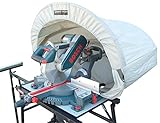
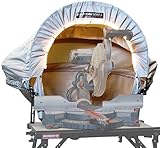


How the two designs collect dust
A rear port draws air and debris from behind the blade, where many saws direct their built-in dust chutes. It takes little room and usually connects neatly to a hose. But the blade throws chips in several directions, and the port can miss much of the fine dust that escapes around the guard and table.
A side hood is a larger enclosure placed beside or behind the blade to catch the spray of chips. It gives airborne debris more area to land in, especially when the saw is cutting near the back of its travel. A hood can still leak at the front, around the moving blade, or where the workpiece interrupts the enclosure. It also takes up more bench space and may interfere with long stock or the saw’s sliding action.
Rear port vs. side hood
| Factor | Rear port | Side hood |
|---|---|---|
| Space and setup | Compact; usually connects directly to the saw | Bulky; needs clearance behind or beside the saw |
| Chip capture | Fair to poor without good airflow | Often better for chips thrown toward the enclosure |
| Fine dust capture | Limited if the blade guard leaks | Can improve capture, but does not seal the blade area |
| Best fit | Small shops, occasional cutting, portable setups | Fixed stations with room for an enclosure |
| Main drawback | Clogs or misses dust when airflow is weak | Can obstruct stock, movement, or access |
Match the collector to the saw
A shop vacuum is practical for a single saw, intermittent cuts, and a compact shop. Use a hose that fits the port without crushing or sharply kinking it. Many saw ports are smaller than a standard 2½-inch vacuum hose, so check the opening and adapter dimensions before buying. A narrow connection can restrict airflow, and a clogged filter makes that problem worse. Empty the vacuum and clean its filter when suction drops.
For frequent cutting, a dust collector with a larger hose can move more air through a hood. Check the collector’s airflow at the tool, not just its advertised rating: long hoses, bends, small adapters, and restrictive filters reduce performance. A 4-inch duct is common for larger collectors, but a saw’s small port may need a reducer. A reducer is convenient, though it does not turn a small outlet into a high-capacity system.
If you are buying for one saw, compare a shop vacuum with a fine-dust filter against a larger collector only if the saw will run often or share the system with other machines.
Choose by workshop layout
Keep the saw’s rear and sides clear through its full range of motion before building an enclosure. On a sliding saw, pull the head forward and back with a workpiece in place; a hood that clears the blade at rest may catch the rails or block a long board. Allow enough room for stock support as well as the dust hose. A flexible hose that pulls on the saw can also shift its position or snag during a cut.
For a portable saw or a bench with little spare room, start with the rear port and a short, smooth hose. This is the cheaper and simpler option, and it is often adequate for occasional framing cuts. If chips still land behind the saw, add a broad, removable hood rather than replacing the whole setup. A miter saw dust-collection hood is a reasonable purchase for a fixed station when it fits the saw’s travel and your available space.
For a permanent station, a homemade hood can work well if it has a wide opening, does not block the stock, and connects to a collector with enough airflow. Make it removable or hinged so you can clear jammed chips and clean the saw. Avoid a tight box around the blade: it can interfere with the cut and may trap dust rather than draw it into the hose.
Common failures and fixes
If dust piles up under the saw, check for a blocked chute, loose adapter, or full vacuum before adding more hardware. If large chips are caught but fine dust coats nearby surfaces, the collector may be moving chips without capturing the dust plume. Improve the enclosure’s position and airflow, keep the guard in place, and clean the filter. Do not assume a hood makes the setup dust-free.
Fine wood dust can irritate lungs and, with repeated exposure, poses a serious health risk. Wear a properly fitted respirator when cutting, particularly when working with MDF or other dusty sheet goods. Keep dust away from motors and heaters, and clean settled dust with a suitable vacuum rather than blowing it into the air. A P100 respirator adds protection when source collection cannot capture everything.
A practical buying decision
Choose the rear port if you need a compact, low-cost setup for occasional work and can accept some cleanup. Choose a side hood if the saw will stay in one place, you have room for it, and chips regularly escape the rear chute. In either case, verify the fit before ordering: port diameter, hose diameter, saw travel, and stock clearance matter more than the label on the accessory. Start with the simplest setup that fits your use, then improve the capture where you can see dust escaping.