As an Amazon Associate I earn from qualifying purchases. This post may contain affiliate links at no extra cost to you.
Sanding produces the finest dust a woodworker breathes: the particles that stay airborne longest, drift furthest from the tool, and settle last. A random orbital session on MDF or a long run of hand sanding hardwood loads the air with dust well below the size a paper mask seals against, which is why reusable elastomeric half masks with P100 filters are the practical standard for this job.
The five respirators below are all reusable facepieces built around replaceable particulate filters. They differ in seal material, latch design, profile under safety glasses, and whether filters come in the box, and those differences decide which one fits your sanding routine.
As an Amazon Associate, we earn from qualifying purchases.
3M Half Facepiece Respirator Assembly 6391 with P100 Filters
Honeywell North 5500 Series Half Mask (550030M)
Trend Air Stealth Dust Mask, Small/Medium (STEALTH/SM)
How to Choose
Who Should Skip
FAQ
Final Verdict
Product and ASIN Reference
Quick Answer
For most woodworkers, the 3M 7502 silicone half mask with P100 pancake filters is the best respirator for sanding: soft seal, low breathing resistance, and a downward exhalation valve that keeps glasses clear. The 3M 6502QL adds a quick latch for short, stop-start sanding jobs, and the Trend Air Stealth is the low-profile pick.
3M Half Facepiece Reusable Respirator 7502
Top Pick
3M Half Facepiece Reusable Respirator 7502
Brand: 3M
Model: 7502 (medium); 7501 small, 7503 large
Facepiece material: Silicone
Filter class: P100 with 2091 or 2097 filters (sold separately)
The 7502 is the medium size of 3M’s 7500 Series, the silicone step up from the basic 6000 Series facepieces. Silicone is the material that matters for sanding: it stays pliable in a cold shop, seals without the strap tension a thermoplastic mask needs, and wipes clean of the fine dust that cakes onto every surface during a long session.
3M routes exhaled air downward through its Cool Flow valve, so breath moves away from safety glasses instead of fogging them mid-pass. Paired with 2091 or 2097 P100 pancake filters, the low-profile discs keep the mask out of the line of sight when you lean in to check a surface between grits. The 2097 adds a charcoal layer for nuisance-level organic vapor relief, useful when sanding recently finished pieces.
Sizes run small (7501), medium (7502), and large (7503), and the facepiece accepts the full 3M bayonet range: 2000 and 2200 Series filters, 7000 Series filters, and 6000 Series cartridges for days when sanding turns into spraying.
Sanding is stop-start work: sand a pass, drop the mask to sight down the board, talk, sand again. The 6502QL is built for that rhythm. Its quick-latch mechanism drops the facepiece to hang at the chest with one hand, without undoing the head harness, and clicks it back into place for the next pass, so the fit you set at the start of the session survives every break.
The facepiece is silicone with a resilient, low-profile seal, and 3M shapes the exhalation path to direct breath downward, away from eyewear. It takes the same bayonet filters as the rest of the 3M line, so a pair of 2097 P100 pancakes turns it into a fine-dust mask for MDF and finish sanding, and cartridge swaps cover spraying days.
The 6502QL is the medium; the line also runs small (6501QL) and large (6503QL). For woodworkers who pull a standard mask down around the neck a dozen times per session, the latch removes the excuse to leave it off for one more quick pass.
3M Half Facepiece Respirator Assembly 6391 with P100 Filters
3M Half Facepiece Respirator Assembly 6391 with P100 Filters
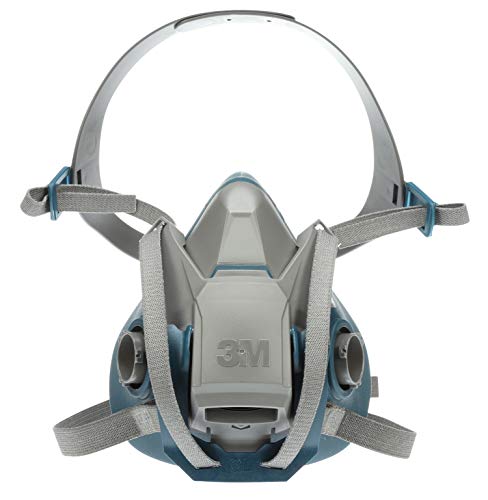
The 6391 is the ready-to-wear route into reusable protection. The box pairs a 3M 6300 half facepiece, the large size in the 6000 Series, with a pair of 3M P100 particulate filters, so there is no separate filter order to get wrong before the first sanding session starts. The filters mount on bayonet connections with a quarter turn.
The facepiece is molded thermoplastic elastomer with a four-point head harness, which keeps it light at the bench. It gives up the silicone seal and downward valve of the 7500 Series, but the seal geometry is the same proven 6000 Series shape, and the mask accepts the full range of 3M bayonet filters and cartridges.
Size is the decision to get right at order time: the 6391 is the large assembly, and the same kit is sold as the 6291 in medium and the 6191 in small. Run the maker’s seal check before work starts, and order a spare pair of P100 filters at the same time, because finish sanding loads filters faster than coarse work does.
Honeywell North 5500 Series Half Mask (550030M)
Honeywell North 5500 Series Half Mask (550030M)
Brand: Honeywell North
Model: 550030M (medium); 550030S small, 550030L large
Facepiece material: Thermoplastic elastomer
Filter class: P100 with North 75FFP100 filters (sold separately)
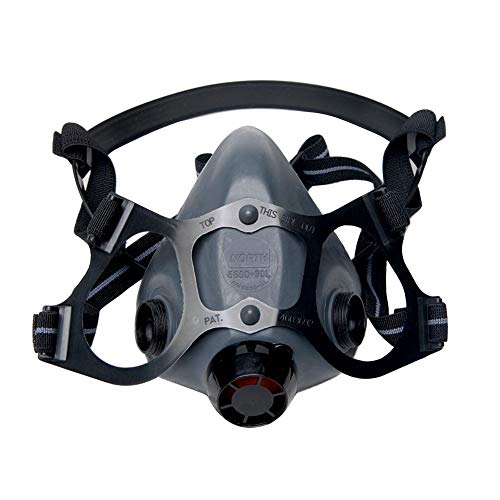
The 5500 Series is Honeywell North’s economy elastomeric line, and the 550030M is its medium facepiece. It is the budget route to a real seal: a thermoplastic elastomer facepiece with North’s N-Series bayonet connectors, a low-profile shape that leaves room for safety glasses, and straps designed to distribute tension without latex.
For sanding, pair it with North P100 pancake filters such as the 75FFP100. The low profile matters at the sander: the filters sit close to the cheeks, so the mask clears a face shield and does not block the downward view of the workpiece.
The trade-off against the silicone masks above is long-session comfort. Thermoplastic elastomer is firmer against the face, and the 5500 lacks a downward-directed exhalation path, so glasses wearers should check fogging on their own setup. Sizes run small (550030S), medium (550030M), and large (550030L).
Trend Air Stealth Dust Mask, Small/Medium (STEALTH/SM)
The Air Stealth takes a different approach from the cartridge platforms above. Trend classifies it as an N100 half mask, the highest particulate class in the NIOSH system, and its twin HEPAC pleated filters sit behind hinged grills that shield them from moisture and stray dust. For fine sanding dust, that filter class is the headline specification.
The low-profile body keeps the field of vision open when you bend over a workpiece, and the downward exhalation valve sends moist air away from safety glasses instead of up across the lenses. The face seal is TPE and free of latex and silicone, which suits sensitive skin, and the mask comes in two sizes so the seal matches the face rather than relying on strap tension alone.
Filters are replaceable, so the running cost is a pair of cartridges rather than a new mask. What the Air Stealth does not offer is a vapor cartridge path: it is a particulate-only mask, so if the session moves from sanding to spraying finishes, a bayonet platform from 3M or North is the better tool.
Facepiece material: TPE, latex-free and silicone-free
Exhalation: Downward valve
Approval: NIOSH N100
How to Choose
Start with the filter, because sanding dust is a fine-particulate problem. P100 filters capture 99.97 percent of airborne particles and are oil-proof, so they hold efficiency through long sessions; N100 is the equivalent top class in the Trend line. Pancake-style filters keep the mask low-profile when you lean over a workpiece watching the scratch pattern. If you sand freshly finished wood, the 2097-style filter adds nuisance-level vapor relief, but real spraying work calls for combination cartridges instead.
Next, fit. Every mask here comes in sizes, and the right size is the one that passes a seal check, not the one that matches your hat size. Silicone facepieces (the 7502 and 6502QL) seal with less strap tension and stay comfortable through a full day; thermoplastic models cost less and suit shorter sessions. Facial hair breaks the seal on all of them.
Then match the mask to your work rhythm. Stop-start sanding favors the quick latch of the 6502QL. One mask for the whole shop favors a bayonet platform with a deep filter catalog. A dedicated sanding-station mask can be the particulate-only Air Stealth or the budget North 5500. Finally, budget for filters as a consumable: fine dust loads them steadily, and breathing resistance is the signal to change them.
Who Should Skip
Skip half masks entirely if you wear a beard or heavy stubble: no facepiece here can seal against facial hair, and a powered respirator with a loose-fitting hood is the correct category. Skip the particulate-only picks if your sanding is paired with spraying or solvent-based finishing in the same session; you need combination organic vapor and P100 cartridges on a bayonet platform instead.
Skip the assembly kit if you are between sizes: the 6391 is the large, and a medium wearer is better served by the 6291. Skip reusable masks altogether if your sanding is a twice-a-year event; a box of disposable P100 respirators is simpler to store and always fresh. And skip any respirator as a substitute for dust extraction: a sander hooked to a vacuum removes most dust before it reaches your face.
FAQ
Is P100 or N95 better for sanding dust?
P100 is the better specification for sanding. It filters 99.97 percent of airborne particles against 95 percent for N95, and its oil-proof media holds efficiency longer in a dusty shop. Fine sanding dust from MDF and hardwoods is exactly the particle range where that margin matters, and every mask in this roundup runs P100 or the equivalent N100 class.
How often do P100 filters need changing?
There is no fixed hour count: change filters when breathing resistance climbs noticeably, or when the media is damaged or soiled. Finish sanding and MDF load filters fastest. Store spares in a sealed bag away from shop dust so a fresh pair is always ready.
Can I wear a respirator with safety glasses while sanding?
Yes, and the pairing is standard practice. Low-profile pancake filters keep the mask clear of eyewear, and downward exhalation valves, fitted to the 7502, 6502QL, and Air Stealth here, push moist breath away from lenses to limit fogging. If glasses still fog, the usual cause is a nose-seal leak, which a size change or seal check fixes.
Does a respirator replace dust collection when sanding?
No. A respirator protects only the wearer and only while it is worn, while extraction at the sander captures dust at the source and protects everyone in the shop, including after the tool stops. Use both: connect the sander to a vacuum or dust extractor, and wear the mask for the fine fraction that still escapes.
Final Verdict
The 3M 7502 is the default recommendation for sanding: silicone comfort, a downward valve that respects your glasses, and the deepest filter catalog in the group. Choose the 6502QL if your sanding is stop-start, the 6391 kit if you want filters in the box and wear a large, the North 5500 if the budget sets the ceiling, and the Trend Air Stealth if a low profile and N100 filtration matter more than a vapor-cartridge path. Whichever you pick, size it by seal check and keep spare P100 filters at the bench.
Find the best tools for car wrapping, from felt squeegees and wrap knives to heat guns and complete kits, and choose the right set for a smooth finish.
Find the radiator hose clamps best for leak-free cooling: worm-gear, T-bolt and spring picks sized for upper and lower radiator hoses, plus a sizing guide.
Find the best brake caliper press tool for smooth, even piston compression. Compare ratcheting presses, dual-piston tools, and spreaders for your brake job.
Compare three Japanese water stones for chisels and plane irons, from a King combination stone to a splash-and-go Shapton, with grit and soaking guidance.
Compare three carving knife kits built around basswood blanks, with guided projects, stropping gear and safety extras, plus criteria for choosing well.
Compare four chip carving knives for lettering by edge shape, steel and handle, from a skewed BeaverCraft C6 to a Swiss Pfeil, for plaques, signs and lids.
The best spindle sanders for guitar making shape cutaways, waist curves, and neck heels cleanly. Compare five benchtop and portable picks by drum size.



 Honeywell North 5500 Series Half Mask (550030M)