4 Best Chip Carving Knives for Lettering (November 2026)
Compare four chip carving knives for lettering by edge shape, steel and handle, from a skewed BeaverCraft C6 to a Swiss Pfeil, for plaques, signs and lids.
Compare four chip carving knives for lettering by edge shape, steel and handle, from a skewed BeaverCraft C6 to a Swiss Pfeil, for plaques, signs and lids.
As an Amazon Associate I earn from qualifying purchases. This post may contain affiliate links at no extra cost to you.
Lettering changes what a chip knife has to do. A general chip knife pops triangular chips out of geometric borders; a lettering knife has to follow curved strokes, stop cleanly at serif ends, and hold a shallow, controlled depth so letter walls stay crisp instead of crumbling. The real decision is edge geometry: a short skewed edge turns inside the bowls of letters like R and S, while a longer straight skew draws the long stems of capitals without chattering.
This roundup is for sign makers carving names into plaques, box makers adding initials to lids, and beginners practicing their first alphabet boards. Every pick below is a dedicated chip carving knife sold on Amazon, and the details come from the product names and specifications on those Amazon pages, so you can match each knife to the lettering style you plan to carve.
Quick Picks
As an Amazon Associate we earn from qualifying purchases.
Product
Best for
Key spec from title
BeaverCraft C6 Chip Carving Knife
Curved letters and rounded serifs
25 mm skewed cutting edge
UJ Ramelson Standard Chip Carving Knife
Long straight strokes on capital letters
1095 steel long skew edge
Pfeil Chip Carving Knife #2
Fine serif detail on small lettering
Swiss alloy steel, Rockwell 57-60
Hutsuls Chip Carving Knife
First practice alphabet boards
1.25-inch carbon steel blade
How to Choose
Match the edge shape to your letterforms
Lettering mixes three kinds of cut: long stems, curved bowls, and short stop cuts where serifs end. A skewed edge slices as it enters the wood, which keeps curved strokes smooth and lets the point pivot inside tight bowls. A longer, straighter skew bridges straight stems so they stay even from top serif to bottom serif. Before buying, look at the alphabet you plan to carve most: rounded scripts reward a short skew, Roman capitals reward a longer straight edge, and small text rewards the finest point you can control at shallow depth.
Keep the blade short enough for tip control
In lettering, the tip does the precision work: it starts each stroke, turns inside corners, and makes the stop cuts that keep chips from running past a letter boundary. Short edges, around an inch, pivot easily and keep the heel from digging into the far wall of a bowl. Longer edges help on sign-sized capitals but flex more on stop cuts and are harder to place exactly. If your letters will mostly sit under two inches tall, favor the shorter blades; scale up only when your letter height does.
Plan for stropping, because lettering dulls tips first
A lettering session wears the point of the blade faster than the middle of the edge, and a dull tip tears serif corners instead of slicing them. High-carbon steels such as 1095 strop back to a working point quickly, which suits carvers who hone little and often between letters. Harder alloy steels hold their point through a whole sign but take more time on the strop when they finally need it. Whichever steel you choose, budget for a leather strop and compound alongside the knife; the pair matters more than the steel name.
Choose a handle that supports thumb-push cuts
Most lettering cuts are low-force thumb pushes and short pull strokes, not the power cuts of roughing work. A palm-filling handle gives the pushing thumb a stable platform and keeps depth consistent across a long name board. Round-neck handles roll slightly in the fingers, which helps steer into inside corners without re-gripping. Avoid oversized or heavily sculpted handles on a lettering knife: they block your view of the tip at the shallow angles lettering uses, and they tire the hand during the slow, repeated strokes an alphabet demands.
The 4 Best Options
BeaverCraft C6 Chip Carving Knife
Top Pick
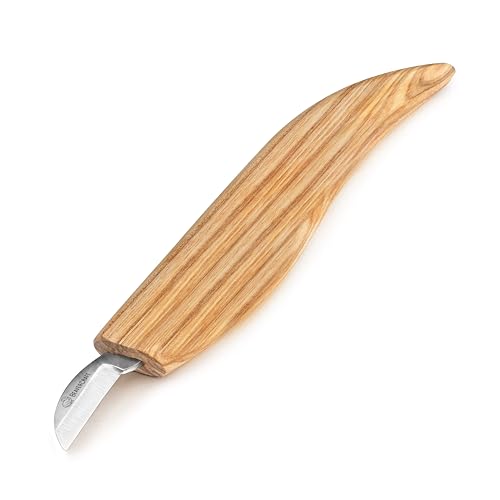
BeaverCraft C6 Chip Carving Knife
Best for: Rounded letters, monograms and curved serifs on plaques and box lids.
BeaverCraft markets the C6 for geometric patterns, letters and symbols, and its skewed 25 mm edge is the natural fit for curved letterforms. The short edge pivots inside the bowls of letters like B, R and S without the heel digging into the opposite wall, and the ashwood handle fills the palm for the thumb-push cuts that set letter depth. At just over six inches overall, it stays maneuverable on small plaques and box lids, and the light build keeps wrist strain low through a full name. It is the easiest of these four to steer on rounded scripts.
UJ Ramelson Standard Chip Carving Knife
Runner-Up
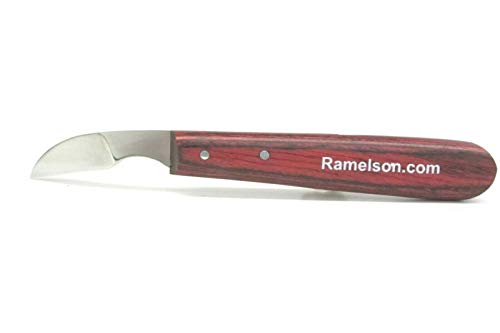
UJ Ramelson Standard Chip Carving Knife
Best for: Roman capitals and long straight strokes on signs and name boards.
Roman capitals and long straight strokes on signs and name boards.
Watch out for
The edge may need stropping before the first session, and Ramelson sells palm tool sets under similar names, so confirm this is the standard chip knife.
For Roman capitals and other straight-stem alphabets, the Ramelson’s long skew edge draws extended vertical and diagonal strokes in a single pass, so stems stay even from top to bottom instead of being patched together from short cuts. Its 1095 high-carbon steel takes a fine edge that suits the shallow stop cuts at serif ends, and the round-neck hardwood handle rolls slightly in the hand, helping you steer into corners without lifting the blade. It is the traditional American chip knife shape, sized for sign work on boards rather than miniature text.
Pfeil Chip Carving Knife #2
Pfeil’s Number 2 is the detail specialist of the four. Its thin alloy-steel blade, hardened to Rockwell 57-60, holds a keen point for the tiny stop cuts that separate serifs from stems on small lettering, and it tracks cleanly through the tight inside corners of letters like A and W. The hardwood handle is plain and light, which keeps attention on the tip during slow, shallow cuts across dense text. Carvers stepping up from a first knife will feel the difference most on fine scripts, small plaques, and any alphabet where the letters sit well under an inch tall.
Specs
Blade material: Special alloy steel, Swiss made
Hardness: Rockwell 57-60
Handle material: Hardwood
Weight: 0.96 ounces
Blade length: not stated
Handle length: not stated
Best for: Small, fine lettering and crisp serif detail.
Watch out for: Pfeil edges often benefit from a light honing before first use, and the slim handle can feel small in large hands during long sessions.
ASIN: B0009GZV5Y
Hutsuls Chip Carving Knife
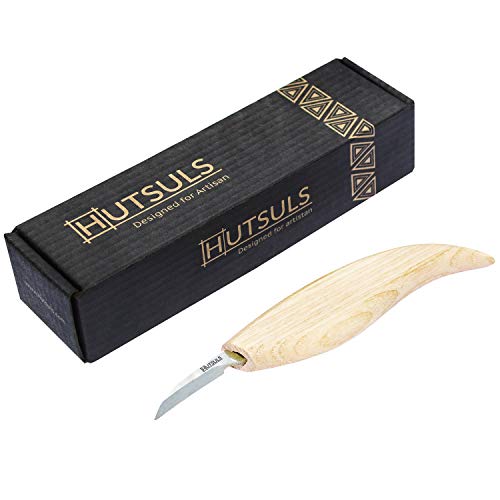
Hutsuls Chip Carving Knife
Best for: Beginners learning letterforms on basswood practice boards.
If your lettering starts with a practice alphabet board, the Hutsuls knife keeps the decision simple: a 1.25-inch carbon steel blade, an ashwood handle just under five inches, and a light build that is easy to control while you learn stop cuts and stroke order. The blade is thick enough, at a sixteenth of an inch, to tolerate the uneven pressure of early practice without feeling fragile, and the edge length suits medium letters on basswood plaques. It gives a beginner a dedicated chip knife shape to learn on, rather than a general whittling blade that fights letter work.
Which One Fits Your Situation
You carve names and monograms into box lids
Curved initials and short names are mostly bowl work and tight turns, which is where the BeaverCraft C6 earns its place. Its short skewed edge pivots inside rounded letters without the heel scarring the far wall, and the palm-filling handle keeps thumb-push depth even across a lid-sized carving. Pick the C6 when most of your lettering is rounded, personal, and small in scale.
You letter signs in Roman capitals
Sign alphabets are built from long straight stems and firm serifs, and the UJ Ramelson Standard is shaped for exactly that work. The long skew edge covers a full stem in one controlled pass, and the round-neck handle helps you roll into serif corners. Choose it when your letters are tall, formal, and carved into boards that will be read from a distance.
You carve small text and fine scripts
When letters shrink, the point of the knife becomes the whole tool. The Pfeil Number 2 holds a fine point in hard alloy steel and tracks through tight inside corners without wandering, which keeps small serifs separate and readable. It suits experienced carvers adding inscriptions, dates, and fine script to finished pieces, where one torn corner shows immediately.
You are practicing your first alphabet
A first alphabet board is about repetition, not fine detail, and the Hutsuls knife matches that stage. Its medium edge length forgives uneven pressure while you learn stroke order and stop cuts, and the light ashwood handle stays comfortable through a full row of practice letters. Start here, then add a shorter or finer knife once your letters shrink.
Common Mistakes
Using a general whittling knife for lettering; its longer, thicker edge cannot turn inside bowls or stop cleanly at serifs, so corners tear.
Cutting a letter outline in one deep pass instead of several shallow passes, which crumbles the letter walls and rounds the serifs.
Skipping stop cuts at the ends of strokes, letting chips run past the letter boundary and into the background.
Blaming the knife for torn letters when the tip has dulled; lettering fails at the point first, so strop little and often.
Practicing on strongly grained pine instead of even-grained basswood or linden, then fighting grain tear-out on every curved stroke.
Frequently Asked Questions
Can one chip carving knife handle a whole alphabet?
For one size and style of lettering, usually yes. A mid-length skewed knife covers stems, bowls, and stop cuts well enough for a practice alphabet or a name board. You only need a second knife when your work splits between large sign capitals, which want a longer edge, and small fine text, which wants a shorter, finer point.
What wood is best for learning carved lettering?
Basswood and linden are the standard practice woods because their grain is fine, even, and soft enough to cut at shallow depth without tearing. Butternut also letters well and shows finished work nicely. Avoid strongly grained or ring-porous woods while learning; the grain steers the edge and breaks serif corners, which makes it hard to tell knife problems from wood problems.
How deep should chip carved letters be cut?
Shallower than most beginners expect. Each stroke is formed by two angled cuts that meet along the center of the stroke, and the depth scales with letter size: small letters may need only a shallow valley, while sign capitals can go deeper. If chips crumble or walls collapse, the cuts are too deep for the letter width, so widen the stroke or reduce the depth.
Do chip carving knives arrive ready to carve letters?
Most arrive sharp enough to cut, but lettering asks more of the tip than general chip work, so a few passes on a strop before the first session is normal. Some knives, including Pfeil models, are often reported to benefit from a light honing first. Check the point on scrap basswood: if it tears instead of slicing the corner of a test chip, strop before starting real letters.
J
JD's Woodworks Editorial Team
We compare specs, warranty terms, long-term owner feedback and street pricing before anything earns a spot. Rankings are never paid.
Affiliate disclosure. As an Amazon Associate we earn from qualifying purchases at no extra cost to you. Prices accurate as of the date shown.
Find the best tools for car wrapping, from felt squeegees and wrap knives to heat guns and complete kits, and choose the right set for a smooth finish.
Find the radiator hose clamps best for leak-free cooling: worm-gear, T-bolt and spring picks sized for upper and lower radiator hoses, plus a sizing guide.
Find the best brake caliper press tool for smooth, even piston compression. Compare ratcheting presses, dual-piston tools, and spreaders for your brake job.
Compare three Japanese water stones for chisels and plane irons, from a King combination stone to a splash-and-go Shapton, with grit and soaking guidance.
Compare three carving knife kits built around basswood blanks, with guided projects, stropping gear and safety extras, plus criteria for choosing well.
The best spindle sanders for guitar making shape cutaways, waist curves, and neck heels cleanly. Compare five benchtop and portable picks by drum size.