
What's inside
- Milwaukee Deep Cut Models Compared: Specs That Matter
- Capacity in Practice: What 5 Inches Really Gets You
- Cut Speed and Blade Selection
- Handling and Balance: Where Deep Cut Saws Are Different
- Value and Ownership Realities
- Decision Matrix: Which Milwaukee Deep Cut Band Saw Fits Your Situation
- Setup for Square Cuts
- FAQ
- Related Guides
As an Amazon Associate I earn from qualifying purchases. This post may contain affiliate links at no extra cost to you.
The Milwaukee deep cut band saw is the best fit if you regularly cut steel pipe, strut, angle iron, and threaded rod up to 5 inches, with the corded 6232-21 offering the most power per dollar and the M18 FUEL 2729-20 and 2829-20 offering cordless mobility for field and overhead work.
As an Amazon Associate we earn from qualifying purchases at no extra cost to you.

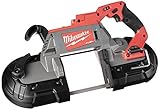
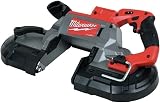

Milwaukee Deep Cut Models Compared: Specs That Matter
Milwaukee uses “Deep Cut” to denote its full-size portable band saws with a 5″ x 5″ rectangular capacity, versus “Compact” and “Sub-Compact” models that top out at 3-1/4″ and 1-5/8″. In 2026, three Deep Cut models dominate the lineup, and the choice comes down to power source and trigger layout.
| Model | Power Source | Cut Capacity | Blade Size | No-Load SFM | Weight (Tool Only) | Key Feature |
|---|---|---|---|---|---|---|
| 6232-21 Deep Cut (Corded) | 11A AC Corded | 5″ x 5″ rectangular, 5″ round | 44-7/8″ x 1/2″ x .020″ | 0-380 SFM, variable speed dial | 31.0 lbs | Line power, CPT constant power technology |
| 2729-20 M18 FUEL Deep Cut | M18 REDLITHIUM (18V) | 5″ x 5″ rectangular, 5″ round | 44-7/8″ x 1/2″ x .020″ | 0-380 SFM, variable speed trigger | 33.5 lbs (bare tool), ~36.2 lbs with 5.0Ah battery | Single trigger, Jobsite Armor, LED work light |
| 2829-20 M18 FUEL Dual-Trigger Deep Cut | M18 REDLITHIUM (18V) | 5″ x 5″ rectangular, 5″ round | 44-7/8″ x 1/2″ x .020″ | 0-540 SFM, variable speed | 34.1 lbs (bare tool), ~36.8 lbs with 5.0Ah battery | Dual-trigger + mode select, faster cutting on thin wall |
All three use the same 44-7/8 inch blade, which keeps consumable costs consistent. The difference is not capacity, but how that capacity is delivered. The corded 6232-21 holds peak SFM under heavy load without battery fade, while the FUEL models adjust power delivery electronically and add overload protection that reduces speed before stalling.
Capacity in Practice: What 5 Inches Really Gets You
On paper, 5″ x 5″ sounds generous. In practice, it defines whether you can make a single-pass cut without rotating the workpiece.
- Plumbing and mechanical: Cuts 4″ Schedule 40 steel pipe (4.5″ OD), 4″ cast iron, and 3″ copper cleanly in one pass. 5″ pipe requires a slight roll but is still within the throat.
- Electrical and strut: Cuts double-stacked 1-5/8″ strut, 4″ x 4″ square tube, and bundles of 3/4″ EMT. A compact band saw would require two cuts or cannot clear the bundle.
- Structural: Handles 4″ x 4″ x 1/4″ angle iron and 4″ channel. The rectangular capacity matters more than round here, as you will feed flat stock vertically against the guide.
- Limitation: The 5-inch depth limits you with 6″ wide flat bar laid flat. You must feed it diagonally or cut vertically, which affects squareness and requires better vise support.
If your typical material is under 2-1/2″ round or strut/rod only, a Milwaukee Compact (2429) will be lighter and faster to position. The Deep Cut earns its keep when at least 30-40% of your cuts are 3″ to 5″.
Cut Speed and Blade Selection
Variable speed is not just for different metals, it is for blade life. Milwaukee’s 0-380 SFM range on the 6232-21 and 2729-20 and 0-540 SFM on the 2829-20 covers the window for steel, stainless, and aluminum with the right TPI.
- 8/12 TPI bi-metal: Default for 1/8″ to 1/4″ wall steel pipe, strut, and angle. Good chip clearance, forgiving if speed is slightly high.
- 10/14 TPI: Best for thin-wall EMT, threaded rod, and stainless under 1/8″ wall. Requires lower SFM, around 200-250, to prevent tooth stripping.
- 14/18 TPI: For sheet metal, small-diameter tubing, and when cutting bundles of rod. Use the lowest speed setting and light feed pressure.
The dual-trigger 2829-20 adds real value on mixed-material days. Its high-speed mode at 540 SFM shortens aluminum and thin-wall steel cuts by 20-30% compared to the 380 SFM ceiling, but you must drop back to 250-300 SFM for solid bar or thick-wall pipe or you will burn teeth. The single-trigger 2729-20 forces you to feather the trigger for speed control, which is less consistent on long cuts.
Worked Runtime Calculation for Cordless Models
Battery runtime is the main buying question for the M18 FUEL models. Use this field estimate:
A single M18 5.0Ah battery delivers roughly 60-80 cuts in 3/4″ EMT, 35-45 cuts in 2″ Schedule 40 steel pipe, or 18-25 cuts in 4″ Schedule 40 steel pipe with a sharp 8/12 TPI blade. A 12.0Ah High Output battery increases those numbers by 1.8x to 2.1x, not a full 2.4x due to weight and heat.
For a day of fabrication: If you plan 30 cuts in 2″ steel pipe and assorted strut, budget 1x 5.0Ah battery. For 40 cuts in 4″ pipe, plan 2x 5.0Ah or 1x 12.0Ah plus one spare. Cold weather below 40F reduces capacity by 15-20%. Dull blades double power draw, so runtime drops faster than cut count suggests.
Handling and Balance: Where Deep Cut Saws Are Different
Weight distribution matters more than total weight on a portable band saw. All Milwaukee Deep Cut saws are front-heavy by design to keep pressure on the cut without leaning.
- Corded 6232-21: Best balance for bench and vise use. The 31 lb weight is centered between the handles, and the cord does not shift balance mid-cut. Less ideal on ladders or lifts due to cord management.
- 2729-20 Single-Trigger: Slightly rear-biased when a 5.0Ah or larger battery is installed. Easier to carry one-handed to the cut, but requires more wrist control to start square. The lower center of gravity helps on vertical cuts.
- 2829-20 Dual-Trigger: The most natural overhead saw. The second trigger near the front shoe lets you keep both hands in a neutral position and modulate speed without twisting. It is the heaviest option, but fatigue is lower during overhead strut work because you are not cantilevering your front hand.
Vibration and shoe design also affect handling. Milwaukee’s adjustable material guide and pivoting shoe help, but on all Deep Cut models you must support long stock within 12 inches of the cut to prevent blade pinching. A common mistake is letting 10-foot sticks hang unsupported, which twists the blade and creates a diagonal cut and premature guide wear.
Value and Ownership Realities
General market pricing in 2026 places the corded 6232-21 as the lowest upfront cost, with the M18 FUEL bare tools priced higher and kits with two batteries and charger at the top. If you already own M18 batteries, the price gap narrows significantly and the cordless models often have lower total cost on service work where setup time matters.
What Wears First and What It Costs
- Blades: The primary consumable. Expect 100-200 cuts in mild steel per bi-metal blade if speed and feed are correct, far fewer in stainless or if you cut hardened all-thread. Never break in a new blade at full speed, run the first 3-5 cuts at 50% speed with light pressure to hone the teeth.
- Blade guides and bearings: Wear accelerates if you side-load the saw or cut without the guide adjusted to the work width. Keep 1/16″ to 1/8″ clearance to the material, not tight against it.
- Tires and wheels: Rubber tires can accumulate steel chips that embed and cause blade slip. Brush tires clean after every few cuts, especially after cutting galvanized strut.
- Shoe and bumper: The shoe takes impact when the saw drops. A bent shoe prevents square cuts even with a new blade. Store the saw on its side, not resting on the shoe.
Cleaning takes two minutes and extends life: blow out chips from the wheel housing, wipe the blade with a dry rag to remove oil and grit, and check blade tension. Over-tensioning cracks blades at the weld, under-tensioning causes wandering and tooth loss. Milwaukee’s tension indicator is a guide, stop when the blade rings slightly when plucked and does not deflect more than 1/4″ sideways under moderate finger pressure.
Decision Matrix: Which Milwaukee Deep Cut Band Saw Fits Your Situation
| Your Situation | Best Fit | Why |
|---|---|---|
| Shop fabrication, daily steel cutting, power at every station, tight budget | 6232-21 Corded | Unlimited runtime, lowest purchase price, holds SFM under load, no battery management |
| Field service, mechanical/electrical contractor, mix of ladder, lift, and floor work | 2729-20 M18 FUEL | Portability without cord, strong balance for carry, same capacity as corded |
| Overhead strut and rod, frequent one-handed or in-position cutting | 2829-20 Dual-Trigger | Two-handed control, faster SFM for thin wall, less wrist strain overhead |
| Already own M18 5.0Ah or 12.0Ah batteries, limited space for cords | Either FUEL model | Leverages existing battery investment, reduces total ownership cost |
| Most material is under 2-1/2″ and you prioritize weight | Consider Compact, not Deep Cut | Deep Cut is overkill and heavier, compact saves 10-12 lbs and time positioning |
Setup for Square Cuts
To get consistent square cuts from any Milwaukee deep cut band saw:
- Install the blade with teeth facing the correct direction, tension until the indicator is centered and verify tracking by hand-spinning the wheel.
- Adjust the material guide so the blade is supported as close to the cut as possible without rubbing the workpiece.
- Set speed low for stainless and thin wall, mid-range for standard steel pipe and strut.
- Let the weight of the saw provide feed pressure. Pushing hard bows the blade and creates a curved kerf. If chips are blue, you are pushing too hard or running too fast.
- Use cutting wax on stainless and thick solid bar, not on thin EMT where it packs in the teeth.
FAQ
Can a Milwaukee deep cut band saw cut stainless steel?
Yes, with a sharp 10/14 or 14/18 TPI bi-metal blade at low SFM and light, consistent pressure. Stainless work-hardens, so do not stop mid-cut or dwell with a spinning blade, keep the blade moving forward.
Is the cordless as powerful as the corded?
Peak cutting power is close on the M18 FUEL models, but sustained power under long, heavy cuts favors the 11A corded 6232-21. For intermittent cuts up to 4″ steel pipe, the FUEL models show no practical difference when using a High Output battery above 50% charge.
What is the difference between single-trigger and dual-trigger?
The cutting head is the same. The 2829-20 adds a second actuation trigger near the shoe and a higher 540 SFM top speed. It improves ergonomics for overhead and vertical cuts and speeds up thin-material production, but does not increase maximum material size.