What's inside
- Delta 22-540 specifications that matter
- Board capacity: useful, but narrower than the name suggests
- Cutterhead performance and surface quality
- How serious is snipe on the 22-540?
- Replacement parts and ownership risks
- Delta 22-540 versus Delta 22-560
- Delta 22-540 Type 1 vs Type 2: How to Identify Your Planer
- Delta 22-540 Planer Review: What Is It Worth Used?
- Delta 22-540 Planer vs Current 12 and 13 Inch Planers
- Upgrading the Delta 22-540 Cutterhead
- How We Chose These Replacement Planers
- Buying decision by situation
- Delta 22-540 Planer Alternatives by Situation
- Final verdict
- Cuts Per Inch and Feed Rate: A Worked Example
- How Many Passes to Reach Final Thickness
- Used-Unit Inspection Checklist
- Common Mistakes Buyers Make
- Frequently Asked Questions
- Related Guides
As an Amazon Associate I earn from qualifying purchases. This post may contain affiliate links at no extra cost to you.
In 2026, the Delta 22-540 is worth buying only as a well-maintained used planer at a clearly discounted price; its 12½-inch capacity and repairable mechanical design remain useful, but age-related parts, snipe, and cutterhead limitations make a newer planer the safer choice for frequent work.
As an Amazon Associate we earn from qualifying purchases at no extra cost to you.


Updated November 2026 — Delta 22-540 planer review in short: the Delta 22-540 is a 12-1/2 inch portable thickness planer with a straight-knife cutterhead, worth buying only used and at a clear discount. If you want a current machine, the DEWALT DW734, DEWALT DW735X and WEN PL1326 are the usual replacements.
Our Top Picks
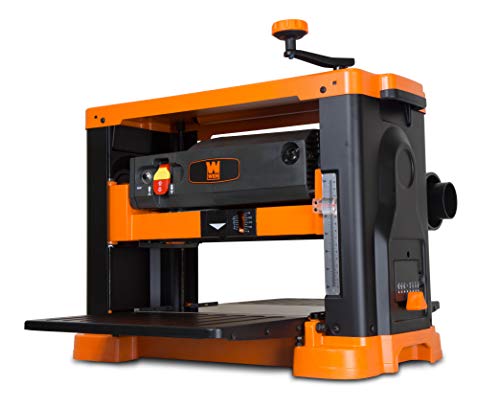 WEN PL1326 15-Amp 13-Inch Spiral Benchtop Thickness PlanerSpiral, 13-Inch, Single Speed81 poundsCheck on Amazon


Delta 22-540 specifications that matter
The Delta 22-540 is an older portable thickness planer intended for dimensioning rough boards and bringing stock to a consistent thickness. It is not a jointer, so it cannot reliably flatten a board with a substantial bow or twist unless one face has first been made flat with a sled, jointer, or similar method.
| Specification | Delta 22-540 | What it means in use |
|---|---|---|
| Maximum board width | 12½ inches | Suitable for most furniture parts and many cabinet panels, but not a full 13-inch capacity |
| Maximum stock thickness | Approximately 6 inches | Enough clearance for substantial beams and thick furniture components |
| Typical maximum cut | About 3/32 inch on narrower stock; roughly 1/16 inch near full width | Shallow passes produce a better finish and reduce motor and feed strain |
| Motor | 15-amp, 120-volt universal motor | Strong enough for normal hardwood dimensioning, with the noise and brush wear associated with universal motors |
| Feed rate | Approximately 26 feet per minute | Reasonable productivity for a portable machine, but not a production-shop rate |
| Cutterhead | Conventional straight-knife cutterhead | Knives can be sharpened or replaced, but the finish is less forgiving of tear-out and damaged edges than a helical system |
| Machine weight | Roughly 65–70 pounds, depending on configuration | Portable enough for one-person movement, but heavy enough to benefit from a stable stand |
Specifications vary slightly between published listings and production revisions, so confirm the rating plate and manual for a particular machine. The important buying facts are the 12½-inch width, conventional cutterhead, and 120-volt portable-planer layout.
Board capacity: useful, but narrower than the name suggests
A 12½-inch opening accommodates common 1x and 2x stock, tabletop components, shelves, drawer parts, and many glued-up panels. It does not comfortably handle every modern countertop or wide slab project. A panel advertised as 12 inches wide may also have cupped edges, uneven glue squeeze-out, or movement that makes a full-width pass impractical.
Leave clearance for irregular edges and avoid treating the maximum opening as an everyday working width. For example, a 12-inch panel may require several light passes and careful support, while a 13-inch machine offers only half an inch more nominal capacity but can make borderline work less awkward. That is one reason shoppers sometimes compare the Delta 22-540 with the Delta 22-560 planer.
The 22-540 also needs outfeed support. Without it, a long board can tip as it leaves the cutterhead, increasing snipe and potentially damaging the surface. A flat stand, aligned extension tables, and support at both ends matter more than a small difference in advertised capacity.
Cutterhead performance and surface quality
The straight-knife cutterhead is the Delta 22-540’s main limitation compared with current helical or segmented-carbide planers. Sharp knives can produce a very good surface on straight-grained material, but figured maple, reversing grain, knots, and heavily interlocked hardwood are more likely to show tear-out.
Three habits make a substantial difference:
- Take light finishing cuts, commonly 1/32 inch or less, after removing the bulk of the material.
- Feed boards with the grain direction arranged to reduce lifting at the cutterhead.
- Rotate or replace knives as soon as one edge becomes nicked instead of compensating with increasingly aggressive cuts.
Knife condition is more important than the motor’s headline amperage. A used planer with clean, correctly set knives will outperform a neglected machine with a stronger-sounding motor. Examine the knife lock bars, screws, cutterhead surface, and adjustment mechanism for stripped fasteners or damage before buying.
How serious is snipe on the 22-540?
Snipe—an unwanted deeper cut at the first or last few inches of a board—is common on portable thickness planers, including the Delta 22-540. It results when the board is supported by only one feed roller as it enters or exits, allowing the board to pivot slightly.
It can often be reduced, but not always eliminated. Set the machine on a rigid, level base, align the infeed and outfeed tables with the bed, and support long boards at the same height as the planer bed. Feed boards end-to-end when possible, maintain steady pressure until the trailing end reaches the outfeed roller, and take a final light pass.
A practical allowance is to leave 2 to 4 inches at each end of a board for trimming. That turns a cosmetic defect into a manageable workflow cost. If the project requires every inch of an expensive board, a newer planer with improved roller geometry or a heavier stationary machine is preferable.
Replacement parts and ownership risks
The 22-540’s older design is mechanically understandable, but replacement-part availability is the central ownership question in 2026. Knives, belts, bearings, switches, and generic hardware may still be obtainable through woodworking suppliers, tool-repair sources, or compatible aftermarket channels. Model-specific parts such as feed rollers, plastic covers, gear assemblies, and discontinued adjustment components can be much harder to locate.
Before paying for one, inspect these wear points:
- Drive belt: Look for cracking, glazing, slack, and visible wobble while running.
- Feed rollers: Hardened or damaged rubber causes slipping, uneven feeding, and inconsistent thickness.
- Gearbox and chains: Listen for grinding, rhythmic knocking, or hesitation under load.
- Knife-setting hardware: Damaged screws or clamps can make safe knife replacement difficult.
- Thickness adjustment: The head should move smoothly and hold its setting without excessive backlash.
- Motor and brushes: Brief sparking can occur in a brushed motor, but heavy arcing, burning odor, or speed loss is a warning.
Cleaning is also part of the cost. Resin and chips packed around the rollers can reduce grip, while dust in the motor and switch area accelerates wear. Disconnect power before cleaning, vacuum the housing and bed, and use appropriate lubrication only where the manual specifies it. Do not oil rubber rollers or contaminate the belt.
Delta 22-540 versus Delta 22-560
The Delta 22-560 is often considered because it offers a nominal 13-inch planning width and comes from a related generation of portable Delta machines. That extra half inch is useful, but it does not automatically make the 22-560 a better purchase. Condition, knife availability, feed performance, and the presence of a complete guard and tables matter more than the model number.
| Buying priority | Better direction | Reason |
|---|---|---|
| Lowest purchase cost | 22-540, if demonstrated running | Older examples can be inexpensive, but savings disappear if feed parts are worn |
| Borderline 12- to 13-inch panels | 22-560 or a current 13-inch planer | The wider opening reduces awkward panel handling |
| Best finish on figured wood | Current helical or segmented-carbide planer | Replaceable inserts generally handle varying grain more predictably |
| Easy future repairs | Current model with documented parts support | Age is less likely to turn a minor failure into a machine-ending problem |
In other words, the planer Delta 22-540 can still be a sensible tool for occasional dimensioning, while the Delta 22 560 planer is mainly attractive when its condition and price are clearly better or its extra width solves a real project need.
Delta 22-540 Type 1 vs Type 2: How to Identify Your Planer
Searches for “delta 22-540 type 2” and “delta planer model 22-540” point to one question: which version is on the bench. The model number and type are printed on the rating plate. Read it before you buy knives, belts or a knife gauge, because several parts are listed as fitting both Type 1 and Type 2 while others are not.
| Check | Why it matters |
|---|---|
| Model 22-540 and Type number | Confirms parts compatibility for knives, belts and springs |
| Voltage and amperage | Delta 22-540 is a 120-volt, 15-amp machine; check the plate |
| Knife part number 22-547 | Replacement knives are sold under this number, in a set of two |
| Drive belt | Listed as a 135J6 poly-V belt by several parts sellers |
One search asks about a “Delta 22-545C planer”. This guide covers the 22-540 only. If the plate on your machine reads a different model, look up that number rather than assuming the parts match.
Delta 22-540 Planer Review: What Is It Worth Used?
People ask how much a Delta 22-540 planer was worth and what it is worth now. There is no fixed number, because condition drives value. Use these tiers.
What to expect at this tier
- Clean, running unit with sharp knives and a working height crank: worth a clear discount against a new DEWALT DW734 class planer.
- Runs but has worn rollers, a loose belt or nicked knives: price it for parts and a rebuild, and budget for knives and belts.
- Does not run, cracked housing or damaged cutterhead: only worth buying for parts.
- Any unit missing its dust hood, tables or manual: deduct for each missing piece.
Delta 22-540 Planer vs Current 12 and 13 Inch Planers
| Planer | Width | Cutterhead | Motor | Best for |
|---|---|---|---|---|
| Delta 22-540 (used) | 12-1/2 in | Two straight knives | 15 A, 120 V | Low-cost used buy |
| DEWALT DW734 | 12-1/2 in | 3-knife | 15 A, 20,000 RPM | Closest like-for-like new planer |
| DEWALT DW735X | 13 in | 3-knife, two-speed | 15 A | Frequent shop use |
| WEN PL1326 | 13 in | Spiral | 15 A | Budget helical |
| Cutech 40800H | 13 in | Spiral, 26 carbide inserts | 15 A | Quieter finish on figured wood |
DEWALT DW734 — Best like-for-like 12-1/2 inch replacement

12-1/2 in width · 15 A · 3-knife cutterhead · 20,000 RPM · benchtop.
- Same width class as the 22-540 with a third knife for a smoother cut.
- Widely stocked replacement knives and parts.
Pros: easy parts supply; familiar capacity; strong brand support.
Cons: straight knives still tear out figured grain.
Skip it if you plan to plane wide panels near 13 inches.
DEWALT DW735X — Best for frequent shop use

13 in width · 15 A · three-knife cutterhead · two-speed feed · benchtop.
- Two feed speeds let you take a fast roughing pass and a slow finishing pass.
- Extra width over the 22-540 helps with glued panels.
Pros: two-speed feed; large user community; parts availability.
Cons: higher price; heavy to move.
Skip it if you plane only occasionally.
WEN PL1326 — Best budget spiral cutterhead

13 in width · 15 A · spiral cutterhead · benchtop.
- Helical-style head reduces tear-out on figured maple.
Pros: spiral head at a budget tier; 13-inch capacity.
Cons: fewer proven long-term reports than the DEWALT line.
Skip it if you want the widest aftermarket support.
Cutech 40800H — Best for a spiral cutterhead with carbide inserts

13 in width · spiral cutterhead · 26 tungsten carbide inserts · two-speed feed.
- Carbide inserts rotate to a fresh edge when one gets nicked.
Pros: two-speed feed; replaceable inserts; lower noise than straight knives.
Cons: higher price than the WEN.
Skip it if you only plane clean softwood.
Makita 2012NB — Best premium 12-inch portable planer

12 in portable planer · 15 A class motor · Interna-Lok head clamp.
- Known for its automatic head clamp, which is designed to reduce snipe.
Pros: head clamp helps reduce snipe; durable build.
Cons: price is far above the used Delta.
Skip it if you are buying on a tight budget.
Upgrading the Delta 22-540 Cutterhead
A helical cutterhead made for the Delta 22-540 and TP300 is sold by aftermarket makers. It costs a large share of what a new DEWALT DW734 costs, so it only makes sense on a very clean unit that you plan to keep.

- Check that it lists 22-540 compatibility and your Type.
- Expect to replace the belt and rollers at the same time on an old planer.
How We Chose These Replacement Planers
The list is based on maker specification sheets, published reviews and parts availability, not on shop measurements. We kept planers in the 12 to 13 inch class that a Delta 22-540 owner would realistically consider.
Buying decision by situation
| Your situation | Recommendation |
|---|---|
| Beginner with occasional softwood and hardwood projects | Buy only if it runs smoothly, includes its guards and tables, and leaves money for knives and a belt |
| Small shop with limited storage | The compact 22-540 is practical, provided it can be lifted safely and stored cleanly |
| Weekly furniture building | Prefer a newer planer with reliable parts support and better dust extraction |
| Frequent wide panels or slab work | Choose a true 13-inch-or-wider machine, or use a wide-belt/industrial service when appropriate |
| Very limited budget | Compare the complete cost: machine, knives, belt, dust collection, stand, and possible repairs—not just the asking price |
Delta 22-540 Planer Alternatives by Situation
| Your situation | Best move | Why |
|---|---|---|
| Occasional shop projects, tight budget | Buy a clean used 22-540 | Dimensions lumber at the lowest cost if the rollers and belt are good |
| You already own one and plane figured wood | Fit a helical head or buy a spiral planer | Straight knives tear out figured grain |
| Weekly use on hardwood | DEWALT DW735X or DW734 | Better parts supply and consistent results |
| Wide glued panels | 13-inch spiral planer | The 12-1/2 inch capacity is tight for 12-inch panels |
Delta 22-540 maintenance schedule
- Every project: clear chips from the cutterhead and rollers, and check knife edges for nicks.
- Every few hours of use: inspect the drive belt for cracks and glazing.
- Every season: check brush wear, lubricate the height-adjust screws and confirm that the tables sit flush with the bed.
- Before storing: wipe resin from the bed and knives and cover the machine.
Delta 22-540 12 portable planer review: bottom line
The Delta 22-540 12-inch portable planer remains a capable dimensioning tool when it is clean and its knives are sharp. Its weak points are age, parts supply, snipe and straight knives. If you want fewer ownership questions, buy a newer DEWALT or a budget spiral planer. If you find a good used 22-540 at a clear discount, inspect the rollers, belt and knives and budget for consumables.
Final verdict
The Delta planer 22-540 remains practical when the job is ordinary board dimensioning, the owner is comfortable maintaining an older tool, and the example is priced as used equipment rather than as a modern equivalent. Its 12½-inch capacity is useful, its 15-amp motor is adequate, and straight knives are serviceable when kept sharp.
Pass on it if the feed rollers slip, the cutterhead has damaged hardware, the thickness mechanism binds, or the seller cannot demonstrate it under load. A cheap 22-540 with unavailable feed parts is not a bargain. For occasional use and a verified machine, however, it can still earn its space in a 2026 workshop—especially when the alternative is paying substantially more for capacity you will rarely use.
Cuts Per Inch and Feed Rate: A Worked Example
Surface smoothness on a portable planer comes down to how many knife cuts land in each inch of board. The published figures for the 22-540 let you work it out. Assumptions: a cutterhead speed of 8,000 RPM with two knives engaged (16,000 cuts per minute) and a feed rate of 26.2 feet per minute.
- Convert feed rate to inches: 26.2 ft/min x 12 = about 314 inches per minute.
- Divide cuts by travel: 16,000 cuts/min / 314 in/min = about 51 cuts per inch.
- Invert it for ripple spacing: 1 / 51 = roughly 0.02 inch between knife marks.
That spacing is fine enough to sand out quickly on most hardwoods, but it is a fixed property of the machine. A helical-style replacement head would change the cut geometry, while dull or nicked knives can leave visible lines regardless of the math.
How Many Passes to Reach Final Thickness
The manual lists a maximum depth of cut of 3/16 inch and a handle that moves the cutterhead about 5/64 inch per turn. Shallow passes are common shop practice on wide hardwood boards, because heavy cuts increase tearout and snipe. The table below assumes a 1-inch rough board planed to 3/4 inch, an 8-foot length, and the feed rate above.
| Cut per pass | Passes needed | Feed time per pass | Total feed time |
|---|---|---|---|
| 1/16 inch | 4 | about 18 seconds | about 1.2 minutes |
| 1/32 inch | 8 | about 18 seconds | about 2.4 minutes |
| 1/64 inch | 16 | about 18 seconds | about 4.9 minutes |
Feed time covers only the board moving through the machine; resetting height, turning boards, and clearing chips add to it. Removing 1/4 inch in total equals roughly three full handle turns.
Used-Unit Inspection Checklist
- Knives: look for nicks, chips, or heavy sharpening wear. Replacement knives are sold as the 22-547 set.
- Rollers: inspect infeed and outfeed rollers for flat spots or glazing that cause slipping.
- Height mechanism: the handle should turn smoothly without a sloppy dead zone, and the cutterhead should stay parallel when raised.
- Motor and cord: listen for grinding at startup and inspect the cord and switch for heat damage.
- Dust chute: confirm the chute is present and not cracked, since chip buildup raises the load on the motor.
Common Mistakes Buyers Make
- Buying without a knife gauge. Uneven knife height is a leading cause of ridges and snipe, so budget for a setting jig.
- Skipping dust collection. A planer throws off a large volume of chips; a hood and vacuum or collector keep the machine and the shop usable.
- Planing wet or dirty lumber. Embedded grit dulls knives fast; brush and inspect boards first.
- Feeding boards with no flat reference face. A planer follows a warped board’s shape, so flatten one face first.
Is the Delta 22-540 still worth buying (delta 22-540 planer how much was it worth)?
Only used and at a clear discount. A running unit with good rollers can still dimension lumber, but parts, snipe and straight knives favor a new DEWALT DW734 for frequent work.
What knives fit the Delta 22-540?
Delta 22-547 12-inch knives, sold as a set of two, fit the 22-540 and the TP300. Confirm the Type on your rating plate first.
Is the Delta 22-540 the same as the TP300?
They share many parts, including knives, and several suppliers list parts for both. Compare the rating plate before ordering anything.
Frequently Asked Questions
What is the maximum depth of cut on the Delta 22-540?
The manual lists a maximum depth of cut of 3/16 inch. In practice, shallower passes generally give a cleaner surface and less snipe on wide boards.
How many knives does the Delta 22-540 use?
The cutterhead holds two double-edged, reversible high-speed steel knives, and a spare set is typically included. Replacement knives are sold under part number 22-547.
Can the Delta 22-540 run on a standard household circuit?
It is a 120-volt, 15-amp machine, so it should be on its own circuit when possible. Sharing a circuit with a dust collector can trip the breaker.
Does a helical cutterhead upgrade fit this planer?
Aftermarket helical heads are sold for the 22-540. Compare the spiral-cut geometry and fit notes carefully before ordering, because installation requires removing the original cutterhead.
Related guides
More from Amazon
Programs that pair well with the guide above. Offers and eligibility are set by Amazon and may change.
A free business account with business pricing and bulk-buying tools for work, shop or home office.
Create a business accountFree shipping on eligible items, Prime Video and more. Eligible new members can start with a free trial.
Start a Prime free trialAudiobooks and podcasts to listen to on the go. Eligible new members can start with a free trial.
Try Audible freeAd-free music streaming. Eligible new subscribers can start with a free trial.
Try Music Unlimited freeAs an Amazon Associate we earn from qualifying purchases.