3 Best Router Mortising Jigs for Joinery (November 2026)
Three router mortising jigs compared on stock thickness, mortise widths and guide system, from the O'SKOOL RTA009 to the Milescraft Edge and Mortise Guide.
Three router mortising jigs compared on stock thickness, mortise widths and guide system, from the O'SKOOL RTA009 to the Milescraft Edge and Mortise Guide.
As an Amazon Associate I earn from qualifying purchases. This post may contain affiliate links at no extra cost to you.
Choosing a mortising jig for a router is really a decision about how the jig registers against your stock. The router and bit do the cutting on every model here, so the real differences are how the jig clamps or rides the workpiece, how it sets mortise length and width, and whether the same setup also cuts the matching tenon. A jig that registers from the same face every time produces joints that line up, even when individual boards vary slightly in thickness.
This guide is for furniture makers cutting mortises with a plunge router they already own: chair and table builders working in batches, cabinet makers cutting face-frame joints, and woodworkers who want repeatable loose or integral tenon joints without a dedicated mortising machine. Every pick is a physical jig sold for router use, taken from its Amazon product title and listing details.
Quick Picks
As an Amazon Associate we earn from qualifying purchases.
Product
Best for
Key spec from title
O’SKOOL Mortise and Tenon Jig RTA009
Repeat mortise and tenon joints in cabinets, chairs and tables
For plunge router use, model RTA009
General Tools 870 E-Z Pro Mortise and Tenon Jig
A complete starter kit with bit and bushings in the box
Model 870 mortise and tenon jig
Milescraft 1224 Edge & Mortise Guide
Edge mortises and narrow stock with a trim or full-size router
Built-in mortise guide, offset base included
How to Choose
Decide Whether You Need Mortises Only, or the Matching Tenon Too
Some router jigs cut only the mortise slot, leaving you to shape a tenon on another machine or fit a separate loose tenon into matching slots in both parts. Others cut both halves of the joint from related setups, which removes the fitting guesswork when you build a full set of chairs or a table base. Neither approach is stronger by itself; the joint depends on fit and glue surface. Decide before you buy, because a mortise-only guide cannot grow into a tenon system later, and a full mortise-and-tenon jig is more setup than a simple edge guide needs.
Check Stock Thickness and Mortise Width Against Your Furniture
Every jig in this category has a working window, and furniture parts fall outside it quickly. Table legs, chair rails and face-frame stock differ enough that a jig sized for thin frame material may not clamp a thick leg securely, while a jig built for thick stock can feel clumsy on narrow rails. Read the listed stock thickness range and the mortise or tenon widths the guides cover, then compare them with the parts you build most. A jig that covers your common rail and leg sizes, with the bit and bushing sizes to match, is worth more than a wider paper range you never use.
Look at How the Jig Registers and Repeats
Repeatability is the entire reason to buy a jig instead of routing against a straightedge. Useful systems register from one reference face, set the mortise length with stops or marked slots, and return to the same setting after you remove and replace a workpiece. That matters most in batches: eight chair legs or four table aprons should receive identical mortises without remeasuring each one. Check how the model you want sets length, how it centres on the stock, and whether those settings lock or simply rely on pencil marks, because a setting that drifts mid-batch quietly ruins the batch.
Confirm Router, Bushing and Bit Compatibility Before Ordering
Router jigs depend on small hardware details that listings state plainly if you read them closely. The jig may need a plunge router rather than a fixed-base model, a guide bushing of a specific style, or a straight or spiral bit of a stated diameter and shank. A kit that includes the bit, bushings and base plate removes most of that risk, while a guide-only product assumes you already own the matching parts. List your router, its base opening and the bushings in your drawer, then match them against the product page for the exact model before you order, not after it arrives.
The 3 Best Options
O’SKOOL Mortise and Tenon Jig RTA009
Top Pick
O’SKOOL Mortise and Tenon Jig RTA009
Best for: Furniture builders cutting repeat mortise and tenon joints across a matching set of parts.
Model: RTA009, mortise and tenon jig
Use: with a plunge router, for cabinets, chairs and table construction
Stock thickness: from 1/2 inch to 1-1/2 inches
Mortise and tenon widths: 1/4 inch, 3/8 inch and 1/2 inch
The RTA009 suits builders who cut the same joint repeatedly across a set of parts, such as the legs, rails and aprons of a chair or table project. It is built around a plunge router and is listed for cabinets, chairs and table construction, which matches the scale of most home furniture work. The listed joint widths cover the common sizes used in frame and leg joinery, and the length range fits typical rail tenons without forcing you into a larger industrial system. For a shop that wants one dedicated setup for a whole project, this is the most purpose-built option here.
General Tools 870 E-Z Pro Mortise and Tenon Jig
Runner-Up
General Tools 870 E-Z Pro Mortise and Tenon Jig
Best for: First-time jig users who want the bit, bushings and setup tools included in one kit.
Model: 870, E-Z Pro mortise and tenon jig
Material: aluminum, as listed
Included bit: 1/4-inch up-cut spiral bit listed in the kit contents
Guide bushings: three bushings for 1/4 inch, 3/8 inch and 1/2 inch listed
The 870 fits the woodworker who wants to start cutting joints without assembling a bushing and bit collection first, because the kit approach puts the cutting hardware in the same box as the jig. It works with a plunge router and cuts both the mortise and the matching tenon, which suits face frames, small doors and lighter furniture where parts stay within a modest thickness range. Its simple channel-and-template layout is easier to understand on a first project than a large multi-table system, and the included centering tool addresses the setup step that decides whether the joint lands in the middle of the stock.
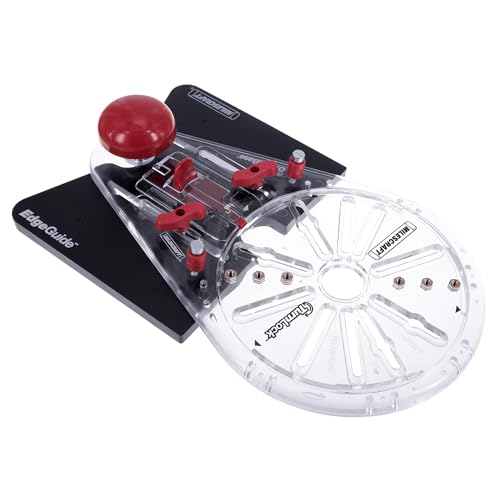
Milescraft 1224 Edge & Mortise Guide
Milescraft 1224 Edge & Mortise Guide
Best for: Edge mortises, grooves and narrow stock where a full joint jig would be oversized.
Model: 1224, Edge & Mortise Guide
Type: universal router guide for straight or cylindrical edges, as listed in the title
Mortise function: built-in mortise guide listed in the title
Edge mortises, grooves and narrow stock where a full joint jig would be oversized.
Watch out for
This is an edge-following guide rather than a clamped mortise-and-tenon system, so check that its registration method suits end mortises before choosing it for leg work.
The 1224 takes a different route from the dedicated joint jigs above: it is a router guide that rides the edge of the board, with a built-in mortise function and an offset base for narrow or awkward stock. That makes it useful when the mortise sits in the edge of a board rather than in the end of a leg, and when the same router also needs a general edge guide for grooves and rebates. Two mortising pins adapt the guide to different board thicknesses, so one compact accessory covers varied material without a separate jig for each width.
Which One Fits Your Situation
You Are Building a Set of Chairs or a Table Base
Choose the O’SKOOL RTA009. A matched set of legs and rails rewards a dedicated jig whose widths and length range are stated for exactly this scale of work. Set it once, cut every mortise and tenon in the project with the same settings, and the parts come together as a set instead of as individual fitting exercises.
You Own a Plunge Router but No Bushings or Mortise Bits Yet
Choose the General Tools 870. The value of this kit is completeness: the spiral bit, three bushings, base plate and centering tool are listed as part of the package, so your first joints do not wait on a second order of small hardware. It suits face frames, small doors and lighter furniture projects learned one joint at a time.
Your Mortises Sit in Board Edges, Not Leg Ends
Choose the Milescraft 1224. An edge-riding guide registers where these cuts actually happen, along the board, and the offset base steadies the router on narrow pieces where a wide plate would tip. It also stays useful after the mortises are done, because the same guide handles straight and curved edge work around the shop.
You Cut One or Two Mortises at a Time, Not Batches
Choose the Milescraft 1224 or the General Tools 870, depending on where the mortise sits. Occasional work does not repay a long dedicated setup, so the faster tool to mount and centre wins. Edge cuts point to the Milescraft guide; a matched mortise and tenon in the end of a rail points to the General Tools kit and its included centering hardware.
Common Mistakes
Buying a mortising jig before checking that your router is a plunge model and that its base accepts the bushing or plate the jig requires.
Registering each workpiece from a different face, so mortises wander across parts that were supposed to receive identical joints.
Choosing a jig whose stock thickness range excludes your table legs or chair rails, then forcing clamps to hold parts the jig was not sized for.
Cutting every mortise at full depth in one pass instead of stepping down, which overloads the bit and leaves rougher walls for the joint.
Skipping a test joint in offcut stock from the same batch, and discovering a loose or offset fit only when the real parts are already cut.
Frequently Asked Questions
Do I need a plunge router for a mortising jig?
Most dedicated mortise and tenon jigs here are listed for plunge router use, because the bit must enter the stock from above, travel along the mortise and lift clear under control. An edge guide such as the Milescraft model is more flexible about router style. Check the product page for the exact jig, and do not assume a fixed-base router substitutes for a plunge model.
What is the difference between a mortising jig and a dedicated mortiser?
A mortising jig guides a router you already own, using a round bit and a guide bushing or edge guide to cut the slot. A dedicated mortiser is a separate machine, usually driving a square chisel, that does nothing else. The jig stores smaller and shares its motor with other work, while the machine suits constant production. For furniture batches in a home shop, the jig usually covers the need.
Why do router-cut mortises have rounded ends?
A rotating round bit cannot leave a square corner, so a routed mortise ends in semicircles that match the bit diameter. Builders either round the tenon edges to fit, which a matching tenon cut with the same system does naturally, or square the mortise corners with a chisel afterwards. Loose tenon work accepts the rounded shape directly, because the tenon stock is shaped to the same profile.
How do I get mortises in the same place on every leg?
Register every leg from the same reference face, keep the jig settings locked for the whole batch, and cut a test mortise in an offcut before touching the real parts. Work through the batch in one session where possible, because a jig that is removed and reset between legs introduces small differences. Mark the reference face on each piece in pencil so the orientation survives handling around the shop.
J
JD's Woodworks Editorial Team
We compare specs, warranty terms, long-term owner feedback and street pricing before anything earns a spot. Rankings are never paid.
Affiliate disclosure. As an Amazon Associate we earn from qualifying purchases at no extra cost to you. Prices accurate as of the date shown.
Four hobby TIG welders compared for home shops: AC/DC picks for aluminum, a compact DC model for steel, listed specs, included gear and honest tradeoffs.
The best Creality Falcon engravers compared: Falcon A1 10W, CR-Laser Falcon 10W, Falcon2 Pro 22W and Falcon2 Pro S 40W, by power, work area and enclosure.
The best CNC machines for manufacturing compared: large-bed routers and closed-loop desktop mills with the work area, spindle and control for batch work.