4 Best Welding Wire for MIG and TIG (November 2026)
The best welding wire depends on your process and metal. Compare ER70S-6 solid wire, E71T-11 flux-core wire and ER4043 aluminum wire by diameter and spool size.
The best welding wire depends on your process and metal. Compare ER70S-6 solid wire, E71T-11 flux-core wire and ER4043 aluminum wire by diameter and spool size.
As an Amazon Associate I earn from qualifying purchases. This post may contain affiliate links at no extra cost to you.
Welding wire is the filler metal that becomes the joint, so the spool you load shapes the bead before technique ever gets a chance. A solid wire with shielding gas lays a smooth bead on clean steel, a flux-core wire keeps working outdoors where wind strips gas away, and an aluminum wire feeds a spool gun for light metal. Pick the wrong class and the weld fights you from the first inch, with spatter, porosity, or a feed that jams halfway through a pass.
This guide is for home shop welders, hobby fabricators, and repair welders who want a short list of wire that matches real jobs. Every spool below was chosen from the name and specifications shown on its Amazon page, with the wire class, diameter, and spool weight stated up front so you can match it to your machine and the metal in front of you.
Quick Picks
As an Amazon Associate we earn from qualifying purchases
Product
Best for
Key spec from title
Hobart H305406-R22 ER70S-6 Solid Wire
Everyday MIG welding on mild steel
ER70S-6, .030 diameter, 10 lb spool
YESWELDER ER70S-6 Solid Wire
A second solid-wire spool for steel
ER70S-6, .030 diameter, 10 lb spool
Hobart H222106-R19 E71T-11 Flux-Core Wire
Gasless welding outdoors
E71T-11 flux-core, .030 diameter, 2 lb spool
YESWELDER ER4043 Aluminum Wire
Aluminum work with a spool gun
ER4043 aluminum, .035 diameter, 1 lb spool
How to Choose
Match the wire class to the process
Solid wire, flux-core wire, and aluminum wire are not interchangeable, and the class you need follows the process and the metal. Solid ER70S-6 wire pairs with shielding gas for clean mild steel and gives a smooth bead with little spatter when the metal is clean. Flux-core E71T-11 wire carries its own shielding inside the core, so it works without a gas bottle and holds up better outdoors. Aluminum ER4043 wire feeds a spool gun or push-pull gun for aluminum parts. Check the wire class on the spool label before you buy, and match it to the process your machine is set up to run.
Pick a diameter your machine feeds well
Wire diameter decides how the spool feeds and how much metal lands in the joint on each pass. A .030 wire is a common middle ground for home shop MIG machines because it feeds smoothly through a standard liner and handles sheet metal up to plate without constant adjustment. Thinner wire suits thin sheet and light repair, while thicker wire suits heavier plate and higher settings. Check your machine manual for the diameters its drive rolls and contact tips accept, and buy tips in the same diameter as the wire so the arc stays steady and the wire does not slip or jam.
Size the spool to the job ahead
Spool weight is a simple way to match the purchase to how much welding you actually do. A 10 lb spool suits a busy home shop because it lasts through many projects and needs fewer changeovers, but it ties up more money and needs dry storage so the wire stays clean. A 2 lb spool suits occasional repair work and lets you try a new wire class without committing to a large spool. A 1 lb spool suits a single aluminum project or a small repair. Weigh how often you weld against how long a spool sits on the shelf, and store open spools indoors away from damp air.
Welding safety starts before the arc
Welding wire work involves heat, bright light, and hot metal, so basic protection belongs in the routine before the first tack. Wear a welding helmet with the correct shade, gloves that cover the hands and wrists, and long sleeves made for hot work. Work in a space with fresh air moving through it, and keep flammable material clear of the welding area. Check that the work clamp is tight on clean metal and that cables are not frayed or pinched. Let each weld cool before you touch it, and keep a fire extinguisher within reach whenever you weld indoors.
The 4 Best Options
Hobart H305406-R22 ER70S-6 Solid Wire
Top Pick
Hobart H305406-R22 ER70S-6 Solid Wire
Best for: Everyday MIG welding on clean mild steel in the home shop.
The Hobart H305406-R22 is a solid ER70S-6 mild steel wire on a 10 lb spool, and it is the straightforward pick for everyday MIG work on clean steel. Solid wire with shielding gas gives a smooth bead and a tidy weld, and the .030 diameter feeds well through a standard home shop MIG machine without constant fiddling. The 10 lb spool suits a welder who runs the machine often enough that a small spool would run out mid-project. It is a plain, widely used wire class with no surprises, which is exactly what a daily steel spool should be.
Watch out for: Solid wire needs shielding gas and clean metal, so it is a poor pick for rusty steel or windy outdoor work.
YESWELDER ER70S-6 Solid Wire
Runner-Up
YESWELDER ER70S-6 Solid Wire
Best for: A spare or alternate solid-wire spool for regular MIG work on mild steel.
The YESWELDER ER70S-6 is a second solid-wire option in the same class and size as the Hobart spool, and it gives a home shop an alternate source for the same everyday MIG work. The wire is ER70S-6 in .030 diameter on a 10 lb spool, so it suits the same machines, the same shielding gas setup, and the same mild steel jobs. Having a second brand in the same class is useful when one spool is out of stock or when you want a spare on the shelf. The bead character and feeding behavior follow the wire class, so expect the same smooth solid-wire results on clean steel.
Watch out for: Like any solid wire, it needs gas and clean metal, and it will not weld well outdoors in wind.
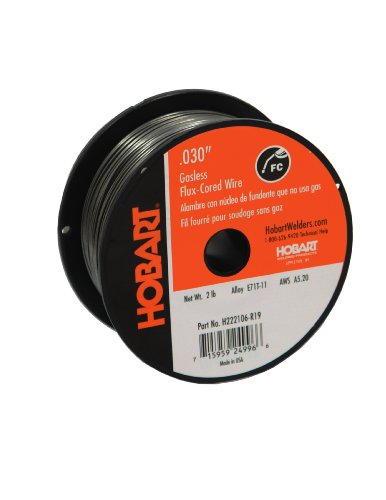
Hobart H222106-R19 E71T-11 Flux-Core Wire
Hobart H222106-R19 E71T-11 Flux-Core Wire
Best for: Outdoor and repair welding on mild steel without a gas bottle.
The Hobart H222106-R19 is a flux-core E71T-11 wire on a small 2 lb spool, and it is the pick for welding without a gas bottle. The flux inside the wire core creates its own shielding as it burns, so the arc holds up outdoors where wind would blow shielding gas away, and it tolerates rusty or painted steel better than solid wire. The .030 diameter suits a small flux-core machine, and the 2 lb spool keeps the purchase small for occasional repair work. It is a practical spool for fence repair, farm equipment, and outdoor fabrication where gas is a hassle.
Watch out for: Flux-core welding leaves slag to chip off and produces more spatter than solid wire with gas.
YESWELDER ER4043 Aluminum Wire
YESWELDER ER4043 Aluminum Wire
Best for: Small aluminum repairs and projects with a spool gun setup.
The YESWELDER ER4043 is an aluminum wire in .035 diameter on a 1 lb spool, and it is the pick for the occasional aluminum job. Aluminum wire is softer than steel wire and feeds best through a spool gun, so it suits a welder who already has that setup and needs a small amount of wire for a repair or a small project. The 1 lb spool keeps the cost low and limits waste, since aluminum wire oxidizes and feeds poorly once it has sat open for a long time. It is a focused spool for one metal and one job, not a general-purpose wire.
Watch out for: Aluminum wire needs a spool gun and argon gas, and it is not a substitute for steel wire on steel.
Which One Fits Your Situation
Daily MIG work on mild steel
A solid ER70S-6 spool in .030 diameter is the right starting point for a home shop that welds clean mild steel most days. Pair it with shielding gas and a machine set for that wire, and the bead stays smooth with little cleanup. The 10 lb spool lasts through many projects, so it suits a welder who runs the machine weekly.
Welding outside or on dirty metal
A flux-core E71T-11 spool is the right pick when the work happens outdoors or the metal is rusty, painted, or hard to clean. The flux inside the wire shields the arc without a gas bottle, so wind does not strip the protection away mid-weld. The 2 lb spool suits repair work and short jobs, and it is easy to carry to the fence line or the field.
Aluminum projects
An ER4043 aluminum spool in .035 diameter is the right pick for aluminum parts, provided the machine has a spool gun and argon gas. Aluminum wire is soft and feeds poorly through a long liner, so the spool gun matters more than the brand. Buy a small 1 lb spool for a single project, since open aluminum wire degrades with time and damp air. Store it sealed and indoors between jobs.
A first spool for a new welder
A new welder should start with a solid ER70S-6 spool in .030 diameter and a bottle of shielding gas, because that combination is the easiest to learn on clean steel. The bead is visible, the spatter is low, and the settings are forgiving across a wide range of thicknesses. Add a flux-core spool later, once the basic technique is steady and the work moves outdoors or onto rusty metal.
Common Mistakes
Buying a wire class that does not match the process the machine is set up to run.
Choosing a diameter the drive rolls and contact tips cannot feed smoothly.
Welding solid wire outdoors in wind, where the shielding gas blows away from the arc.
Storing open spools in damp air, which rusts steel wire and oxidizes aluminum wire.
Using aluminum wire on steel, or steel wire on aluminum, and expecting a sound joint.
Frequently Asked Questions
What wire should I start with for MIG welding mild steel?
Start with a solid ER70S-6 wire in .030 diameter and a bottle of shielding gas. That combination suits a wide range of home shop steel work, feeds smoothly, and gives a clean bead with little spatter. Keep the steel clean, match the contact tip to the wire diameter, and the arc will stay steady.
Can I weld outside with solid MIG wire?
Solid wire needs shielding gas, and wind strips that gas away from the arc, so outdoor welding with solid wire often ends in porosity and a weak bead. A flux-core E71T-11 wire carries its own shielding inside the core, so it holds up far better outdoors and on rusty metal. Use flux-core wire for fence repair and farm equipment.
Why does my wire jam in the liner?
A jam usually comes from a wrong-size contact tip, a worn liner, or drive rolls set too tight or too loose. Check that the tip matches the wire size, that the liner is clean and the right size, and that the drive roll tension feeds cleanly. Aluminum wire jams more often, which is why a spool gun is standard.
How should I store welding wire between jobs?
Store spools indoors in a dry place, away from damp air and temperature swings. Keep the wire in its bag or a sealed container when the spool is off the machine, and keep the loose end secured so it does not unravel. Steel wire rusts when damp, and aluminum wire oxidizes, and either problem shows up as a rough bead.
J
JD's Woodworks Editorial Team
We compare specs, warranty terms, long-term owner feedback and street pricing before anything earns a spot. Rankings are never paid.
Affiliate disclosure. As an Amazon Associate we earn from qualifying purchases at no extra cost to you. Prices accurate as of the date shown.
Miter saw vs table saw: compare crosscuts, rip cuts, accuracy, space, and value to choose the right saw for your shop and your first woodworking projects.
Compare five solar portable generators for shops, campsites, and outages, covering battery size, output, solar charging, outlets, and what to check first.
The best portable CNC machines for small shops and shared spaces, compared by footprint, weight, work area, and setup. Compact benchtop picks for wood, acrylic, and soft metal.
Find the best Penn Industries dust collector on Amazon: the PSI Woodworking DC3XX blower and the DC725 tabletop unit, compared on airflow, pressure, and shop fit.
Compare five large stationary horizontal metal band saws for fabrication shops on cutting capacity, motor, power supply, blade speed, and mitering before buying.
Find the best mortising chisel bits for clean square mortises in this guide: hollow-chisel sets and singles compared by size, shank, steel, and machine fit.
Find the best drill press base for your shop. Compare rolling stands and mobile bases by capacity, footprint, casters, locking, and setup before you buy.
Find the best dewalt planer dw734 blades for your 12-1/2-inch thickness planer. Compare OEM and aftermarket 3-knife sets, steel types, and fit before you buy.


 YESWELDER ER4043 Aluminum Wire









