
Our Top Picks
 SKIL 5” Random Orbital Sander with Cyclonic Dust5 inches7.87 x 4.8 x 5.51 inches3.44 poundsCheck on Amazon
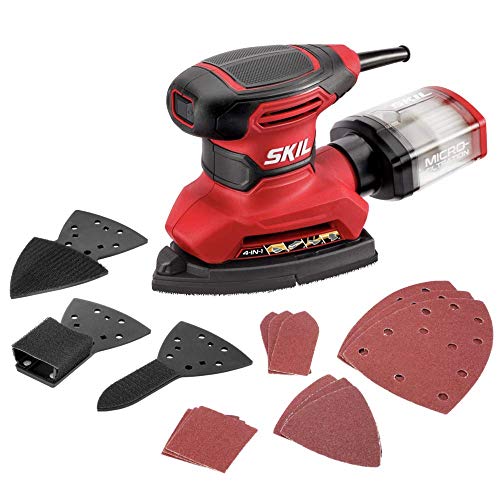 SKIL Corded Multi-Function Detail Sander with Micro-Filter DustOne Size9.84 x 5.7 x 6.69 Inches2.6 PoundsCheck on Amazon
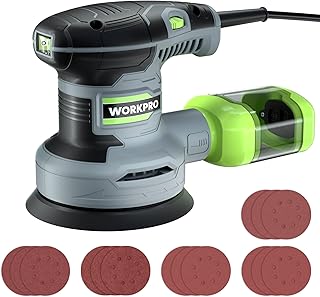
 WORKPRO 5-Inch Random Orbit Sander Variable Speed withRandom Orbit Sander8.85 x 5 x 5.7 Inches2.7 poundsCheck on Amazon


What's inside
As an Amazon Associate I earn from qualifying purchases. This post may contain affiliate links at no extra cost to you.
Sanding is the one job in my garage that wrecks everything else. Thirty minutes with a random orbit sander and a bare dust bag, and there’s a gray film on my table saw, my drill press, the window, and in my throat all night. Picking the best sander with dust collection has less to do with amps or orbit size than with whether the tool grabs dust at the pad instead of throwing it into the air you’re breathing.
I’ve owned cheap sanders with a bag that filled in two minutes and better ones that pull almost everything into a shop vac. The gap between them is enormous, and it isn’t purely a price thing. Here’s how I sort it out now, after finishing a lot of cabinet doors in a space where dust has nowhere to go.
As an Amazon Associate we earn from qualifying purchases at no extra cost to you.



| Sander type | Dust capture in my shop | Best for |
|---|---|---|
| Random orbit, 5 in. | Very good on a vac, poor on the bag | Finish prep, smoothing |
| Quarter sheet | Decent, slower removal | Face frames, between coats |
| Detail or mouse | Fair, small port clogs | Corners, spindles |
| Belt sander | Messy no matter what | Flattening, heavy removal |
| Long reach or drywall | Excellent, built around a vac | Big panels, walls, ceilings |
Dust collection is a system, not a bullet point
Every sander on the shelf claims dust collection. Usually that means a cloth bag or a small plastic canister clipped to the back, and those catch the coarse stuff while the fine particles, the ones that hang in the air for hours and settle into your finish, sail right past. A bag beats nothing. It is not dust collection.
Capture happens when the pad, the abrasive, the hose and the vacuum all cooperate. Pad holes have to line up with disc holes. The hose has to be light enough that it doesn’t steer the tool. And the vac needs a fine filter, because a standard shop vac filter will cheerfully blow sanding dust back into the room through the exhaust. Swapping my filter improved my shop air more than buying a nicer sander did.
How I choose the best sander with dust collection
Pad hole pattern. Eight holes is the common layout on 5-inch random orbit sanders and it works fine if your discs match. Premium European sanders use dozens of small holes, which pull from more of the pad and load abrasive slower. Buy an oddball pattern and you’ll resent it the first time you need discs on a Saturday.
Port size and adapters. This is where people get stuck. Sander ports are small, vac hoses are fat, and the adapter in the box may not fit your vac. I keep a short length of small-diameter hose and a couple of stepped rubber adapters hanging on the wall for exactly this.
Hose behavior. A swiveling port and a light, flexible hose do more for control than any number on the label.
Profile and grip. Low and flat lets me press straight down over the pad instead of tipping it. Tipped pads leave swirls, and swirls show up under stain like a signature.
Corded or cordless. Cordless sanders in the DeWalt XR, Milwaukee FUEL and Makita LXT lines are genuinely good now. But tether one to a vac hose and you’ve given up most of the freedom you paid for. For a stack of doors I still grab a cord.
5-inch random orbit sander, vac-ready
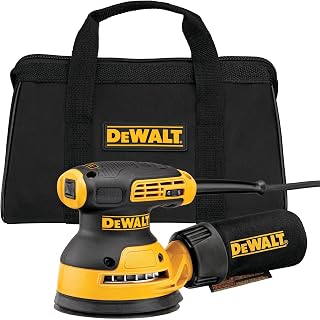
If I could keep one sander, it’s a 5-inch random orbit with variable speed, a pad brake, and a port that accepts a small vac hose. Stick with the eight-hole pattern so discs stay easy to buy, and skim reviews specifically for comments about whether the hose adapter fits a normal shop vac.
What each type really does with the dust
Random orbit
This is the tool that matters most, because it does the finish prep where stray dust ruins the result. Hooked to a vac, a decent 5-inch random orbit catches the large majority of what it makes, and you can watch the dust vanish at the edge of the pad. On the bag, that same tool is a dust pump. Fix this one first.
Sheet and detail sanders
Quarter-sheet and triangular detail sanders capture less, mainly because the ports are tiny and the pads have few holes. They still benefit from a vac. I use mine for corners, face frames and knocking down raised grain between coats, short bursts rather than long sessions.
Belt sanders
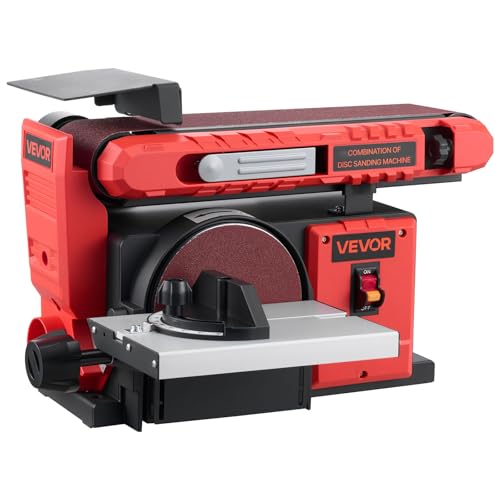
A belt sander throws coarse dust fast and far. I always connect a vac, but I don’t kid myself that it’s clean work. Belt sanding happens near my open garage door with a fan pushing air out and a respirator on my face. That’s the honest version.
Long-reach and drywall sanders
These are the exception. They were engineered around a vacuum, and capture is genuinely excellent. For big flat panels or any wall and ceiling work, one of these feels like cheating.
The vac, the hose and the filter
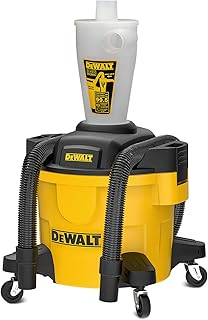
Any mid-size shop vac can do the pulling. What separates a clean shop from a hazy one is the filter and what sits in front of it. A fine or HEPA-rated cartridge plus a bag keeps fine dust out of the pleats, and a small cyclone separator means you empty a bucket instead of buying filters. Dedicated extractors with variable suction and an auto-start outlet are the nice version, and the auto-start alone changed how often I bother to hook up the hose.
My mistake for years: too much suction through too stiff a hose. The pad grabbed the workpiece, the sander crawled, and I fought the hose the whole time. Dialing the suction back and switching to a lighter antistatic hose fixed both.
- ✔ Fine or HEPA filter cuts the haze you can’t see
- ✔ Cyclone separator saves filters and money
- ✔ Auto-start outlet runs the vac only while you sand
- ✔ Variable suction stops the pad from sticking
- ✘ Dedicated extractors cost far more than a shop vac
- ✘ Small-diameter hoses clog on chips from other tools
- ✘ One more hose and cord underfoot in a tight garage
Dust extractor or fine-filter shop vac
The vac matters as much as the sander. If a dedicated extractor is out of range, put a fine-filter cartridge and a bag in the shop vac you already own and add a cyclone separator. Cheaper than a new tool, and you’ll notice it the same afternoon.
FAQ
Is a sander’s dust bag ever good enough? For a few minutes outdoors or on a scrap part, sure. For anything you plan to finish, or any session long enough to raise a haze in a closed garage, no. Hook it to a vac and wear a respirator.
Do I need a special vacuum, or will my shop vac work? Your shop vac will work. Add a fine or HEPA filter and a collection bag, dial the suction down if you can, and run a small-diameter hose to the sander. That gets you most of the way to an expensive extractor.
Cordless or corded for a small shop? Cordless if you sand in short bursts and move around a lot, corded if you sand for hours. Cordless loses much of its appeal once a vac hose is attached anyway.
Short version: buy a 5-inch random orbit sander with a real port and a disc pattern you can actually find, then spend the rest of your money on the vacuum and filter behind it. That pairing beats a premium sander running on a bag every time.
Check prices on Amazon →