Most shop hand injuries do not happen at the saw. They happen while carrying rough lumber, sliding sheet goods off the rack, breaking down pallets, and cleaning up offcuts, when splinters and sharp edges do the damage. A good pair of work gloves covers those handling jobs, then comes off before any work at rotating machinery, where a caught glove can pull a hand in.
The five pairs below cover the main styles a woodworker chooses between: a synthetic all-rounder, a traditional full-leather glove, a reinforced heavy-utility pair, a high-dexterity handyman glove, and a thin coated cut-resistant pair for sheet goods and blade handling. Each entry lists palm, cuff, and care specs for direct comparison.
As an Amazon Associate, we earn from qualifying purchases.
Quick Answer
For most woodworkers, the Mechanix Wear Original is the best work glove for general shop use: a synthetic leather palm, breathable mesh back, and secure wrist closure handle lumber, assembly, and cleanup without killing dexterity. Choose the Wells Lamont 1132 for rough lumber in full leather, and the DEX FIT Cru553 when cut resistance and coated grip matter most.
Mechanix Wear Original Work Gloves
Top Pick
Mechanix Wear Original Work Gloves
Palm: synthetic leather with reinforced high-wear areas
The Original is the default shop glove for a reason: it balances protection and feel better than most general-purpose pairs. The palm is synthetic leather with abrasion-resistant fingertips and reinforcement in high-wear areas, so it survives dragging boards across a bench and gripping rough stock without the break-in period leather needs. A vented palm and a CoolPlus woven-mesh back keep air moving during long sessions.
The fit is secured by a thermoplastic rubber hook-and-loop wrist closure that keeps sawdust and chips out, and the Freedom-Flex cuff lets the wrist bend freely when reaching into cabinets or under benches. The fingertips are touchscreen capable, useful for checking a cut list on a phone without stripping a glove off. The gloves are machine washable, so a pair can be rotated through the wash instead of being thrown away when grimy. This is the mid-range pair to buy first if the shop has no gloves at all.
Wells Lamont 1132 Leather Work Gloves
The 1132 is the traditional answer for handling rough lumber: a full glove cut from grain cowhide, with a reinforced split cowhide palm patch where boards slide across the hand. Cowhide is naturally abrasion and puncture resistant, exactly the protection needed when unloading rough-sawn stock or handling boards with raised grain and stray splinters. The leather gradually conforms to the shape of the hand, so the fit improves with use instead of loosening.
The pattern is a Gunn cut with a bound hem, and the ball-and-tape adjustable wrist snugs the glove down so dirt stays out. At one millimeter thick, the leather is heavy enough for lumber work yet flexible enough for hand tools. There is no padding and no stretch panel, so dexterity is a step behind the synthetic pairs here, and the glove needs a break-in period. As the budget pick in full leather, it suits woodworkers who prefer a pair that molds to their hands over months.
Specs
Material: grain cowhide leather, full glove
Palm: reinforced split cowhide palm patch
Cut: Gunn cut, bound hem
Closure: ball-and-tape adjustable wrist
Leather thickness: 1 millimeter
Sizes: Medium through X-Large in this style
Tier: budget
Ironclad Heavy Utility Work Gloves
Runner-Up
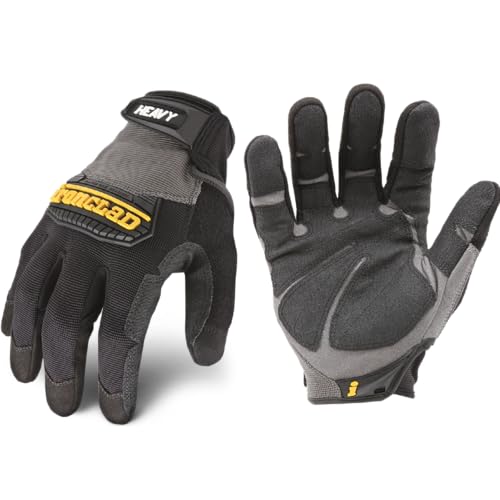
Ironclad Heavy Utility Work Gloves
Palm: synthetic leather with DuraClad reinforcements
Knuckles: thermoplastic rubber protection
Cuff: hybrid cuff with quick-release feature and cuff puller
Extras: terry cloth thumb sweat wipe, breathable back
The Heavy Utility, Ironclad’s HUG model, is the reinforced option for the roughest handling jobs in the shop: demolition of old projects, breaking down crates and pallets, moving sheet goods with sharp factory edges, and hauling rough stock. The synthetic leather palm carries DuraClad overlays on the saddle, palm, thumb, and fingers; Ironclad states the reinforcement delivers eight times the durability of normal synthetic leather, and the engineered palm pattern keeps the glove flexible despite the extra layers.
A thermoplastic rubber guard across the knuckles protects against bumps and scrapes in tight spaces, and the hybrid cuff combines a secure fit with a quick-release safety feature, plus a cuff puller for fast on and off. A terry cloth thumb panel works as a sweat wipe, and the back is breathable fabric. The gloves are machine washable in cool water and should be hang dried. This is the premium pair, aimed at woodworkers whose gloves wear out at the palm first.
The 125M Handyman is the dexterity pick, built for the bench tasks where thick gloves get in the way: handling screws and hardware, fitting joinery, adjusting fences and stops, and general assembly. The padded synthetic leather palm is cut and sewn with reinforced stitching, and the back combines synthetic leather with spandex stretch panels, so the glove flexes with the hand instead of bunching at the knuckles. A reinforced thumb saddle covers the area that wears first when gripping tools and boards.
The strap closure keeps the fit snug without a bulky cuff, and the lightweight build means the gloves can stay on through a whole glue-up rather than being pulled off for every small part. CLC lists carpentry among the recommended uses, and the published care instruction is hand washing. Dexterity is the trade: the palm is thinner than the Ironclad or the Wells Lamont, so this is not the pair for demolition or rough lumber. As a budget pair kept at the bench, it fills the gap the heavier gloves leave.
The Cru553 covers the jobs where the hazard is a slicing edge rather than abrasion: handling sheet goods with sharp corners, changing and carrying blades, and cleanup around sharp offcuts. The glove is a thin knit of HPPE performance fiber with a water-based foam nitrile coating on the palm and fingers, and it carries a Level 5, ANSI A5 cut-resistance rating from the maker. The foam nitrile keeps its grip on smooth and slightly oily surfaces where plain knit gloves skate, which is why coated gloves are the standard for sheet handling.
The 3D comfort fit is snug and stretchy, so fingertip feel stays good enough for picking up small parts, and the fingertips are touchscreen compatible. The knit is breathable and cool compared with leather, and the gloves are machine washable. Two cautions apply: cut resistance is not cut proof, and a coated knit offers little padding against impact. Treat this pair as the sheet-goods and cleanup glove, not as protection at the saw. It is a mid-range pick, and sizes run from extra small through XX-Large.
How to Choose Work Gloves for Woodworking
Start with the job, because no single pair covers the whole shop. For rough lumber, leather or a reinforced synthetic palm resists the splinters and abrasion that shred thin gloves. For bench work and assembly, a thinner synthetic glove with stretch panels preserves the fingertip feel needed for hardware and joinery. For sheet goods and blade handling, a coated cut-resistant knit adds grip and slicing protection in a thin, cool package.
Palm material decides durability. Grain cowhide lasts for years and molds to the hand, but needs break-in and dries stiff if soaked. Synthetic leather starts comfortable and washes well. Coated knits are the lightest and coolest, but the coating wears through at the fingertips first.
Fit and closure matter more than brand. A glove loose at the fingertips catches on edges and dulls feel; a glove too tight fatigues the hand. Hook-and-loop straps and ball-and-tape wrists keep chips and dust out. Finally, the safety rule that overrides all others: gloves come off around rotating machinery. Table saws, jointers, lathes, and drill presses can grab a glove and pull a hand in, so wear gloves for handling and cleanup, and work bare-handed at the machines.
Who Should Skip These Gloves
Skip this whole category if the main goal is protection while a machine is running; no glove here is designed for use at a spinning blade or cutter, and wearing one there adds risk instead of removing it. Carvers should also look elsewhere: knife work calls for dedicated carving gloves and thumb guards matched to carving technique, a separate topic from these handling gloves.
Woodworkers who prefer animal-free gear can skip the Wells Lamont pair and choose between the four synthetic options. Anyone who needs chemical protection for finishing should skip these as well; stains and solvents call for disposable nitrile gloves rated for the product being used, not reusable work gloves that soak up finish and hold it against the skin.
FAQ
Should work gloves be worn at the table saw or lathe?
No. Gloves should never be worn around rotating machinery, because a blade, bit, or chuck can catch the fabric and pull the hand into the cut. These gloves are for handling lumber, sheet goods, and cleanup between operations. Take them off before switching any machine on.
What is the best glove material for handling rough lumber?
Grain cowhide leather is the traditional choice, because it resists splinters and abrasion and molds to the hand. A reinforced synthetic leather palm, like the Ironclad Heavy Utility design, lasts as long under heavy use and is machine washable. Thin coated knits wear through too quickly for daily rough-lumber work.
How should work gloves fit for bench work?
Snug, with no loose material at the fingertips. The fingertip should reach the end of the glove without excess fabric folding over, and the wrist closure should hold the glove in place without cutting circulation. For detail work, a stretch-back glove like the CLC Handyman keeps feel better than a loose leather pair.
How long does a pair of shop work gloves last?
It depends on the work mix. A leather or reinforced synthetic pair used mainly for lumber handling can last many months of regular shop time, while coated knit gloves wear at the fingertips first. Wash gloves as the maker directs, hang them to dry, and retire a pair when the palm wears through, since a torn glove catches on edges.
Conclusion
For a first and only pair, the Mechanix Wear Original covers the widest range of shop handling. Add the Wells Lamont 1132 if rough lumber is a weekly job, the Ironclad Heavy Utility if palms wear out fast, the CLC Handyman for bench dexterity, and the DEX FIT Cru553 for sheet goods and sharp-edge cleanup. Whatever the pair, the habit that matters most is simple: gloves on for handling, gloves off at the machines.
Find the best tools for car wrapping, from felt squeegees and wrap knives to heat guns and complete kits, and choose the right set for a smooth finish.
Find the radiator hose clamps best for leak-free cooling: worm-gear, T-bolt and spring picks sized for upper and lower radiator hoses, plus a sizing guide.
Find the best brake caliper press tool for smooth, even piston compression. Compare ratcheting presses, dual-piston tools, and spreaders for your brake job.
Compare three Japanese water stones for chisels and plane irons, from a King combination stone to a splash-and-go Shapton, with grit and soaking guidance.
Compare three carving knife kits built around basswood blanks, with guided projects, stropping gear and safety extras, plus criteria for choosing well.
Compare four chip carving knives for lettering by edge shape, steel and handle, from a skewed BeaverCraft C6 to a Swiss Pfeil, for plaques, signs and lids.
The best spindle sanders for guitar making shape cutaways, waist curves, and neck heels cleanly. Compare five benchtop and portable picks by drum size.



 DEX FIT Cru553 Level 5 Cut Resistant Gloves