As an Amazon Associate I earn from qualifying purchases. This post may contain affiliate links at no extra cost to you.
Table of Contents
Quick Answer
Scott Shop Towels Original, 1 Roll
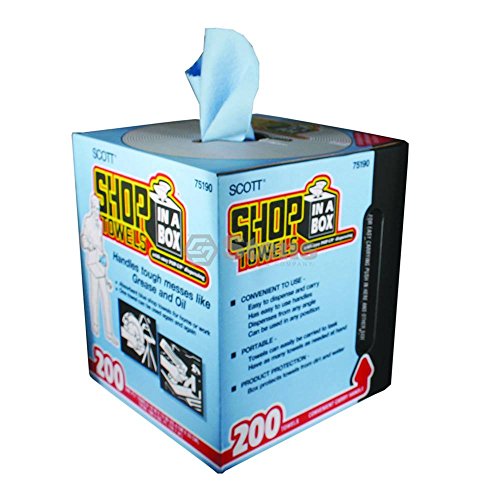
Scott Shop Towels Original Pop-Up Box, 200 Count
WypAll X60 Cloths, BRAG Box
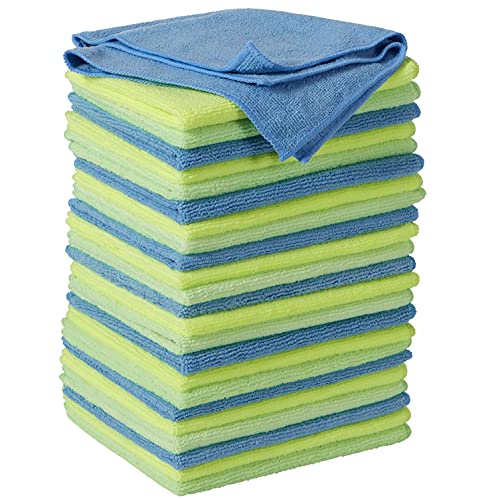
Zwipes 924 Microfiber Cleaning Cloths, 24 Pack
Chemical Guys Professional Grade Premium Microfiber Towels, 12 Pack
How to Choose Shop Towels and Microfiber Cloths for Woodworking
Who Should Skip These Shop Towels and Cloths
FAQ
Conclusion
Product and ASIN Reference
A woodworking shop goes through wiping cloths faster than almost any other consumable. Glue squeeze-out has to come off before it dries, finish gets wiped on and wiped off again, and benches and tool tops collect a film of dust and oil. The wrong cloth makes each job harder: thin paper tears when wet, cheap rags leave lint in a fresh finish, and a cloth too nice to ruin never gets used for messy work.
OUR TOP PICK
Scott Shop Towels Original Pop-Up Box, 200 Count (75190)
The five picks below split the job the way most shops actually work. Two disposable Scott options cover daily cleanup and glue work, the WypAll X60 is the heavy-duty reusable wiper for finishing jobs, and the two microfiber packs handle dusting and final wipe-downs where lint is the enemy.
As an Amazon Associate, we earn from qualifying purchases.
Quick Answer
For most woodworking shops, the Scott Shop Towels Original roll is the best everyday choice: a cloth-like disposable towel that stays strong when wet, handles glue and finish cleanup, and tears off one sheet at a time. Add the WypAll X60 box for finishing work where lint and residue matter, and keep a microfiber pack such as the Zwipes 924 for dusting tools and wiping down surfaces before finishing.
Scott Shop Towels Original, 1 Roll
The blue roll is the default shop towel for a reason. Each roll holds 55 perforated sheets of a cloth-like paper material that behaves more like fabric than a kitchen paper towel: it stays intact when soaked, scrubs dried glue off a bench, and absorbs finish, oil, and water without shredding. That matters most at the glue-up, where a towel must wipe squeeze-out along a joint line, rinse out, and wipe again without leaving fibers in wet glue.
The roll hangs on a wall dispenser or stands on the bench, and one sheet pulls free with one hand while the other holds a workpiece. Sheets measure about 10.4 by 11 inches, big enough to fold into a pad for wiping on oil finishes such as Danish oil. Because the towels are disposable, finish-loaded ones go straight into safe disposal instead of a laundry pile, the correct habit for oil-soaked cloths. This is the budget pick and the one to buy first.
The pop-up box uses the same blue Scott towel as the roll, in a flat dispenser box of 200 sheets with a built-in handle. The box sits flat on a bench or assembly table, and each sheet pops up ready for the next grab, so a woodworker mid-glue-up can take a fresh towel one-handed without unrolling or tearing. Sheets run slightly larger than the roll version, at about 9 by 12 inches. Shops with a separate finishing area often keep one box in each spot; the flat box stores well in a cabinet and keeps towels dust-free until pulled. Choose the box if towels live at fixed stations, the roll if they travel.
WypAll X60 Cloths, BRAG Box
Runner-Up
WypAll X60 Cloths, BRAG Box
Format: BRAG dispenser box, 180 sheets
Sheet size: 12.5 x 16.875 inches
Material: HydroKnit spunlace, no adhesives or binders
The X60 is the step up for shops that find blue paper towels too weak or too linty for finishing work. These HydroKnit cloths absorb more than twice as much water as rags by weight, according to the manufacturer, and are reinforced to stay strong wet or dry. The key detail is what the material does not contain: no adhesives or binders, so the cloth leaves no residue on a surface about to receive finish. That makes the X60 a sensible wiper for the last pass before a topcoat and for wiping on stains and oils.
Unlike the Scott towels, an X60 sheet is built to be used more than once. It can be rinsed, wrung out, and kept working through a day of cleanup before being discarded, which narrows the cost gap with paper. The BRAG box dispenses 180 large sheets, each about 12.5 by 16.9 inches, big enough to fold into a thick finishing pad. The white color shows how much stain or dust a sheet has picked up, so there is no guessing whether it is clean enough for a final wipe. This is the mid-range pick.
Zwipes 924 Microfiber Cleaning Cloths, 24 Pack
Zwipes 924 Microfiber Cleaning Cloths, 24 Pack
Format: 24 cloths, assorted colors
Cloth size: 12 x 16 inches
Material: microfiber, polyester and polyamide blend
Microfiber earns its place in a wood shop on the dust side of the workflow. The split fibers pick up and hold fine dust instead of pushing it around, so a dry Zwipes cloth is the right tool for wiping down a project after sanding, cleaning dust off tool tops and fences, and clearing the bench before finish goes on. The 924 cloths use a short terry weave in a polyester and polyamide blend, sized 12 by 16 inches, and the maker rates them to hold up to eight times their weight in liquid.
The 24 pack comes in assorted colors, which is more useful in a shop than it sounds. Assign one color to finishing-room dust duty, another to bench cleanup, and another to machine wiping; color coding keeps a gritty cloth from ever touching a surface about to be finished. The cloths are machine washable and rated by the maker for hundreds of wash cycles; wash separately from cotton and skip softener and dryer sheets.
Chemical Guys Professional Grade Premium Microfiber Towels, 12 Pack
Chemical Guys Professional Grade Premium Microfiber Towels, 12 Pack
These are the towels to keep reserved for the last step. The Chemical Guys premium towels use a high-pile, ultra-soft microfiber in a generous 16 by 16 inch square, built to lift residue without scratching delicate surfaces. In a wood shop that means buffing out paste wax, wiping down a cured finish during final inspection, and dusting show pieces before they leave the shop. The long pile traps fine dust deep in the towel instead of dragging it across the surface.
The 12 pack is smaller than the Zwipes set and the towels cost more each, so the routine is strict: they live in a closed drawer in the finishing area, get used only on clean, cured surfaces, and get washed separately. The maker rates them to stay soft through hundreds of washes with proper care. Used that way, one pack lasts a small shop a long time, because the towels never meet glue, stain, or grit. This is the premium pick.
How to Choose Shop Towels and Microfiber Cloths for Woodworking
Start by separating disposable from reusable work. Glue-ups, oil finishes, and stain work call for disposable towels: the cloth becomes contaminated, and oil-soaked cloths are a fire risk if wadded up and stored, so a towel that goes from bench to safe disposal is the right tool. Dust control and final wipe-downs are clean jobs, and those belong to washable microfiber that never touches finish or grit.
Next, match lint behavior to the job. Any cloth that touches a surface between sanding and the final coat must leave nothing behind. Binder-free wipers such as the WypAll X60 and clean, freshly washed microfiber are the safe choices; worn cotton rags are the usual source of lint nibs sealed into a finish.
Then consider sheet size and dispensing. Small sheets are fine for glue squeeze-out; finishing pads and big wipe-downs want the larger X60 sheet or a 16-inch microfiber square. One-handed dispensing from a pop-up or BRAG box saves real time during a glue-up, while a roll suits a towel that travels. Finally, build a rotation instead of using a premium cloth for everything.
Who Should Skip These Shop Towels and Cloths
Skip this category if the shop already runs a laundered rag service and is happy with it; these picks are for shops buying their own consumables. Skip the premium microfiber if there is no separate finishing space, because without a clean place to store them, expensive towels end up as glue rags within a week.
Skip the disposable Scott towels if the main job is heavy solvent degreasing of machinery; that work is better served by the X60 or by industrial wipers bought in case quantities. And skip microfiber for wiping oil-based finish: it loads up and smears rather than levels the finish. A disposable cloth or finishing wiper is the correct choice there.
FAQ
Are blue shop towels safe to use for wiping on oil finishes?
Yes, and they are a common choice for it. The cloth-like paper stays intact when soaked with oil finish, folds into an even pad, and can be disposed of immediately afterward. Any cloth soaked with drying oil is a fire risk: lay it flat outdoors to dry fully or store it in a sealed metal container until disposal, never wadded up in a bin.
Can microfiber cloths replace tack cloths before finishing?
They cover much of the same ground. A clean, dry microfiber cloth picks up sanding dust effectively and can be washed and reused, while a tack cloth is single-purpose and disposable. For the final pass before a topcoat, either works; microfiber is the better value over time if the cloths are kept clean and reserved for that job.
How should microfiber towels be washed to keep them working?
Wash them separately from cotton and other lint-producing laundry, in warm water with liquid detergent. Skip fabric softener, dryer sheets, and bleach, since those coat or damage the split fibers and kill the dust-grabbing effect. Dry on low heat, and store clean cloths in a closed bin.
How many shop towels does a small woodworking shop use?
Usage varies with project volume, but a one-person shop doing regular glue-ups typically works through a roll or box of disposables in a few weeks and keeps a dozen or two reusable cloths in rotation.
Conclusion
The right shop towel system is a small set of specialists rather than one do-everything cloth. Keep the Scott roll or pop-up box at the bench for glue, spills, and finish cleanup, step up to the WypAll X60 when a surface needs a binder-free, low-lint wipe, and protect two microfiber tiers, the Zwipes 924 for daily dust control and the Chemical Guys premium towels for final buffing, for the clean end of the workflow. Matched to the job that way, finishes come out cleaner.
Product and ASIN Reference
Product
ASIN
Scott Shop Towels Original, 1 Roll (75130)
B000TRQHXS
Scott Shop Towels Original Pop-Up Box, 200 Count (75190)
B00004TBJD
WypAll X60 Cloths, BRAG Box, 180 Count (34015)
B0040ZOF5M
Zwipes 924 Microfiber Cleaning Cloths, 24 Pack
B00ANZHG7C
Chemical Guys Professional Grade Premium Microfiber Towels, Gold, 12 Pack
B00A8MZ7IA
J
JD's Woodworks Editorial Team
We compare specs, warranty terms, long-term owner feedback and street pricing before anything earns a spot. Rankings are never paid.
Affiliate disclosure. As an Amazon Associate we earn from qualifying purchases at no extra cost to you. Prices accurate as of the date shown.
Find the best tools for car wrapping, from felt squeegees and wrap knives to heat guns and complete kits, and choose the right set for a smooth finish.
Find the radiator hose clamps best for leak-free cooling: worm-gear, T-bolt and spring picks sized for upper and lower radiator hoses, plus a sizing guide.
Find the best brake caliper press tool for smooth, even piston compression. Compare ratcheting presses, dual-piston tools, and spreaders for your brake job.
Compare three Japanese water stones for chisels and plane irons, from a King combination stone to a splash-and-go Shapton, with grit and soaking guidance.
Compare three carving knife kits built around basswood blanks, with guided projects, stropping gear and safety extras, plus criteria for choosing well.
Compare four chip carving knives for lettering by edge shape, steel and handle, from a skewed BeaverCraft C6 to a Swiss Pfeil, for plaques, signs and lids.
The best spindle sanders for guitar making shape cutaways, waist curves, and neck heels cleanly. Compare five benchtop and portable picks by drum size.


 Chemical Guys Professional Grade Premium Microfiber Towels, 12 Pack