
What's inside
As an Amazon Associate I earn from qualifying purchases. This post may contain affiliate links at no extra cost to you.
Best Tabletop Band Saws for Small Projects
The best tabletop band saw for detailed small projects is the Rikon 10-305 if you want a compact 10-inch saw with a useful 4-5/8-inch cutting height; choose the WEN 3959 to spend less, or the JET JWBS-10OS if you value a heavier base and more substantial construction over easy portability. For fine curves, blade choice, a rigid mounting surface, and careful setup matter as much as the saw’s headline capacity.
Quick comparison: three compact 10-inch saws
These models suit benchtop work without the footprint of a full-size floor saw. Published specifications can vary by model revision, so confirm the current manual before buying—especially if a particular throat or cutting-height limit is essential.
As an Amazon Associate we earn from qualifying purchases at no extra cost to you.
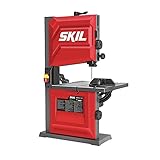
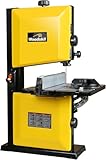


| Model | Wheel size / throat | Maximum cutting height | Motor | Approximate weight | Best fit |
|---|---|---|---|---|---|
| Rikon 10-305 | 10 in / 9-5/8 in | 4-5/8 in | 1/3 hp | About 75 lb | Frequent small-shop work; useful capacity in a compact footprint |
| WEN 3959 | 9 in / 9 in | 3-1/2 in | 2.8 A | About 40 lb | Occasional curves and light resawing on a budget |
| JET JWBS-10OS | 10 in / 10 in | 4 in | 1/2 hp | About 75 lb | A more substantial benchtop saw for a dedicated work surface |
Weights and motor ratings are not directly comparable across manufacturers, and a higher rating does not guarantee cleaner cutting. Check the product’s current specification sheet for exact figures and included accessories. None of these compact saws should be mistaken for a heavy resaw machine.
Choose by the work you actually do
For tight curves, toys, and small wooden parts: Rikon 10-305
The Rikon’s combination of a 9-5/8-inch throat and 4-5/8-inch cutting height gives it room for many small furniture parts, bandsaw boxes, toys, and curved blanks. Its roughly 75-pound mass is a trade-off: it takes more effort to move than a lightweight saw, but is less likely to skate across a bench under ordinary cutting loads.
It makes the most sense if you expect regular use and have a sturdy surface where it can stay set up. For very tight curves, fit a narrow blade within the saw’s recommended range and make several relief cuts into waste material. Trying to force a wide blade around a small radius twists the blade and can pull the cut off line.
For a small budget or occasional use: WEN 3959
The WEN is the lighter, less expensive option, typically sold in a general market range around $150–$250, depending on the seller and current configuration. Its 9-inch throat and 3-1/2-inch cutting height are adequate for modest craft parts and thin stock, but impose a real limit on wide panels and taller blanks.
At about 40 pounds, it is easier to store or reposition. That convenience also makes secure mounting more important: clamp or bolt it to a rigid bench before cutting. It is a sensible choice for an occasional user who wants a compact saw, not for someone planning frequent thick-stock work.
For a more planted benchtop setup: JET JWBS-10OS
The JET offers a 10-inch wheel size, a 10-inch throat, and a 4-inch cutting height in a benchtop format. Its roughly 75-pound weight helps it feel more settled than a very light portable machine. Consider it if the saw will live on a dedicated bench and your projects benefit from the extra throat width.
Its additional capacity does not make it a substitute for a larger saw when cutting thick hardwood or repeatedly resawing wide boards. If your work is mostly thin curves, a smaller, cheaper model with a suitable narrow blade may do the job just as well.
Four buying checks that matter more than a long feature list
- Throat capacity: This is the distance from the blade to the frame. A 9-inch throat can accommodate a workpiece up to roughly that width from the edge to the cut line, but turning room and the shape of the project can reduce practical clearance. Measure your largest part before choosing.
- Cutting height: This is the maximum stock thickness that fits beneath the upper guide assembly. It is not a promise that the saw will cut that thickness efficiently. Small motors and narrow frames are best suited to modest loads and patient feed rates.
- Stability: A rigid bench, secure mounting, and low vibration help keep the cut controlled. A saw that is easy to carry may need extra attention to mounting; a heavier saw is harder to move but not automatically vibration-free.
- Setup and blade availability: Budget time to square the table, track and tension the blade according to the manual, and align the guides. Check that blades in your desired width and tooth pattern are readily available in the correct length.
Set up for accurate small work
A tabletop saw can cut inaccurately even when its specifications look right. Before the first project, place it on a flat, rigid bench and fasten it down using the manufacturer’s mounting points. Check that the table is square to the blade, then set tracking, tension, and guides as directed in the manual. Guide clearances should be close enough to support the blade without rubbing during an unloaded run.
Make a test cut in scrap of the same species and thickness as the project. If the blade drifts, first check its sharpness, tension, tracking, and guide alignment; pushing harder usually makes the problem worse. Mark the intended line clearly, keep hands out of the blade path, and use a push stick or other suitable aid when the workpiece is too small to hold safely.
Blade and ownership costs to plan for
The included blade is often a general-purpose compromise. A narrow blade turns more easily for curves, while a wider blade tends to track straighter for cuts with long, gentle arcs. Finer teeth can leave a smoother edge on thin stock, but the right choice depends on material thickness and the blade maker’s recommendations. Before purchasing spare blades, verify both length and width compatibility for the exact saw model.
Blades are consumables: dull or damaged teeth, poor tracking, and repeated twisting during tight turns are common reasons for replacement. Sawdust also accumulates around the wheels, guides, and lower cabinet, affecting tracking and increasing wear if left in place. Unplug the saw before cleaning or adjusting it, use a brush or vacuum rather than blowing dust into the mechanism, and inspect tires and guides periodically for damage or buildup.
A practical budget should include the saw, a blade suited to the work, and any mounting hardware or dust-collection connection needed for your shop. As a rough example, if a $200 saw is used 40 times, its purchase cost alone works out to $5 per use; blades, maintenance, and accessories are additional. Frequent use makes sturdy construction and available replacement parts more valuable than saving a small amount up front.
Bottom line
Choose the Rikon 10-305 for a strong balance of throat and cutting height in a compact saw, the WEN 3959 for low-cost occasional work and easier storage, or the JET JWBS-10OS for a wider throat and a more substantial permanent bench setup. Match the capacity to your largest workpiece, then budget for a suitable blade and careful setup—the details that most often determine whether a tabletop band saw makes clean, controlled cuts.