
Our Top Picks
 Makita XTR01Z 18V LXT Lithium-Ion Brushless Cordless Compact6.2 x 8.5 Inches6.2 x 8.5 x 5.8 inches5.3 poundsCheck on Amazon
 BOSCH PR20EVS Colt 1.0 HP Variable-Speed Palm Router35 in9.41 x 7.43 x 4.7 inches3.3 poundsCheck on Amazon
 RYOBI ONE+ 18V Cordless Compact Fixed Base RouterPCL424B6.25 x 4 x 7.3 inches3.22 poundsCheck on Amazon


What's inside
As an Amazon Associate I earn from qualifying purchases. This post may contain affiliate links at no extra cost to you.
Every trim router in my garage has spent more time fighting me over its cord than cutting wood. My bench is against a wall, there is one useful outlet, and an extension cord snakes across the floor to reach anything clamped to a sawhorse. At that scale the cord is not a minor annoyance, it is why a two-minute roundover turns into a ten-minute wrestling match. So I went looking for the best cordless trim router rather than buying another corded palm router, and the cordless one is now the first tool I reach for on small work.
The honest version: cordless palm routers are not better at everything. They run out of headroom sooner in hard maple, they warm up on long edge runs, and a good one costs more than a solid corded model. What you are buying is setup speed and freedom of movement. The real question is whether it is worth paying twice, once for the tool and once for the battery platform it ties you to.
As an Amazon Associate we earn from qualifying purchases at no extra cost to you.

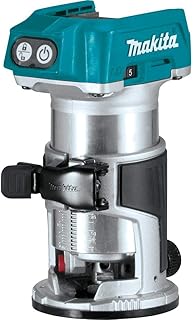


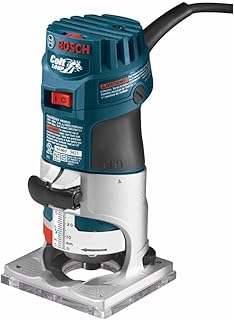

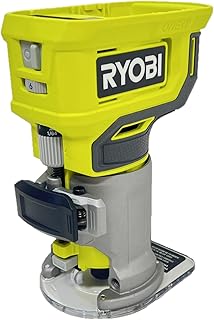
| Class | Where it earns its keep | Trade-off I accept |
|---|---|---|
| 12V compact (Milwaukee M12 FUEL, Makita CXT class) | One-handed roundovers, hinge mortises, overhead work | Less grunt in dense hardwood, shorter runtime |
| 18V/20V (DeWalt XR, Makita LXT, Milwaukee M18 FUEL) | Long edge profiles, flush trimming, template routing | Tall and top-heavy with a big battery |
| Budget 18V (Ryobi ONE+ class) | A second body so you can leave a bit installed | Coarser depth adjustment, more slop as it ages |
| Corded palm router | Production runs and long bench sessions | The cord, which is why you are reading this |
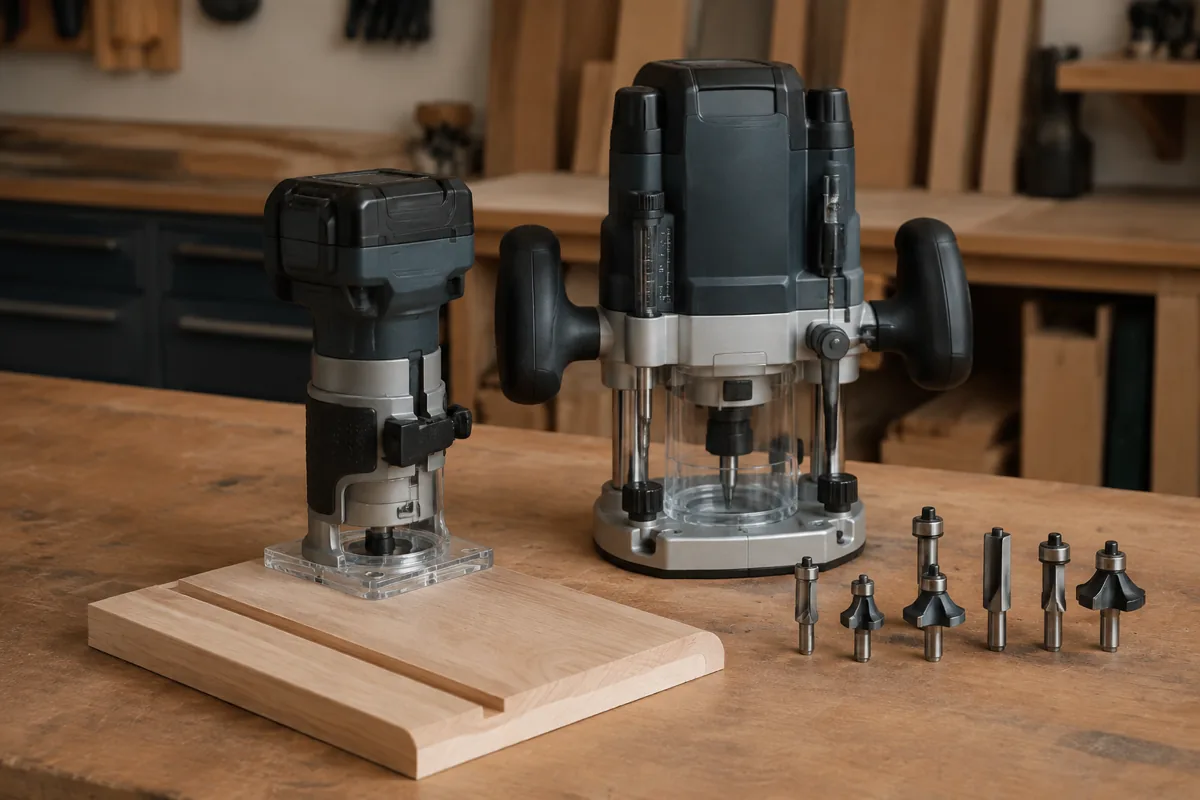
Why I stopped reaching for the corded palm router
Brushless motors moved this category from compromise to genuinely useful. A current cordless trim router gives you variable speed, soft start so it does not twist out of your hand, an electronic brake, and usually an LED ring around the bit. That light matters more than it sounds when you are chasing a pencil line at bench height in a badly lit garage.
What has not changed is the collet. These are 1/4-inch tools for roundovers, chamfers, small rabbets, flush trimming, hinge mortises and inlay. Going cordless does not turn a palm router into a substitute for a router table or a big plunge router, and any listing that hints otherwise is selling optimism.
How I pick the best cordless trim router for a garage shop
Platform first, tool second. If you already own DeWalt XR, Milwaukee FUEL or Makita LXT packs, buy the bare tool that fits them. Adding a second battery system to a small shop means another charger on the wall and money going into things that are not wood.
After that, four things in order. Depth adjustment that holds where I set it, because a bit creeping mid-cut ruins the part, not just the setup. A flat base with real bit visibility, ideally a clear sub-base. A spindle lock, because one-wrench bit changes beat juggling two wrenches over a bench full of parts. And an available dust hood, since a trim router throws chips straight at your face.
Cordless trim router, 18V/20V brushless class
If you own no batteries yet, start here and choose the platform you will still be buying into in five years. Filter for micro depth adjustment, a clear sub-base and an available plunge base, then buy the bare tool if you already have packs.
12V versus 18V, and why I ended up with both
People assume bigger is better, then buy a router that feels top-heavy on a three-inch-wide rail. The 12V-class compacts are shorter, lighter and much easier to control one-handed on a vertical edge. They pay for it with less power in dense hardwood, so you take lighter passes and swap packs more often.
The 18V/20V tools hold speed better through long profiles and flush trimming, and they are what I want for template work. With a high-capacity pack installed they are tall, and tall means tippy on narrow stock. If I could keep only one it would be the 18V/20V, because it covers more jobs. The 12V is still what I grab first.
- ✔ No cord to drag across a finished panel or snag on clamps
- ✔ Setup is quick enough that you use it for one-minute jobs
- ✔ Easy overhead and away from outlets
- ✔ Shares batteries with tools you already own
- ✘ Costs more than a comparable corded palm router
- ✘ Battery height makes it feel top-heavy on narrow stock
- ✘ Runtime drops fast with deep passes in hardwood
- ✘ Deepens your commitment to one battery platform
Compact 12V palm router
This is the size that lives on my bench. A 12V-class router is easier to steer one-handed and easier to trust on delicate edges, as long as you accept lighter passes and keep a second pack on the charger.
Depth adjustment, bases, and the details you will curse
Depth mechanisms come in a few flavors: a sliding clamp you eyeball, a lever or rack-and-pinion, and a micro-adjust ring. Micro-adjust is what you want when you are sneaking a flush trim bit down to a veneer edge. Also check that the scale stays readable with a battery in place.
Then look at bases. A plunge base opens up mortises and stopped grooves, an offset base reaches inside corners, and an edge guide helps with stopped dados. A router with no accessory bases is a one-trick tool, so confirm in the manual what actually fits instead of assuming it matches the corded version.
The mistakes I made so you can skip them
I hogged a big roundover in one pass on white oak, got chatter and a burn line, and learned to take two or three light passes even when the wood looks agreeable. I also bought a bare tool with no spare battery and spent an afternoon watching a charger.
Worse, I started a template job on a nearly dead pack. The motor slowed, the bit dwelled, and I burned an edge I had already sanded. Now I swap packs before anything that shows. I have skipped dust collection on a quick job and paid for it in finish prep, and I have blamed a good router for what was really a dull flush trim bit.
1/4-inch shank router bit set
Do not pair a good router with bargain-bin carbide. A small set with a couple of roundovers, a chamfer, a flush trim and a straight bit covers most garage work, and sharp bits cut burning more than any tool upgrade will.
Cordless trim router FAQ
Can a cordless trim router replace a full-size router? No. A 1/4-inch palm router handles edge profiles, flush trimming, hinge mortises and light grooving. Panel raising, big rabbets and heavy template work still want a corded midsize router or a router table.
How much runtime should I expect from one battery? More than most people fear and less than the marketing implies. Light chamfers on a couple of cabinet doors are easy work for a mid-size pack, while deep passes in hardwood will drain a compact battery quickly. Keep two packs and rotate them.
Should I buy the bare tool or a kit? Bare tool if you already have two healthy batteries on that platform, since you are only paying for the router. Kit if this is your entry into the platform, because buying a battery and charger separately usually costs more.
If you want one recommendation: buy into the platform you already own, insist on micro depth adjustment and a clear sub-base, and put the leftover money into good bits rather than a bigger battery. That is the combination that has kept my corded palm router in its case for months.
Check prices on Amazon →